Shepherdess bringing sheep in
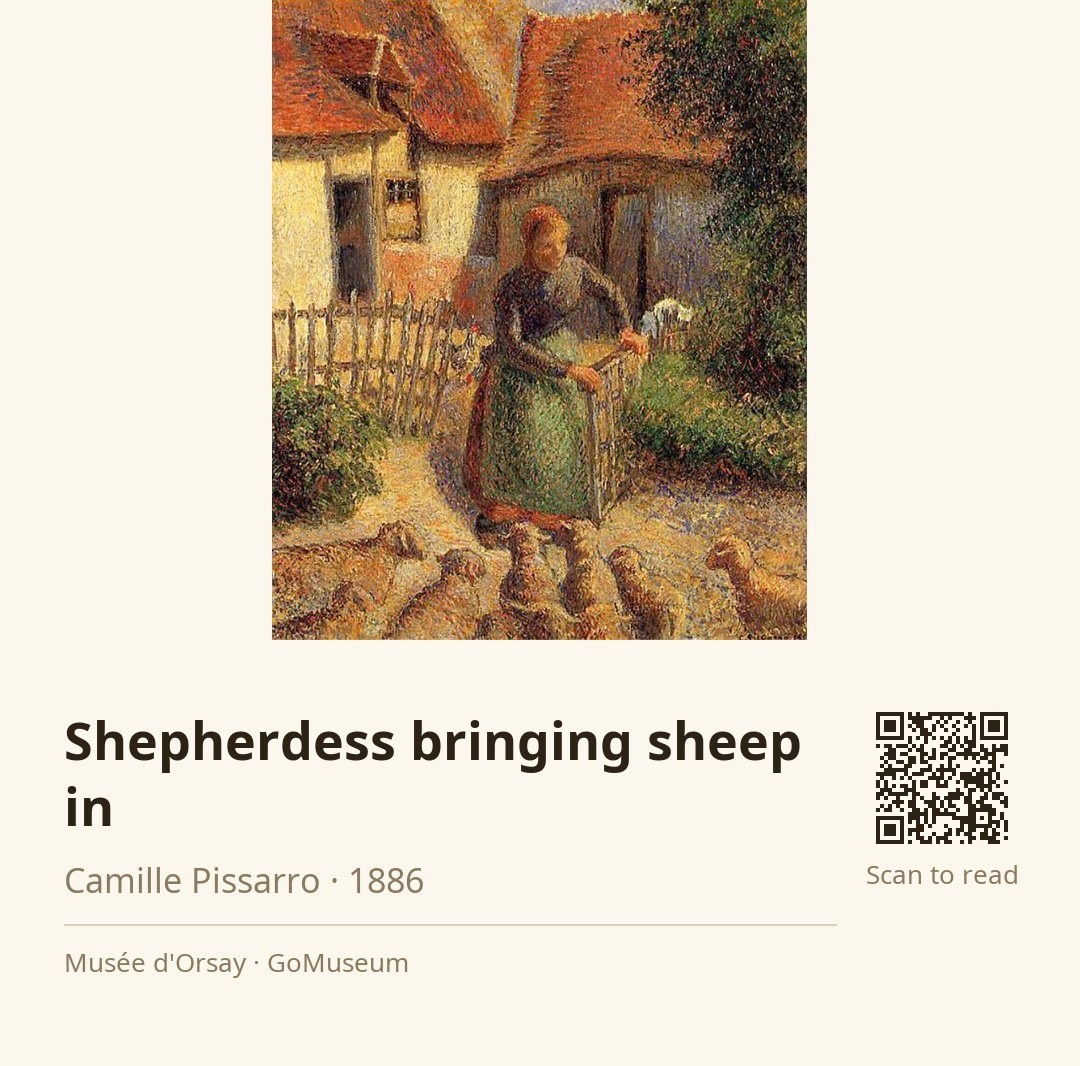
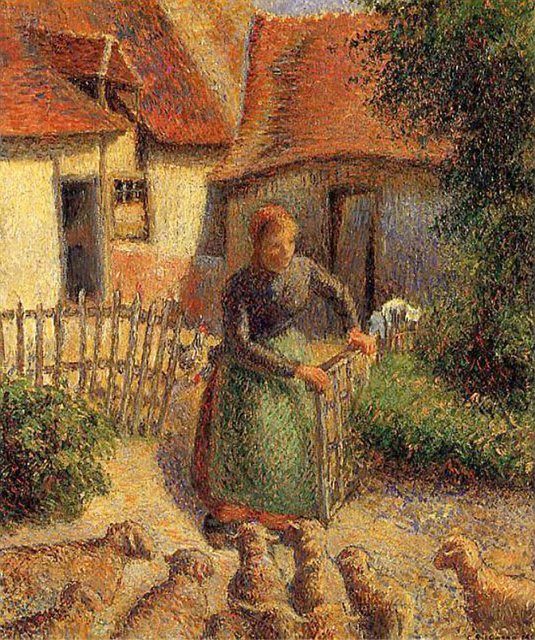
🎧 This work has audio narration — listen in the appTake a moment to really look at this painting, "Shepherdess Bringing in the Sheep" by Camille Pissarro. Notice how the shepherdess stands confidently, her posture relaxed yet purposeful, as she guides her flock. The way the light dances across her clothing and the sheep creates a soft, almost ethereal quality, doesn’t it?
These details matter because they capture a fleeting moment in rural life, a world that Pissarro cherished and sought to immortalize. The shepherdess isn’t just a figure; she represents the harmony between humanity and nature, a theme that resonates deeply in Pissarro's work. He painted the everyday lives of ordinary people, elevating their experiences to art.
Created in 1886, this piece reflects Pissarro's commitment to Impressionism, a movement that sought to capture the essence of a moment rather than its precise details. It’s fascinating to think about how Pissarro, often considered the father of Impressionism, influenced so many artists who followed him.
As you stand here, consider what this scene tells you about the connection between people and their environment. What stories do you think the sheep might tell if they could speak?
Jacob Abraham Camille Pissarro, born on July 10, 1830, in Saint Thomas, was a Danish-French painter pivotal to the Impressionist and Neo-Impressionist movements. His artistic journey began under the influence of masters like Courbet and Corot, and he later collaborated with Seurat and Signac, embracing Neo-Impressionism at age 54. Pissarro's dedication to depicting rural life and the working class set him apart; he painted everyday scenes without grandeur, focusing on authenticity.
As a mentor, Pissarro played a crucial role in the development of fellow artists, including Cézanne, Gauguin, and Van Gogh, earning him the title "dean of the Impressionist painters." His warm personality and wisdom made him a father figure within the art community. Pissarro was the only artist to exhibit in all eight Paris Impressionist exhibitions from 1874 to 1886, solidifying his legacy. Despite facing criticism for his subjects, he remained committed to his vision, advocating for a personal approach to classicism. Pissarro passed away on November 13, 1903, leaving an indelible mark on art history.
The painting 'Shepherdess Bringing in the Sheep' was created by Camille Pissarro in 1886, a time when he was deeply immersed in the Impressionist movement. After the war, a complex restitution claim unfolded, with Meyer seeking to reclaim the painting from art dealer Christoph Bernoulli. Decades later, his daughter Léone-Noëlle Meyer pursued the claim against the Fred Jones Jr. Museum at the University of Oklahoma, which had received the painting as a gift in 2001. The legal battles continued for years, culminating in a settlement in 2016 that allowed the painting to circulate between the Fred Jones Jr. Museum and the Musée d'Orsay. However, this agreement faced scrutiny, leading to further court proceedings. Ultimately, in June 2021, Meyer relinquished ownership, and the painting remains with the Fred Jones Jr. Museum, with plans for it to be exhibited in France every three years.
Notice how the strokes seem almost spontaneous, capturing the movement and life of the scene. The light plays a crucial role here; it filters through the trees, creating dappled patterns on the shepherdess and her flock. This interplay of light and shadow gives the painting a sense of depth and immediacy. The color palette is soft yet vibrant, with earthy tones that reflect the pastoral setting. Pissarro's choice to depict the shepherdess in a relaxed yet commanding pose invites you into the moment, making you feel as if you are part of this serene rural landscape. The composition is carefully structured, guiding your eye through the scene, from the shepherdess to the sheep and back again, creating a rhythm that mirrors the natural flow of life.
He was a mentor to many artists, including Cézanne and Gauguin, influencing their approaches to color and form. This painting exemplifies his commitment to portraying the everyday lives of ordinary people, elevating their experiences to the level of fine art. Pissarro's focus on rural life and the working class challenged the artistic norms of his time, paving the way for future generations to explore similar themes. His legacy is evident in the way contemporary artists continue to draw inspiration from his dedication to capturing the essence of life in all its forms.
One surprising aspect of 'Shepherdess Bringing in the Sheep' is its tumultuous history during World War II. After being looted by the Nazis, it became a focal point in a lengthy legal battle over its rightful ownership, highlighting the ongoing issues of art restitution and the impact of war on cultural heritage.