The Luncheon
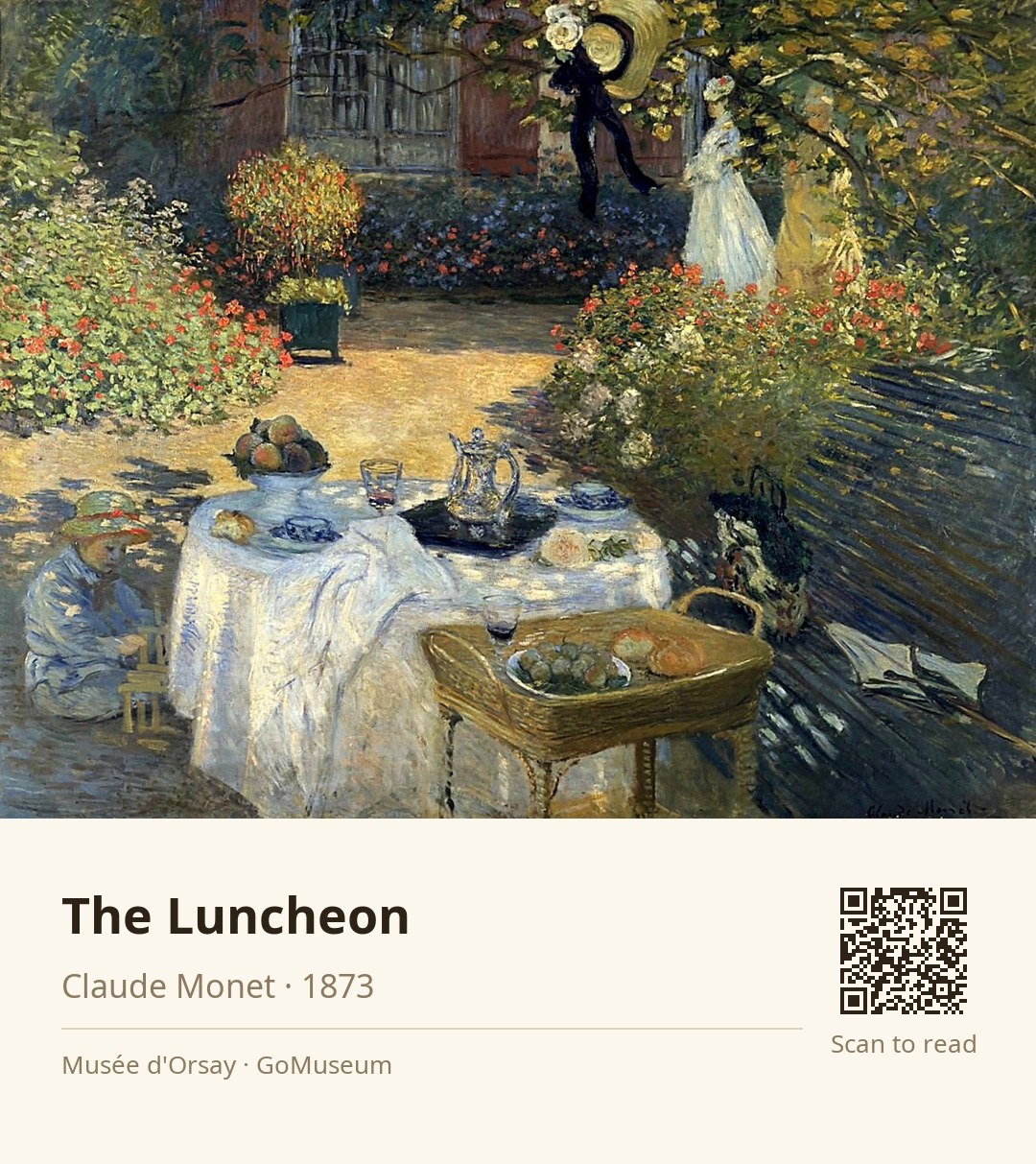
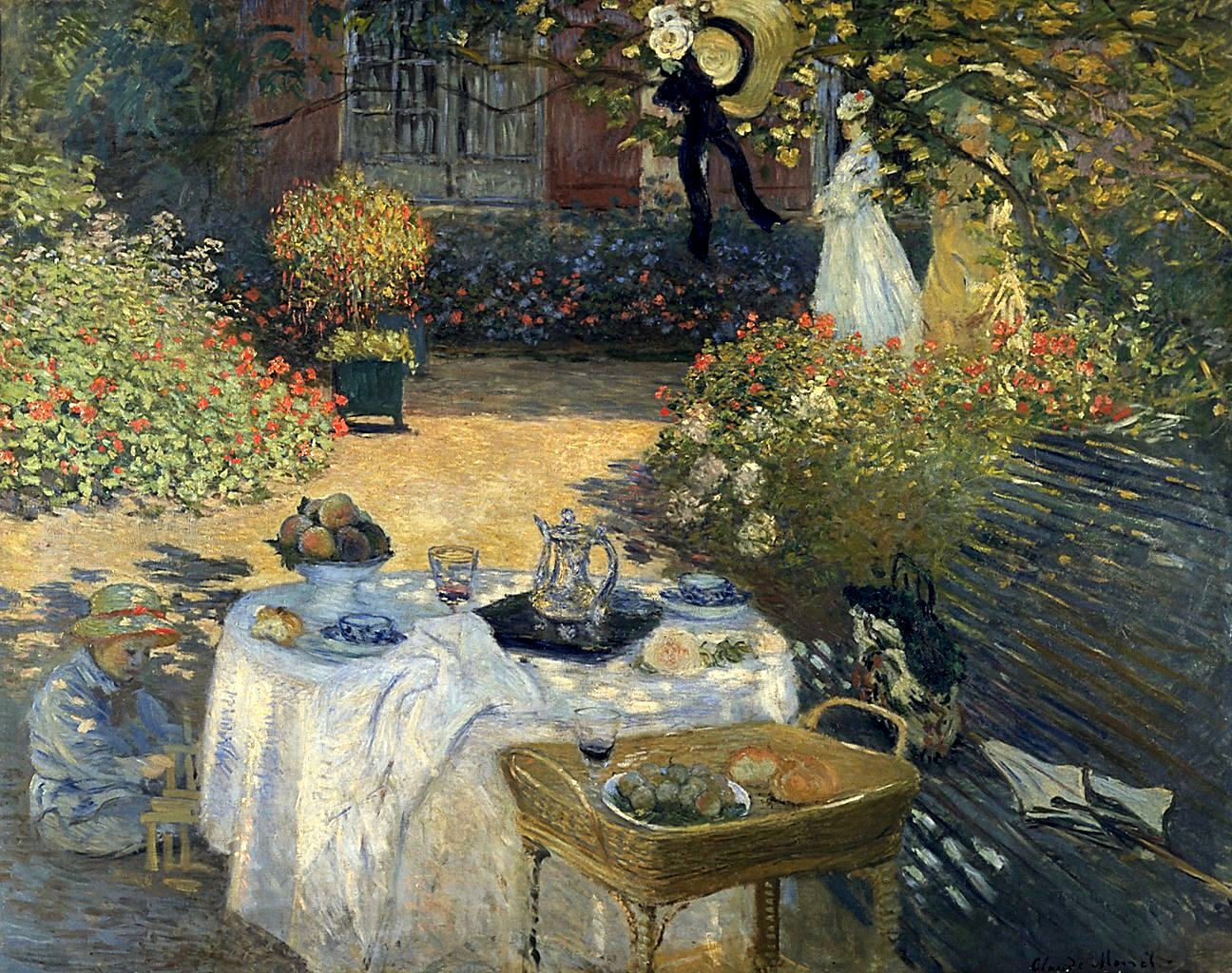
🎧 This work has audio narration — listen in the appTake a moment to really look at "The Luncheon" by Claude Monet. Notice how the sunlight dances across the vibrant flowers in the garden, casting playful shadows on the table. The reds and greens seem to pulse with life, drawing you into this intimate scene. What’s striking here is how Monet captures not just a moment in time, but the very essence of a leisurely afternoon. The table is still set with remnants of a meal, and you can almost hear the laughter of family echoing in the air. This isn’t just a painting of a meal; it’s a celebration of nature and everyday life, reflecting the joy of the Impressionist movement that sought to depict fleeting moments. Painted in 1873, this piece is one of Monet’s early explorations of domestic life in his garden at Argenteuil, a place that became a sanctuary for him and a source of inspiration. The scene feels spontaneous, yet it’s meticulously crafted, showcasing Monet’s mastery in blending colors and light. As you stand here, think about the stories this garden could tell. What do you imagine the conversations were like around that table?
Oscar-Claude Monet, born on November 14, 1840, in Paris, was a pioneering French painter and a founder of Impressionism, a movement that transformed the art world. Raised in Le Havre, he developed a passion for nature and painting early on, encouraged by his mother, while his father hoped he would pursue a business career. After his mother's death in 1857, Monet moved in with his aunt, who supported his artistic ambitions.
Monet's career began with caricatures, but he soon sought formal training, studying under Eugène Boudin, who introduced him to plein air painting. His breakthrough came in 1866 with "La Femme à la robe verte," which garnered attention at the Salon. The term "Impressionism" originated from his work "Impression, Sunrise," exhibited in 1874, marking a shift away from traditional art.
Throughout his life, Monet focused on capturing the essence of light and color in nature, creating series of paintings that depicted the same scenes under varying conditions, such as his famous haystacks and water lilies. He settled in Giverny in 1883, where he cultivated a beautiful garden that became his muse. Despite personal hardships, including the loss of loved ones and health issues, Monet's relentless dedication to his craft solidified his place in art history as a master of modernism, influencing countless artists and leaving a lasting legacy. He died on December 5, 1926, in Giverny, celebrated as one of the most significant figures in art.
Claude Monet's 'The Luncheon' was painted in 1873, a pivotal time for the artist as he was exploring domestic life in his garden at Argenteuil. Initially titled 'Panneau décoratif', it was commissioned to decorate the home of his patron, Ernest Hoschedé. The painting was first exhibited in 1876 at the second Impressionist exhibition in Paris, where it was met with mixed reviews, typical for the Impressionist movement that was still finding its footing. The work remained in the collection of Gustave Caillebotte from 1878 until 1894, before eventually being housed at the Musée d'Orsay in Paris since 1986, on loan from the Louvre. This piece stands as one of Monet's early explorations of the vibrant life around him, capturing a moment that feels both spontaneous and carefully composed.
As you gaze at 'The Luncheon', take a moment to appreciate Monet's masterful brushwork. The painting is alive with small, quick strokes that create a sense of movement and light. Notice how he uses dabs of color to suggest the lush blooms of the garden, particularly the reds and greens that seem to pulse with energy. The composition draws you in, with the table slightly off-center, creating a dynamic balance that feels natural and inviting. The interplay of sunlight and shadow, especially on the figures and the table, evokes the warmth of a summer afternoon, making you feel as if you could step right into the scene.
Interestingly, 'The Luncheon' was not painted outdoors, which was unusual for Monet. Instead, he created it in his studio, likely using sketches made in the garden.
Initially, 'The Luncheon' was commissioned as a decorative panel for the home of Monet's patron, Ernest Hoschedé, which reflects Monet's early involvement in creating art for private collections rather than for public exhibition.
The painting features Monet's son, Jean, playing in the garden, and the two women in the background are believed to be close friends of Monet and his wife, highlighting the intimate connections and family moments that inspired the artwork.