 Image: Rodney · Jiří Kolář · Adrian Scottow from London, England · Adrian Scottow from London, England
La Méditerrannée
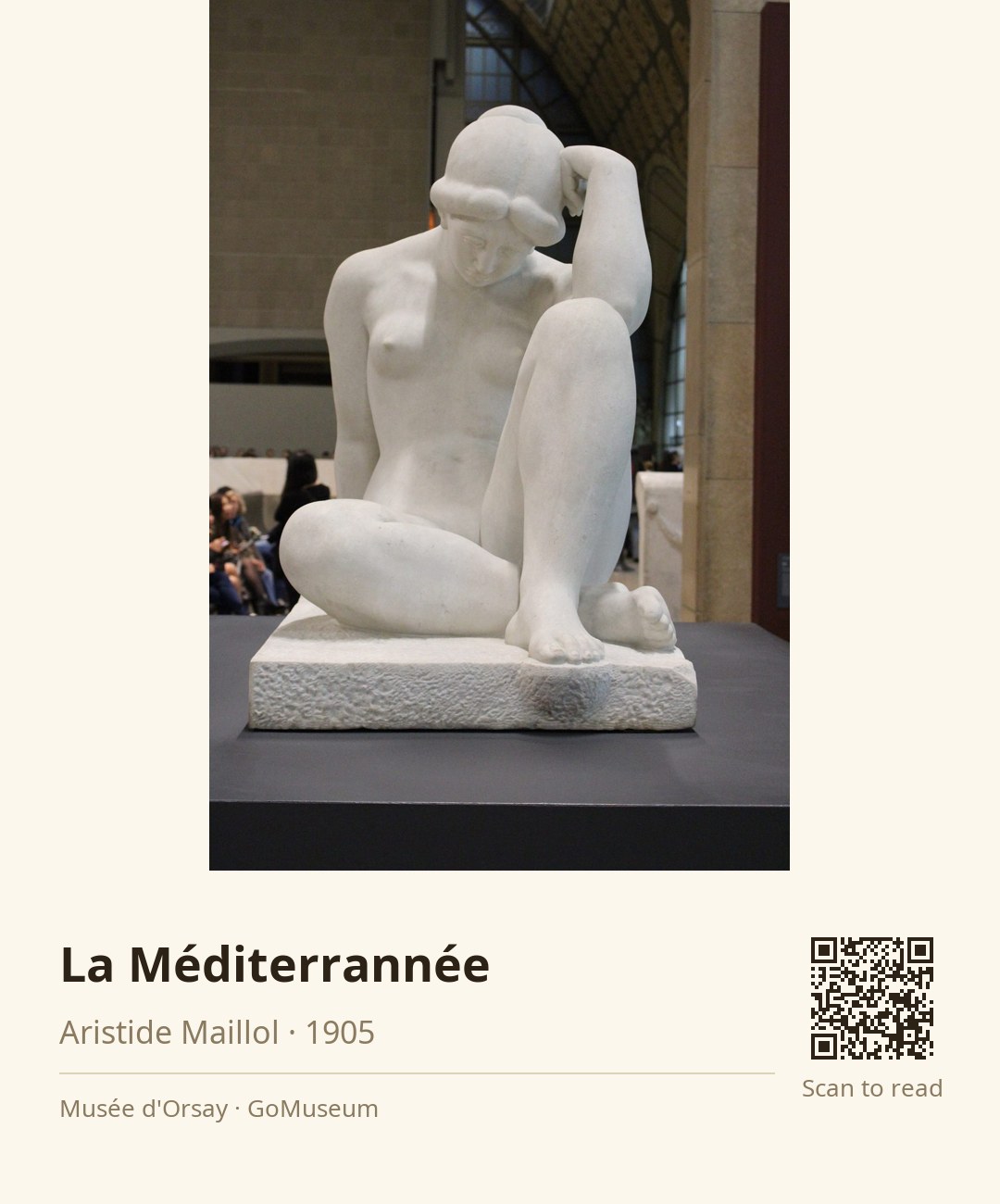
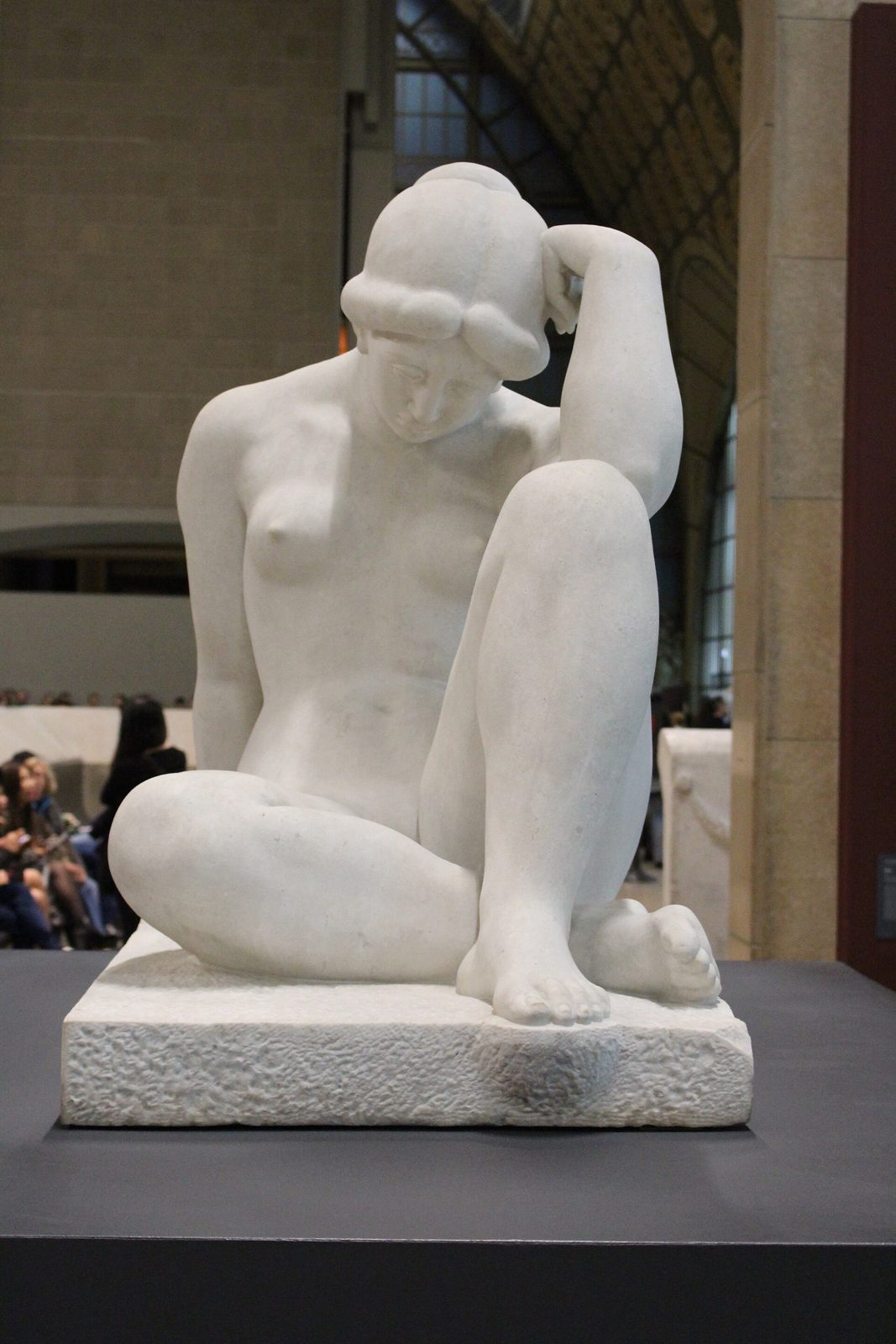
🎧 This work has audio narration — listen in the appTake a moment to really soak in the serene presence of "La Méditerranée" by Aristide Maillol. Notice how the figure of the seated woman seems almost to breathe with tranquility, her elbow resting on her knee, head cradled in her hand. This isn’t just a pose; it’s a moment captured in time, inviting you to pause and reflect. Now, look closely at the smooth, flowing lines of her body. Maillol’s choice to emphasize these curves creates a sense of harmony and balance, reminiscent of ancient Greek sculptures. This detail matters because it embodies Maillol’s belief that art should transcend mere imitation of nature, aiming instead for an idealized beauty that speaks to the soul. Created in 1905, this piece marked a significant shift in Maillol’s career, moving from painting to sculpture, and it reflects his deep admiration for classical forms while paving the way for modern abstraction. His work inspired many artists, including Picasso and Matisse, who saw in it a new way to approach the human form. As you stand here, consider what thoughts or feelings this figure stirs within you. What does her stillness say about the nature of contemplation in your own life?
Aristide Maillol, born on December 8, 1861, in Banyuls-sur-Mer, was a prominent French Catalan sculptor, painter, and printmaker. Initially pursuing painting, he shifted his focus to sculpture in his early forties, becoming one of the most celebrated sculptors of his era. His works, characterized by a classical treatment of the female form, influenced notable artists like Picasso, Matisse, and Moore, marking a significant transition in modern sculpture.
Maillol's artistic journey began in Paris, where he studied at the École des Beaux-Arts under renowned instructors. His early works were shaped by the decorative arts, particularly tapestry, which he explored before fully dedicating himself to sculpture. His first major piece, "A Seated Woman," completed in 1902, exemplified his unique style, blending simplicity with a profound sense of beauty.
Throughout his career, Maillol received acclaim for his serene and monumental sculptures, which emphasized form over narrative. His public commissions included memorials and monuments, solidifying his legacy in art history. Despite the challenges he faced, including the loss of many artworks during the Nazi occupation, his influence persisted, with a significant collection of his works housed in the Musée Maillol in Paris. Maillol passed away in an automobile accident on September 27, 1944, leaving behind a transformative body of work that continues to resonate in the art world.
As you admire 'La Méditerranée', take a moment to appreciate the craftsmanship involved in its creation. Notice how the contours of her body are not just shapes but a harmonious blend of curves that evoke a sense of tranquility. This technique reflects Maillol's belief in the beauty of simplicity, where every line serves a purpose, guiding your eye across the sculpture's surface. The way he captures the essence of the female form speaks to his deep understanding of anatomy and his desire to transcend mere representation.
The journey of 'La Méditerranée' began in the early 1900s when Maillol was transitioning from painting to sculpture. This piece, completed in 1905, was initially modeled after his wife and was part of a significant exhibition at the Salon d'Automne that year. It was a time when the art world was buzzing with the bold colors of the Fauves, yet Maillol's work stood apart, embodying a quiet, contemplative beauty. The reception was overwhelmingly positive, with critics praising its monumental quality and serene presence. This sculpture marked a pivotal moment in Maillol's career, establishing him as a leading figure in modern sculpture and setting the stage for his future works. It was a turning point that not only defined his artistic direction but also resonated deeply with the public and fellow artists alike.
Completed in 1905, this piece embodies a shift towards a serene, classical representation of the female form that would influence generations of artists. Think of how it inspired the likes of Picasso and Matisse, who were captivated by its simplicity and beauty. Maillol's work marked a departure from the chaotic expressions of the time, steering sculpture towards a more tranquil and timeless aesthetic. This sculpture's geometric composition and meditative quality set a standard for modern figure sculpture, resonating through the works of Henry Moore and beyond. Remember, Maillol's legacy lies in his ability to distill the essence of beauty into a form that speaks quietly yet powerfully across time.
This personal connection adds an intimate layer to his work, showing how deeply his life influenced his art. It's fascinating to think that the serene figure you see before you was inspired by someone so close to him, blending personal narrative with artistic expression.
Maillol's background in tapestry design honed his understanding of form and texture, which he later applied to his sculptures, emphasizing smooth lines and harmonious curves that evoke tranquility.
The positive reception of 'La Méditerranée' at the Salon d'Automne in 1905 marked a turning point in Maillol's career, establishing him as a leading figure in modern sculpture and influencing the direction of his future works.