Iron-frame house with glazed earthenware cladding
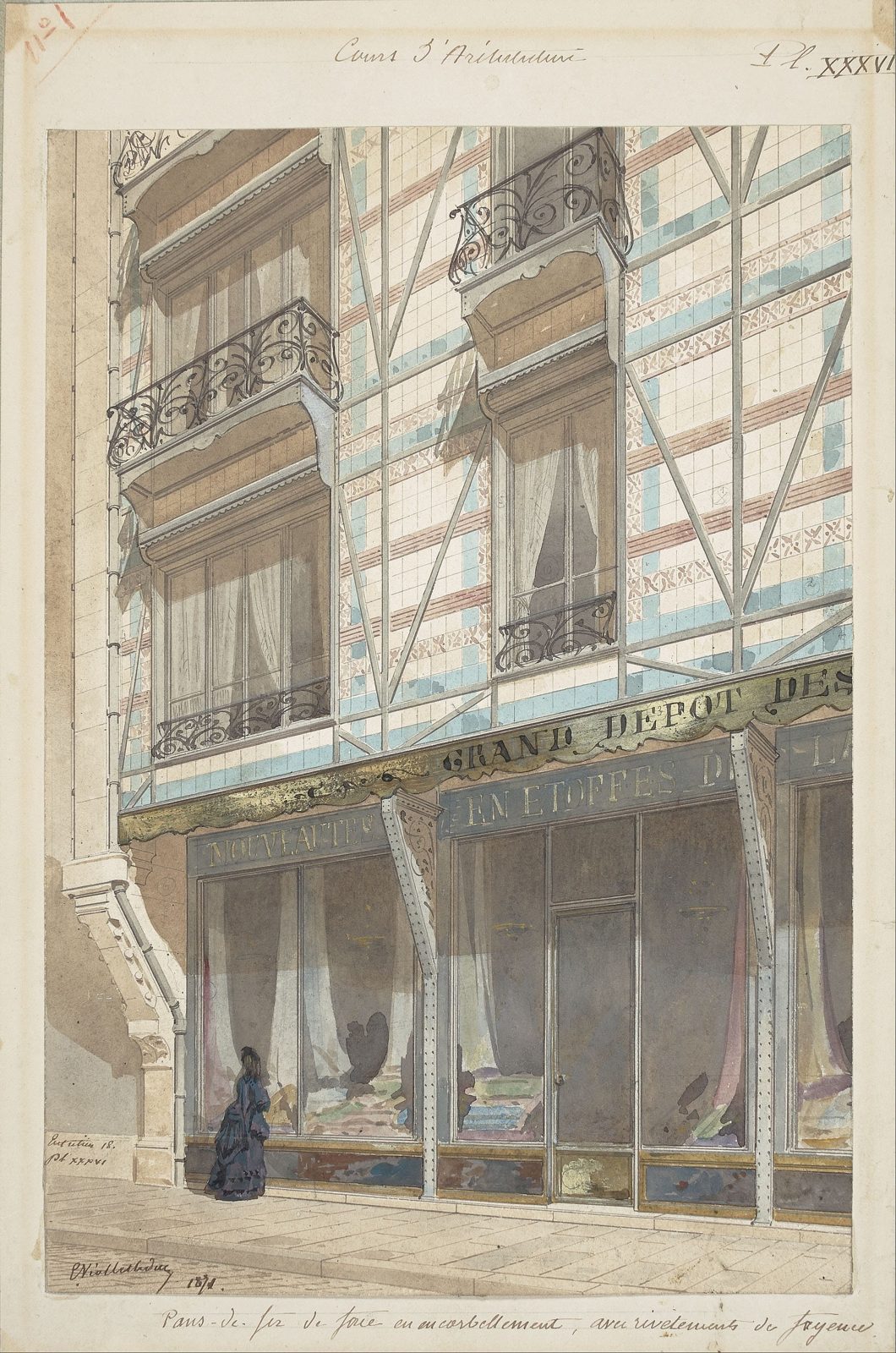
🎧 This work has audio narration — listen in the appTake a moment to really look at the "Iron-frame house with glazed earthenware cladding" by Eugène Viollet-le-Duc. Notice how the shimmering surface of the glazed earthenware catches the light, creating a vibrant interplay of color and texture. This isn’t just about aesthetics; it’s a bold statement about the potential of modern materials in architecture. Viollet-le-Duc, known for his meticulous restorations of medieval structures, was also a pioneer of modern architecture. By using iron and ceramic, he challenged the traditional notions of building, showing that strength and beauty could coexist. The way he combines these materials reflects his belief that architecture should be both functional and expressive. Created in 1871, this artwork is not merely a design; it’s a vision of what architecture could become. It paved the way for future architects to explore innovative materials and forms, influencing movements like Art Nouveau and even modern skyscrapers. As you stand here, think about how this piece resonates today. What do you think about the balance between tradition and innovation in architecture?
Eugène Viollet-le-Duc was a pivotal figure in 19th-century architecture, born in Paris in 1814. Renowned for his meticulous restorations of medieval landmarks such as Notre-Dame de Paris and Mont Saint-Michel, he transformed the approach to historical architecture. His work not only preserved these structures but also inspired a new generation of architects, including prominent figures of the Art Nouveau movement and modern architecture like Frank Lloyd Wright and Le Corbusier, who regarded him as a foundational influence.
Educated in a family steeped in the arts, Viollet-le-Duc rejected the rigid classical training of the École des Beaux-Arts, opting instead for hands-on experience in architectural offices. His travels across France and Italy fueled his passion for medieval architecture, leading to significant contributions in both restoration and theoretical writings. His seminal works, particularly "Dictionnaire raisonné de l'architecture française," remain influential, offering a comprehensive visual and theoretical framework that shaped architectural discourse.
A visionary thinker, he advocated for the integration of modern materials and rational design principles, laying groundwork for contemporary architecture. His legacy endures, as his ideas continue to resonate in architectural practice and education, marking him as a key figure in the evolution of modern architecture.
In 1871, Eugène Viollet-le-Duc created the 'Iron-frame house with glazed earthenware cladding,' a work that reflects his innovative approach to architecture. Known primarily for his restoration of medieval landmarks, Viollet-le-Duc was a pivotal figure in the 19th-century architectural scene. His designs often blended traditional forms with modern materials, a concept that was quite revolutionary at the time. This particular piece was likely part of his broader vision to integrate new technologies into architectural practices, showcasing the potential of iron and ceramics in construction. Although specific exhibition details for this work are scarce, Viollet-le-Duc's reputation was already well-established, having influenced a generation of architects with his writings and restoration projects. The reception of his works was mixed; while some praised his forward-thinking designs, others criticized them for straying too far from historical accuracy. Nevertheless, his contributions to architecture, particularly through works like this, laid the groundwork for future movements, including Art Nouveau and modernism.
His innovative use of materials and theoretical writings influenced a generation of architects, including the likes of Frank Lloyd Wright and Le Corbusier. His ideas helped to shape the Art Nouveau movement, inspiring artists to embrace organic forms and new materials. Viollet-le-Duc's vision was not just about buildings; it was about reimagining the possibilities of architecture itself.
Did you know that Viollet-le-Duc's writings were so influential that they were considered essential reading for architects around the world? His 'Dictionnaire raisonné de l’architecture française' contains over 3,700 drawings and remains a critical resource for understanding medieval architecture. It’s fascinating to think that his theoretical work has had a lasting impact on both the Arts and Crafts movement and the Gothic Revival across Europe, shaping the way we think about architecture even today.
Viollet-le-Duc came from a family deeply embedded in the arts and architecture; his grandfather was an architect, and his uncle was a painter and art critic who hosted a literary salon. This environment exposed him to influential figures like Prosper Mérimée, which played a crucial role in his career development.
His theoretical works, especially the 'Dictionnaire raisonné de l’architecture française,' were considered essential reading and influenced key figures in the Arts and Crafts movement, promoting a return to craftsmanship and the use of traditional materials in response to industrialization.