Bedroom in Arles
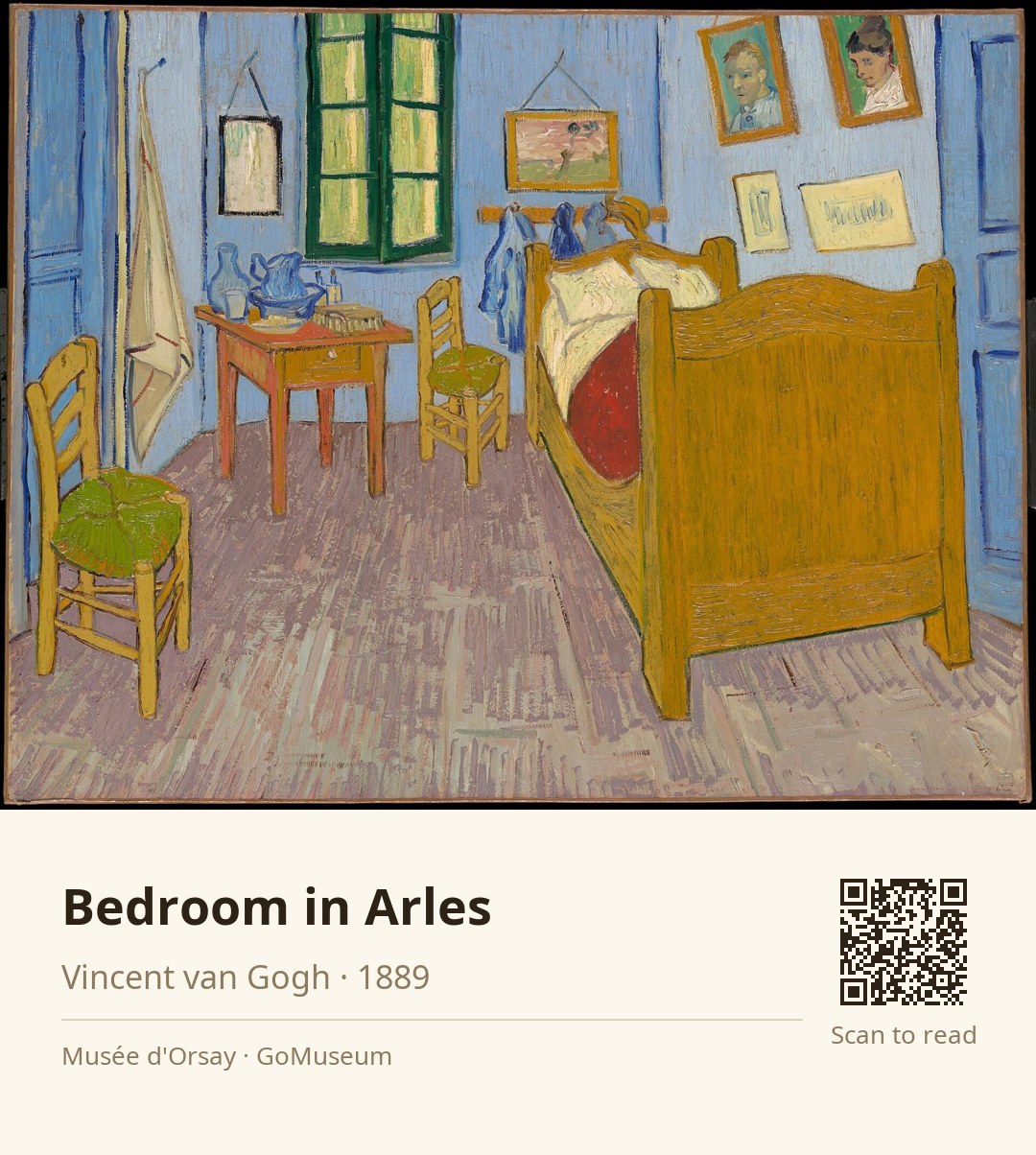
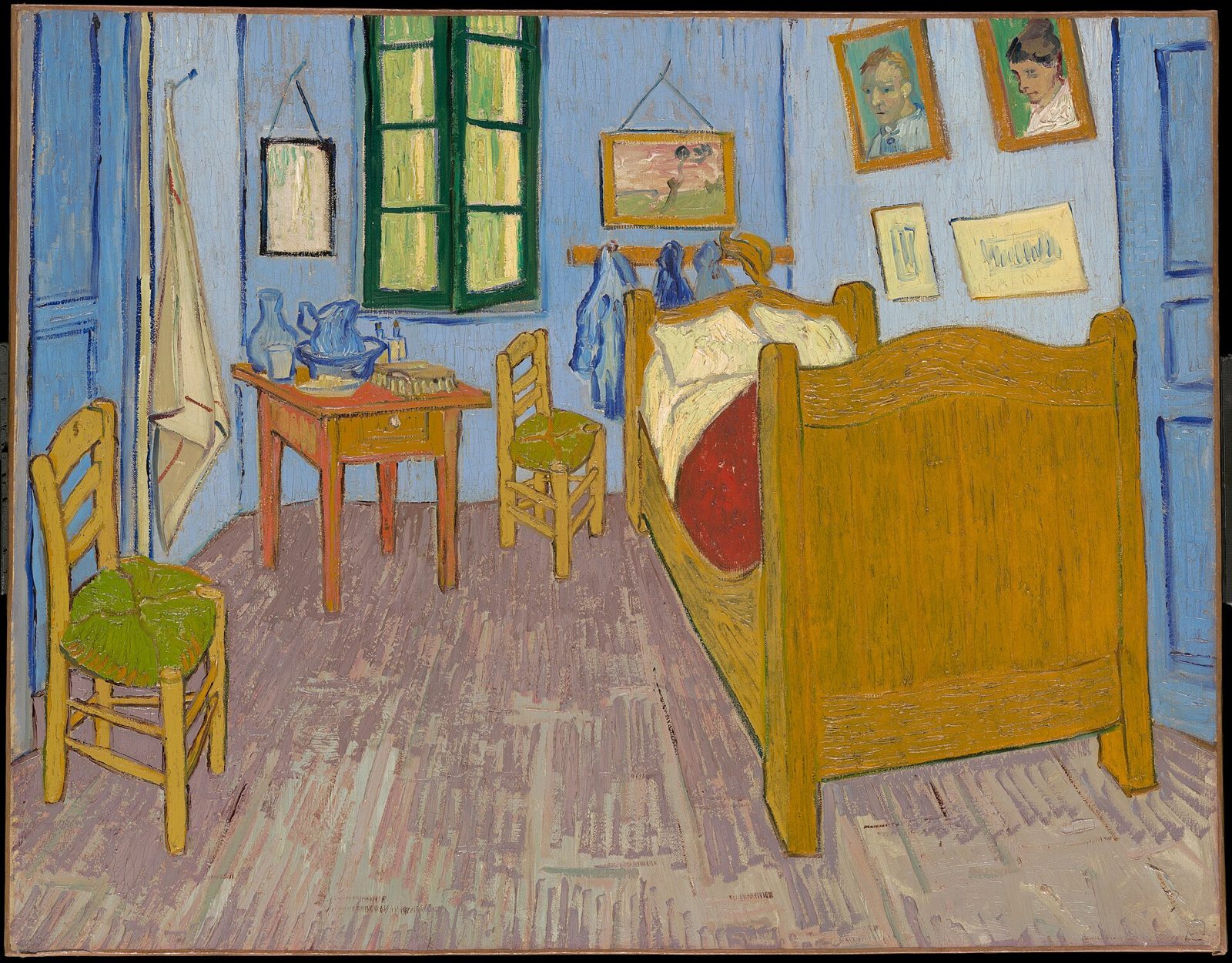
🎧 This work has audio narration — listen in the appTake a moment to really soak in the vibrant colors and the unique perspective of Van Gogh's "Bedroom in Arles." Notice how the walls seem to pulse with that striking blue, almost as if they’re alive. And look at the way the furniture is arranged—everything feels intentionally placed, creating a sense of intimacy and comfort. These details matter because they reflect Van Gogh's emotional state during a turbulent time in his life. This room wasn’t just a physical space; it was his sanctuary, a place where he sought solace and stability amidst his struggles with mental health. The bold colors and exaggerated forms are not just stylistic choices; they’re expressions of his inner turmoil and desire for peace. Created in 1889, this painting captures a moment when Van Gogh was living in Arles, a period that was both prolific and challenging for him. He painted this room multiple times, each version revealing more about his psyche and his longing for connection. As you stand here, think about what this room represents for you. What does a personal space mean in your life? How does it reflect your own emotions and experiences? Let Van Gogh’s vision inspire you to consider the stories that our own spaces tell.
Vincent van Gogh was a Dutch Post-Impressionist painter born on March 30, 1853, in Zundert. He is renowned for his vibrant use of color and expressive brushwork, which laid the groundwork for modern art. Despite creating around 2,100 artworks in just over a decade, including 860 oil paintings, he struggled with mental illness and poverty throughout his life. His early career as an art dealer was marked by disillusionment, leading him to pursue painting in 1881.
Van Gogh's intense passion for art was evident in his correspondence with his brother Theo, who provided emotional and financial support. His works evolved significantly after moving to Paris in 1886, where he mingled with avant-garde artists. His time in Arles in 1888 marked a peak in his creativity, producing iconic series like sunflowers and wheat fields.
Tragically, van Gogh's life ended in suicide at 37, after years of battling his demons. Initially unrecognized, he gained fame posthumously, becoming a symbol of the tortured artist. His legacy influenced movements like Fauvism and Expressionism, securing his place as one of the most significant figures in art history.
In 1889, Vincent van Gogh created 'Bedroom in Arles' during a particularly tumultuous period of his life. This painting was part of a series where he depicted his bedroom in the Yellow House in Arles, a place he hoped would be a haven for himself and fellow artists. The work was initially shown at the Kunsteverein in Barmen in 1913, and later at the art franco-tchèque exhibition in Prague in 1923. Over the years, it changed hands several times, passing through the collections of notable figures like Werner-Drucker and Paul Rosenberg before eventually reaching Matsukata Kojiro, a prominent Japanese collector. His struggles and the emotional depth captured in this piece resonate with viewers, making it a pivotal work in his oeuvre.
As you gaze at 'Bedroom in Arles,' pay attention to the bold brushwork that seems to dance across the canvas. Van Gogh employed thick, expressive strokes, layering paint to create texture that almost invites you to reach out and touch it. The vibrant blues and yellows are not just colors; they pulse with emotion, reflecting his inner turmoil. Notice how the furniture is arranged—each piece feels like it has a story, contributing to the sense of intimacy. The perspective is slightly skewed, which adds a dreamlike quality, making the viewer feel as if they are stepping into Van Gogh's mind. The use of color is particularly striking; the walls are a deep blue that contrasts sharply with the warm yellows of the bedding, creating a tension that mirrors his emotional state. This painting is a masterclass in how color and composition can evoke feelings, drawing you into Van Gogh's personal sanctuary.
Painted during his time in Arles in 1889, this work exemplifies his revolutionary use of color and form, which would go on to influence generations of artists. The bold colors and expressive brushwork laid the groundwork for movements like Fauvism and Expressionism, where emotion took precedence over realism. Van Gogh's unique approach to color and composition challenged traditional perspectives, inviting viewers to feel rather than just see. This painting, with its intimate portrayal of his personal space, resonates deeply, reminding us of the fine line between genius and madness, and why his legacy continues to inspire and provoke thought in the art world today.
The furniture in 'Bedroom in Arles' is not just randomly placed; it reflects Van Gogh's personal relationships and emotional state, with each piece symbolizing aspects of his life and his desire for companionship.