 Image: Sailko
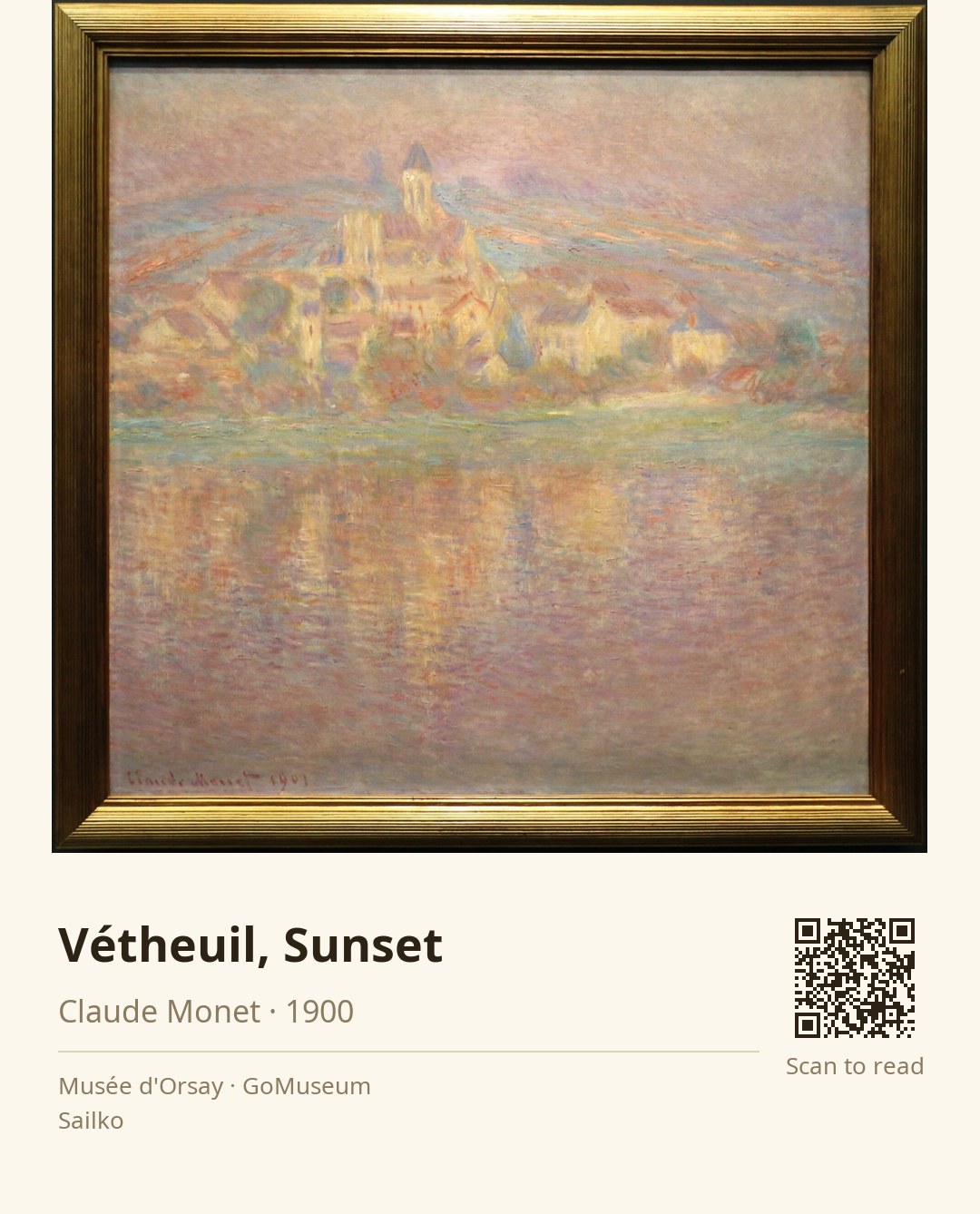
Vétheuil, Sunset
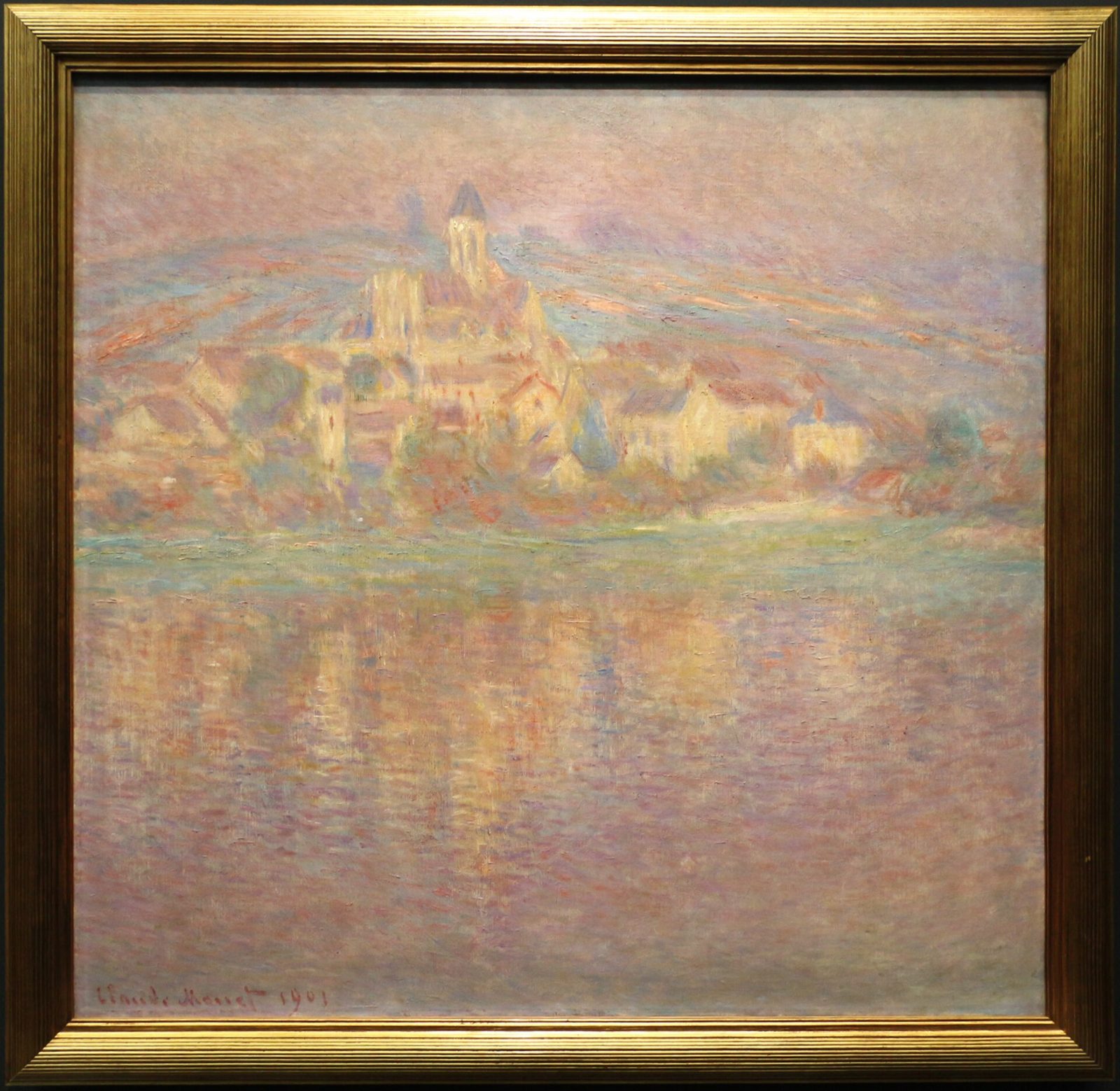
🎧 This work has audio narration — listen in the appThe church spire rises prominently in the center of Claude Monet's "Vétheuil, Sunset," its warm hues of yellow and pink glowing against the twilight sky. Surrounding it, the village's soft, impressionistic brushwork captures the tranquil essence of the riverside scene, while the shimmering river reflects these colors, blending the village into the landscape.
Monet's choice of palette creates a serene atmosphere, inviting viewers to immerse themselves in the peacefulness of the moment. The gentle hills in the background, rendered in muted shades of purple and blue, enhance the sense of depth and calm, embodying the Impressionist aim to depict nature as it is perceived in fleeting moments. This painting, created in 1900, is part of Monet's exploration of light and its effects on the landscape, a theme he pursued throughout his career.
Painted during a period of prolific output, "Vétheuil, Sunset" reflects Monet's dedication to capturing the beauty of the French countryside, particularly the village of Vétheuil, where he lived for several years. Monet's work was exhibited at the Bernheim gallery in Paris in 1902, showcasing his continued evolution as a leading figure in the Impressionist movement.
Oscar-Claude Monet, born on November 14, 1840, in Paris, was a pioneering French painter and a founder of Impressionism, a movement that transformed the art world. Raised in Le Havre, he developed a passion for nature and painting early on, encouraged by his mother, while his father hoped he would pursue a business career. After his mother's death in 1857, Monet moved in with his aunt, who supported his artistic ambitions.
Monet's career began with caricatures, but he soon sought formal training, studying under Eugène Boudin, who introduced him to plein air painting. His breakthrough came in 1866 with "La Femme à la robe verte," which garnered attention at the Salon. The term "Impressionism" originated from his work "Impression, Sunrise," exhibited in 1874, marking a shift away from traditional art.
Throughout his life, Monet focused on capturing the essence of light and color in nature, creating series of paintings that depicted the same scenes under varying conditions, such as his famous haystacks and water lilies. He settled in Giverny in 1883, where he cultivated a beautiful garden that became his muse. Despite personal hardships, including the loss of loved ones and health issues, Monet's relentless dedication to his craft solidified his place in art history as a master of modernism, influencing countless artists and leaving a lasting legacy. He died on December 5, 1926, in Giverny, celebrated as one of the most significant figures in art.
Monet's technique in "Vétheuil, Sunset" showcases his mastery of oil paint on canvas, employing loose brushwork that creates a sense of immediacy and movement. The colors are applied in soft, pastel tones, allowing them to blend seamlessly into one another, which enhances the tranquil atmosphere of the scene. Monet's choice to depict the village and river in warm hues of yellow, orange, and pink against the cooler shades of purple and blue in the background creates a striking contrast that draws the viewer's eye. The brushstrokes are not meticulously detailed but rather impressionistic, capturing the fleeting effects of light as it dances across the landscape. This approach invites viewers to feel the warmth of the sunset and the serenity of the riverside, embodying the Impressionist goal of portraying nature as it is perceived in a moment.
The warm hues of yellow, orange, and pink used for the village and river stand out against the cooler purple and blue background, creating a striking visual contrast that captures the viewer's attention.
Monet employed loose brushwork in this painting, which enhances the sense of immediacy and movement, characteristic of his Impressionist style.