A street in Paris, May 1871
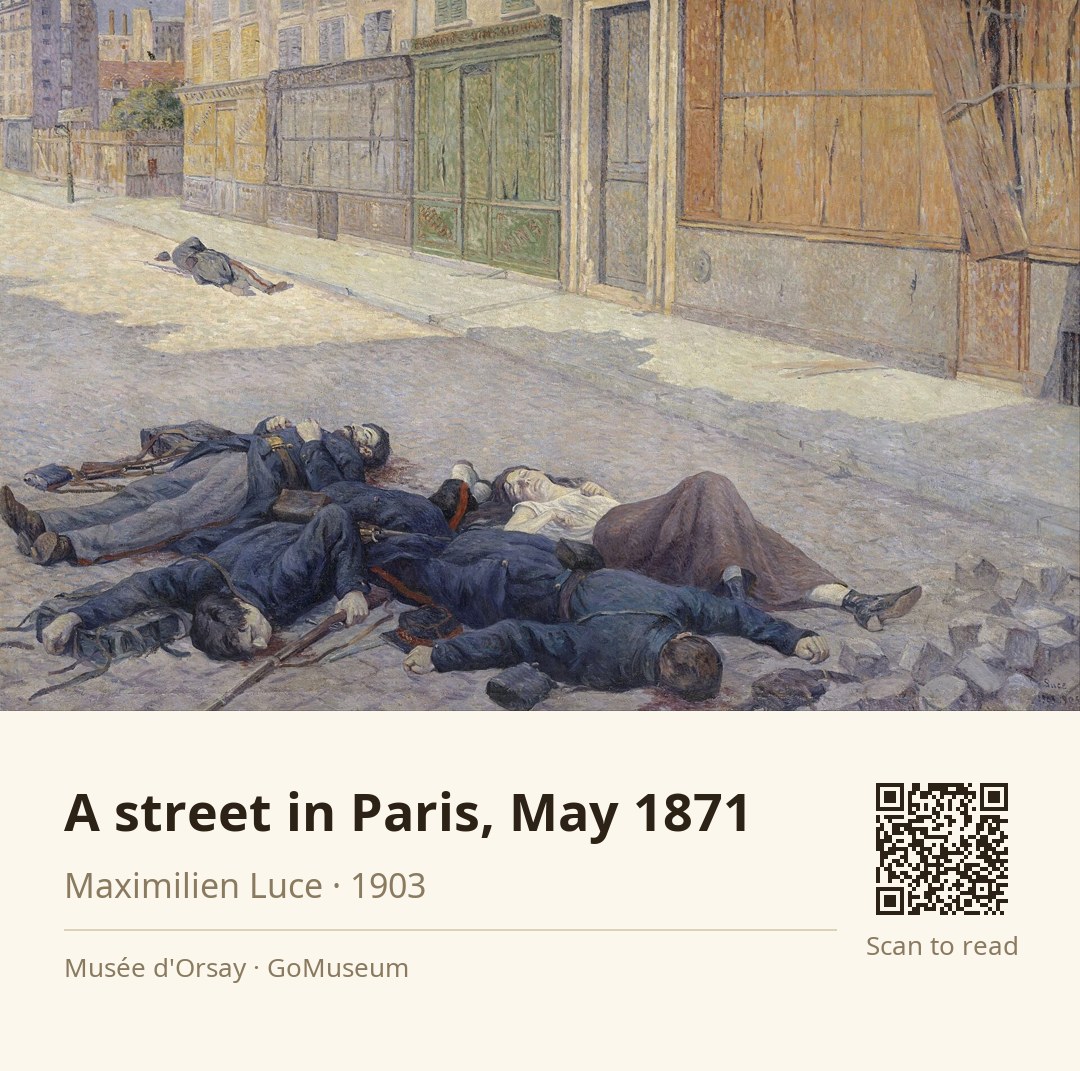
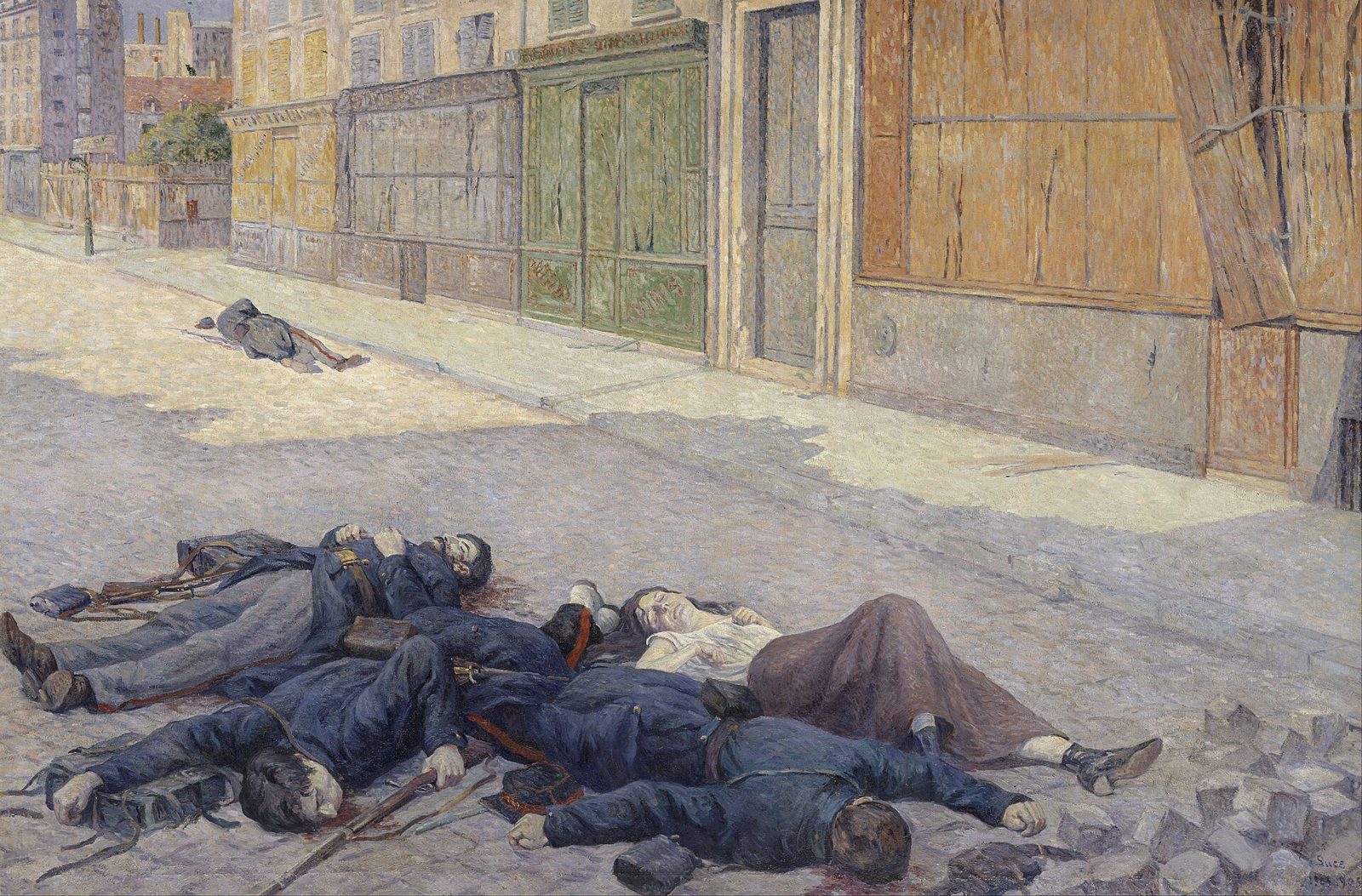
🎧 This work has audio narration — listen in the appTake a moment to really look at "A Street in Paris, May 1871" by Maximilien Luce. Notice how the scene is filled with bodies, strewn across the ground in various positions, their pale faces stark against the warm hues of the surrounding street. This isn’t just a depiction of chaos; it’s a haunting reminder of the human cost of conflict during the Paris Commune. What’s striking here is the way Luce contrasts the vibrant colors of the street with the lifeless forms of the fallen. The warm tones evoke a sense of life and energy, while the bodies, especially that of a woman lying parallel to the sidewalk, serve as a poignant reminder that civilians were caught in the crossfire of this brutal civil war. Luce’s choice to include a woman among the dead highlights the indiscriminate nature of violence, suggesting that the struggle for equality and justice claimed lives regardless of gender. As you stand here, consider the small details—like the overturned cobblestones in the lower right corner, remnants of barricades that once stood against the soldiers. And then, there’s that solitary cat on the roof, watching the scene unfold. What do you think it symbolizes? Is it indifference, survival, or perhaps a glimmer of hope amidst despair? Let that question linger as you absorb the weight of this powerful moment captured in time.
Maximilien Luce was a French Neo-impressionist artist born on March 13, 1858, in Paris. Coming from a modest background, he began his artistic journey as a wood-engraver before transitioning to painting, influenced by the Impressionist and later Pointillist movements. His early life was marked by a strong sense of social justice, which fueled his anarchist activism. Luce's military service in Brittany introduced him to influential figures, including future French President Alexandre Millerand, further shaping his political views.
In the mid-1880s, Luce embraced the Divisionist technique pioneered by Georges Seurat, producing vibrant works that captured the effects of light with emotional intensity. His painting "On the Bank of the Seine at Poissy" exemplifies this period, celebrated for its lyrical celebration of nature. Luce was an active member of the Société des Artistes Indépendants, where he rose to leadership roles, advocating for artistic freedom and inclusivity.
Despite his later return to a more traditional Impressionist style, Luce's contributions to Neo-impressionism and his commitment to social causes left a lasting impact on the art world. He continued to exhibit until his death on February 6, 1941, remaining a significant figure in the evolution of modern art and a voice for the marginalized.
Maximilien Luce's 'A Street in Paris, May 1871' was painted between 1903 and 1905, long after the harrowing events it depicts. This painting is the first and most renowned in a series that Luce dedicated to the Paris Commune, a pivotal moment in French history. The work entered the collections of the Musée d'Orsay in 1977, gifted by Frédéric Luce, Maximilien's son. Before that, it was displayed at the Musée d'Art Moderne de Paris from 1969 to 1977, and briefly at the Louvre. The painting captures the aftermath of the bloody week of May 21-28, 1871, when the French government violently suppressed the Commune, resulting in thousands of deaths.
This large-scale oil painting measures 151 by 225.5 centimeters, and its composition is striking. Luce employs a dynamic diagonal structure, leading the viewer's eye across the canvas, where bodies lie in various orientations, creating a sense of disarray. The brushwork is expressive, with warm, vibrant colors dominating the scene, contrasting sharply with the pale, lifeless faces of the fallen. The cadavers are shrouded in shadow, emphasizing their tragic fates against the lively backdrop of the street. Luce's choice to depict a woman among the dead serves to underscore the indiscriminate nature of violence during the Commune. The overturned cobblestones in the lower right corner hint at the barricades that once stood firm against the soldiers, while the solitary cat on the roof adds a layer of eerie calm to the chaos below. This juxtaposition of life and death, vibrancy and stillness, creates a haunting atmosphere that lingers in the viewer's mind.
Here's a fascinating tidbit: Maximilien Luce painted 'A Street in Paris, May 1871' long after the actual events of the Paris Commune. He was just a young teenager during the uprising, but the memories of the chaos and violence left a lasting impression on him.
Luce was only thirteen during the events of the Paris Commune, but he lived in Paris and witnessed the chaos and violence firsthand, which left a lasting impact on him. This personal connection to the events likely fueled his passion for portraying the human cost of the conflict in his art.
As an anarchist, Luce was deeply committed to social justice and often used his art to comment on political issues, particularly the struggles of the working class. His engagement with leftist politics not only informed the subjects he chose to depict but also the emotional intensity and urgency present in his works.