 Image: Sailko
Under the snow: farmyard in Marly-le-Roi
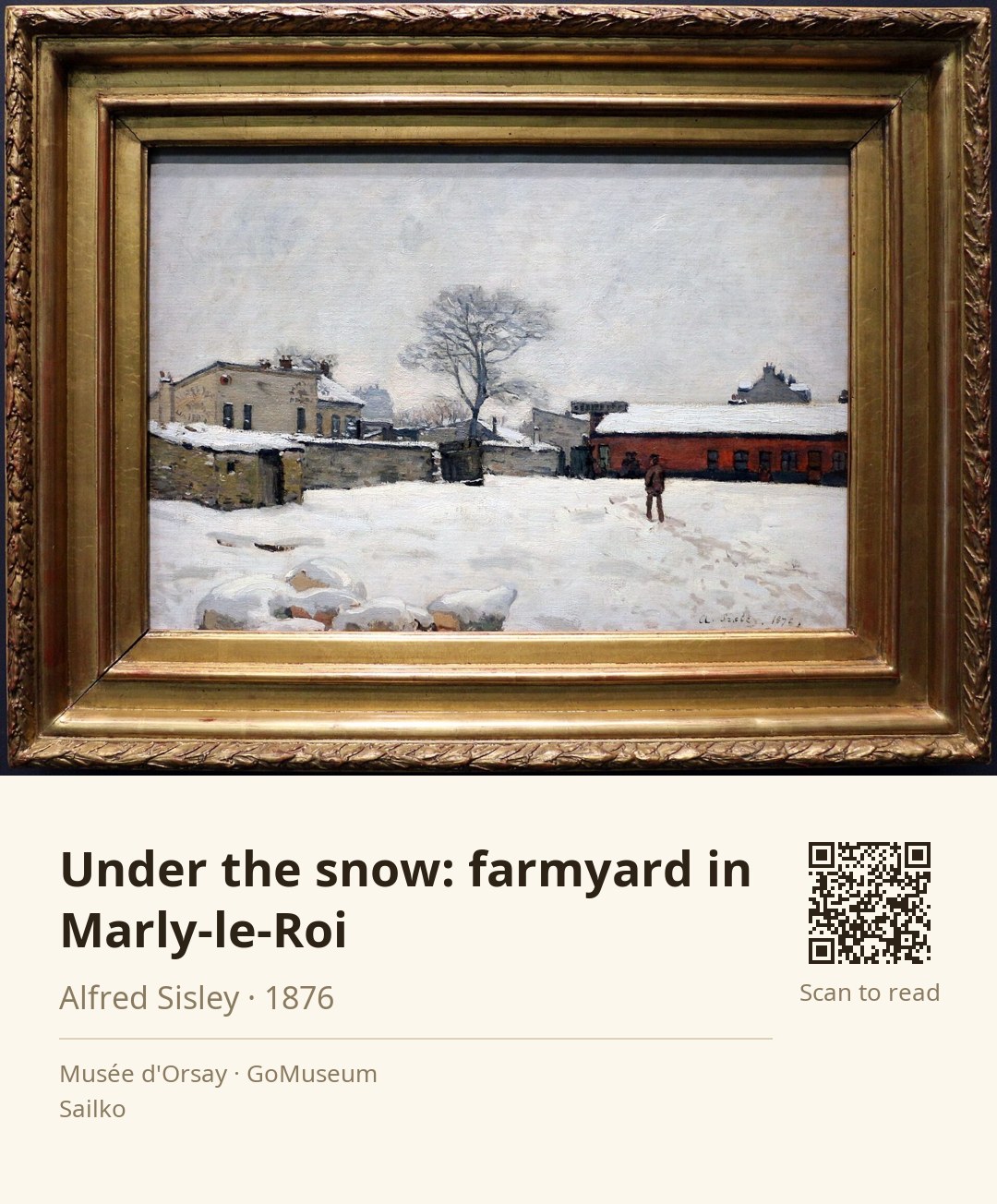
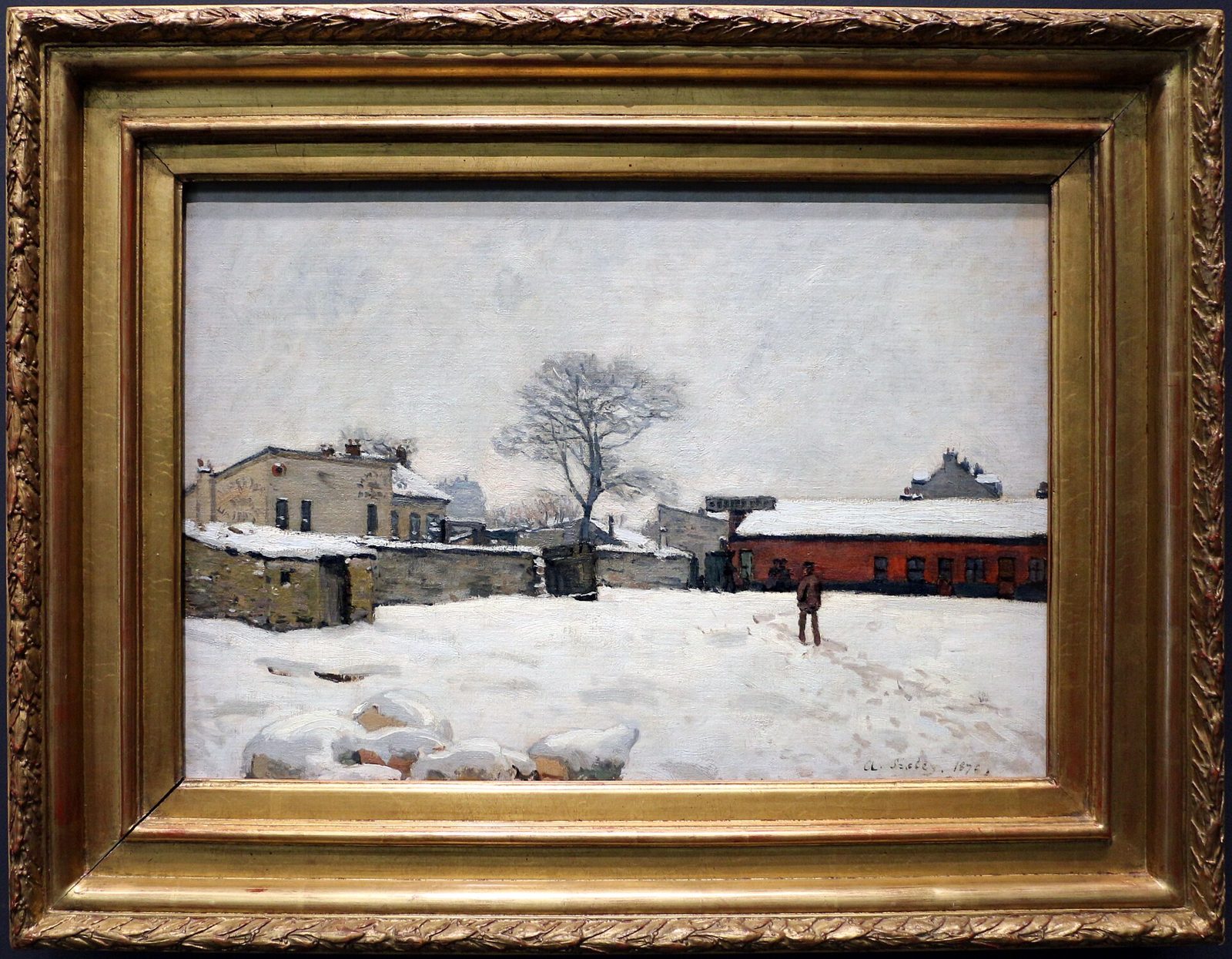
🎧 This work has audio narration — listen in the appA lone figure stands amidst the soft, white blanket of snow in Alfred Sisley's "Under the Snow: Farmyard in Marly-le-Roi." The muted palette of whites, grays, and browns captures the chill of winter, while a stone building with a sloped roof peeks through the snow to the left. The leafless tree in the background adds a stark contrast against the overcast sky, drawing your eye deeper into this serene landscape.
This scene reflects Sisley’s dedication to capturing the essence of nature in its quiet moments, emphasizing the stillness and beauty of a winter farmyard. The gentle brushwork creates texture, allowing the viewer to almost feel the cold air and the crunch of snow underfoot. Sisley, a key figure in the Impressionist movement, often painted en plein air, immersing himself in the landscapes he depicted.
Born in Paris to British parents, Sisley faced financial hardships throughout his life, relying on the support of patrons and friends. Despite this, he remained committed to his art, producing works that would later be celebrated for their emotional depth and technical skill. "Under the Snow" was created in 1876, a testament to his enduring passion for landscape painting.
Alfred Sisley was a British-born Impressionist landscape painter, born in Paris on October 30, 1839, to affluent expatriate parents. His dedication to painting outdoors, or en plein air, marked him as one of the most consistent figures within the Impressionist movement. Sisley’s work primarily focused on landscapes, with notable series depicting the River Thames, the floods at Marly-le-Roi, and the Gothic church at Moret-sur-Loing. Despite his talent, he struggled for recognition and financial stability throughout his life, often relying on the support of patrons and friends.
Sisley's artistic journey began in earnest after returning to Paris from London, where he had been sent to pursue a business career. Instead, he found his calling in art, studying at the École des Beaux-Arts and forming close friendships with fellow artists like Monet and Renoir. His personal life was marked by hardship, particularly after the Franco-Prussian War disrupted his family's financial support. He married Eugénie Lescouezec, and together they faced many challenges, including the loss of a child and Sisley’s ongoing financial instability.
Although Sisley’s work was largely overlooked during his lifetime, it has since gained significant appreciation, solidifying his place in art history as a key contributor to Impressionism and French landscape painting. His delicate depictions of nature continue to resonate, showcasing the beauty of the world around him. Sisley passed away on January 29, 1899, in Moret-sur-Loing, leaving behind a legacy that would flourish posthumously.
Alfred Sisley's 'Under the Snow: Farmyard in Marly-le-Roi' was created in 1876, a period when the Impressionist movement was gaining momentum. This particular work was part of a series of paintings that Sisley produced during his time in Marly-le-Roi, a location he frequently visited due to its picturesque landscapes. The painting was later exhibited in Paris in 1930 and again in 1939, showcasing Sisley's evolving reputation. Its provenance traces back through several owners, including Dollfus Zygomalas and Eduardo Mollard, before it became part of the collection of Enriqueta Alsop.
Sisley’s technique in 'Under the Snow' is a masterclass in capturing the essence of winter. The oil paint is applied with a delicate touch, allowing the snow to appear soft and inviting, almost like a plush blanket. The muted palette of whites, grays, and browns creates a harmonious atmosphere, evoking the chill of the season. Sisley’s brushwork is fluid and expressive, with each stroke contributing to the overall texture of the snow and the buildings. The composition is carefully balanced; the lone figure in dark clothing stands out against the bright snow, drawing the viewer’s eye into the scene. The leafless tree in the background adds a stark contrast, guiding your gaze deeper into the landscape. This thoughtful arrangement not only enhances the visual impact but also invites contemplation of solitude in nature.
One intriguing aspect of Sisley’s life is that despite his British heritage, he spent most of his artistic career in France and was never granted French citizenship during his lifetime. He made two attempts to naturalize, but both were unsuccessful, leaving him a British citizen until his death.
Being born to British parents in Paris, Sisley was immersed in both cultures, which shaped his artistic perspective and led him to primarily focus on French landscapes.
The Franco-Prussian War severely affected Sisley's financial situation, forcing him to rely on the support of patrons and friends for the rest of his life.