Richard Wagner
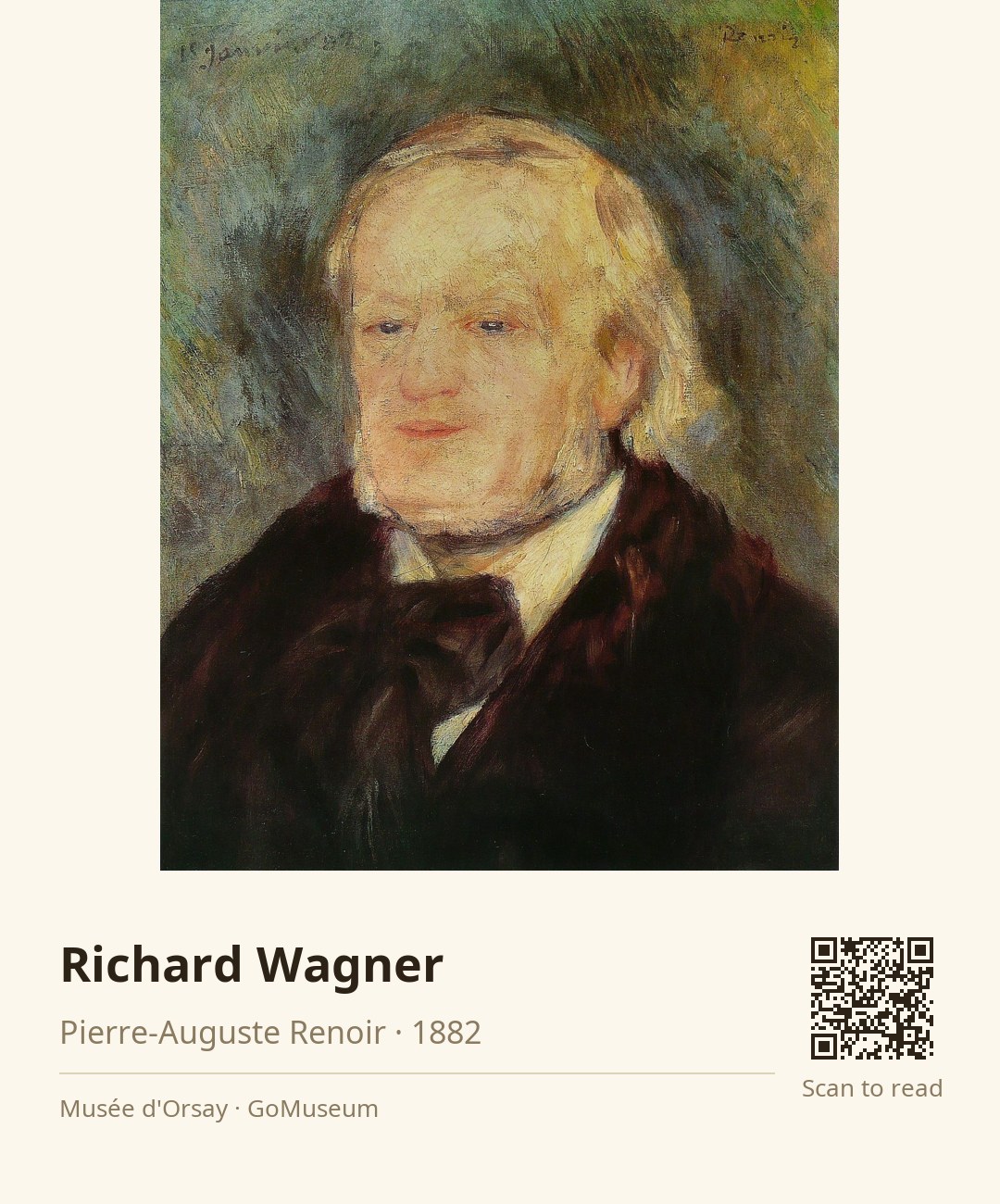
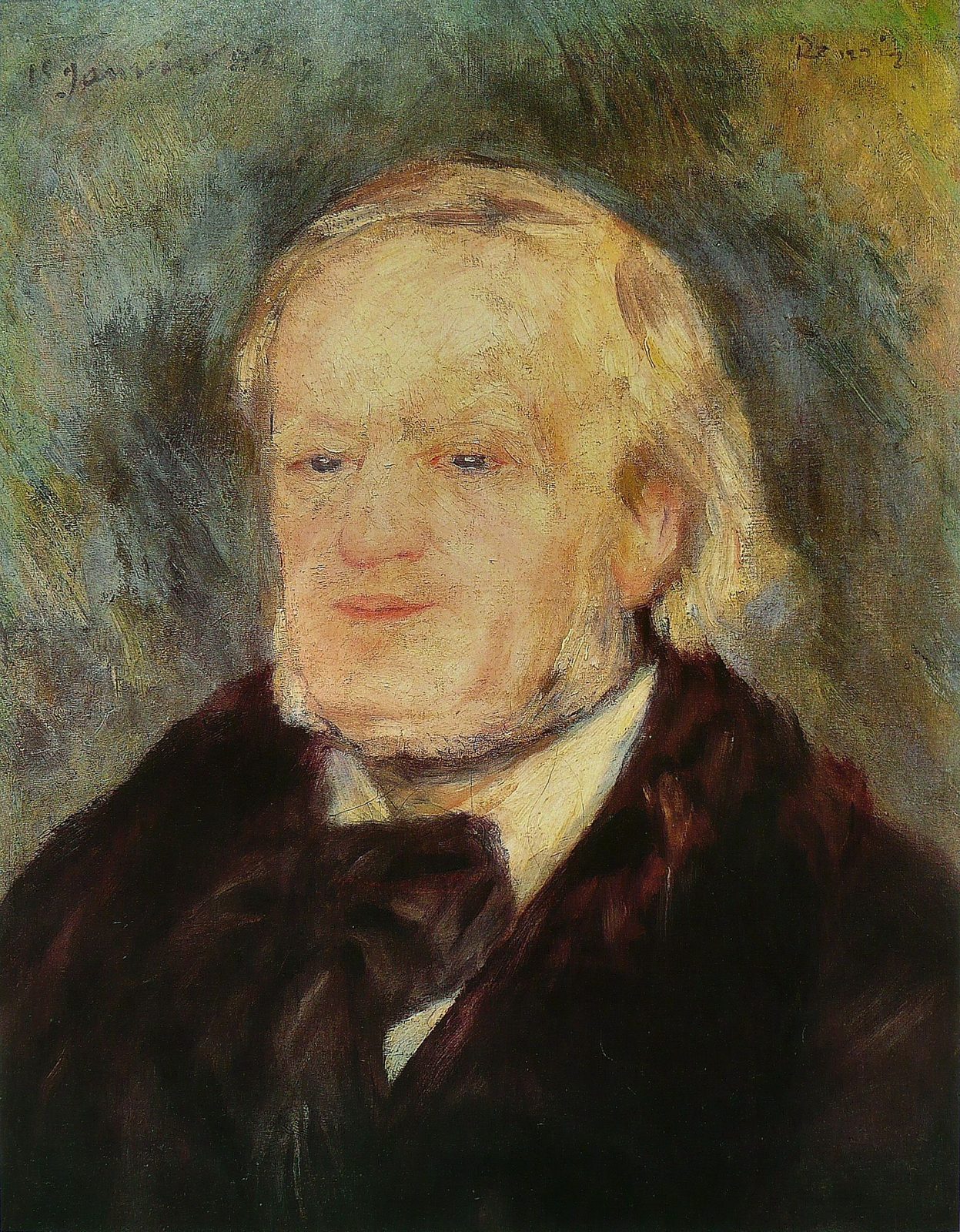
🎧 This work has audio narration — listen in the appTake a moment to really look at this portrait of Richard Wagner by Renoir. Notice the way the colors blend, especially that striking blue and rose palette. It’s not just a pretty picture; it captures the essence of Wagner's complex character.
Renoir painted this in just thirty-five minutes during a brief meeting in Palermo, where Wagner had just finished orchestrating "Parsifal." The urgency of that moment is palpable in the brushstrokes, reflecting both the admiration and the challenge of capturing such a monumental figure in music.
Wagner himself remarked that he looked like "a Protestant priest," which is a fascinating insight into how he viewed his own image—perhaps a mix of humility and self-awareness. This was a time when Renoir was still establishing his reputation, yet here he was, painting one of the most controversial composers of his day.
As you stand here, think about the fleeting nature of that encounter. What do you think it was like for Renoir to meet someone he admired so deeply? How does this moment resonate with the way we connect with art and artists today?
Pierre-Auguste Renoir, born on February 25, 1841, in Limoges, France, emerged as a pivotal figure in the Impressionist movement. His early life in a modest family led him to Paris, where he honed his artistic skills amidst the masterpieces of the Louvre. Initially apprenticed in a porcelain factory, Renoir's passion for painting flourished, particularly after studying under Charles Gleyre, where he befriended fellow artists like Monet and Sisley.
Renoir's work celebrated feminine beauty and vibrant social scenes, exemplified in iconic pieces like "Dance at Le Moulin de la Galette." Despite facing criticism early on, he gained recognition, especially after participating in the first Impressionist exhibition in 1874. His style evolved over the years, transitioning towards realism influenced by classical masters like Raphael.
Throughout his life, Renoir balanced personal struggles, including health issues, with a prolific output, reportedly creating around four thousand works. He became a beloved figure in art history, known for his warm palette and expressive brushwork. Renoir passed away on December 3, 1919, leaving a legacy that continues to inspire artists and art lovers alike.
In January 1882, Pierre-Auguste Renoir found himself in Palermo, Italy, where he had a rare opportunity to meet the renowned composer Richard Wagner. This encounter was not without its challenges; after two failed attempts to secure a sitting, Renoir finally gained Wagner's attention. The composer, having just completed the orchestration of 'Parsifal,' agreed to pose for Renoir but under the condition that the session would last no longer than twenty minutes. In a remarkable feat, Renoir completed the portrait in just thirty-five minutes.
As you gaze at this portrait, pay attention to Renoir's masterful use of color and light. The brushwork is both fluid and spontaneous, capturing the essence of Wagner's character in a way that feels almost alive. The striking blue and rose palette creates a vibrant contrast that draws your eye, while the soft blending of colors gives the impression of warmth and depth. Renoir's choice of composition, focusing on Wagner's bust, allows for an intimate connection between the viewer and the subject. The slightly tilted angle of Wagner's head adds dynamism, suggesting a moment of thoughtfulness or contemplation. This technique not only showcases Renoir's skill but also reflects the urgency of the moment—an artist striving to encapsulate the spirit of a musical genius in a fleeting encounter.
Did you know that Renoir had to wait quite a while before he could paint Richard Wagner? During his trip to Palermo in 1882, he faced two failed attempts to meet the composer. But when he finally got his chance, Wagner had one quirky condition: the portrait session could last no longer than twenty minutes!
Wagner humorously remarked that he looked like 'a Protestant priest,' indicating his self-awareness and perhaps a hint of humility about his own image.
Renoir had to complete the portrait in just thirty-five minutes due to Wagner's tight schedule, which added a layer of urgency and spontaneity to the painting process.