Princess Sabra
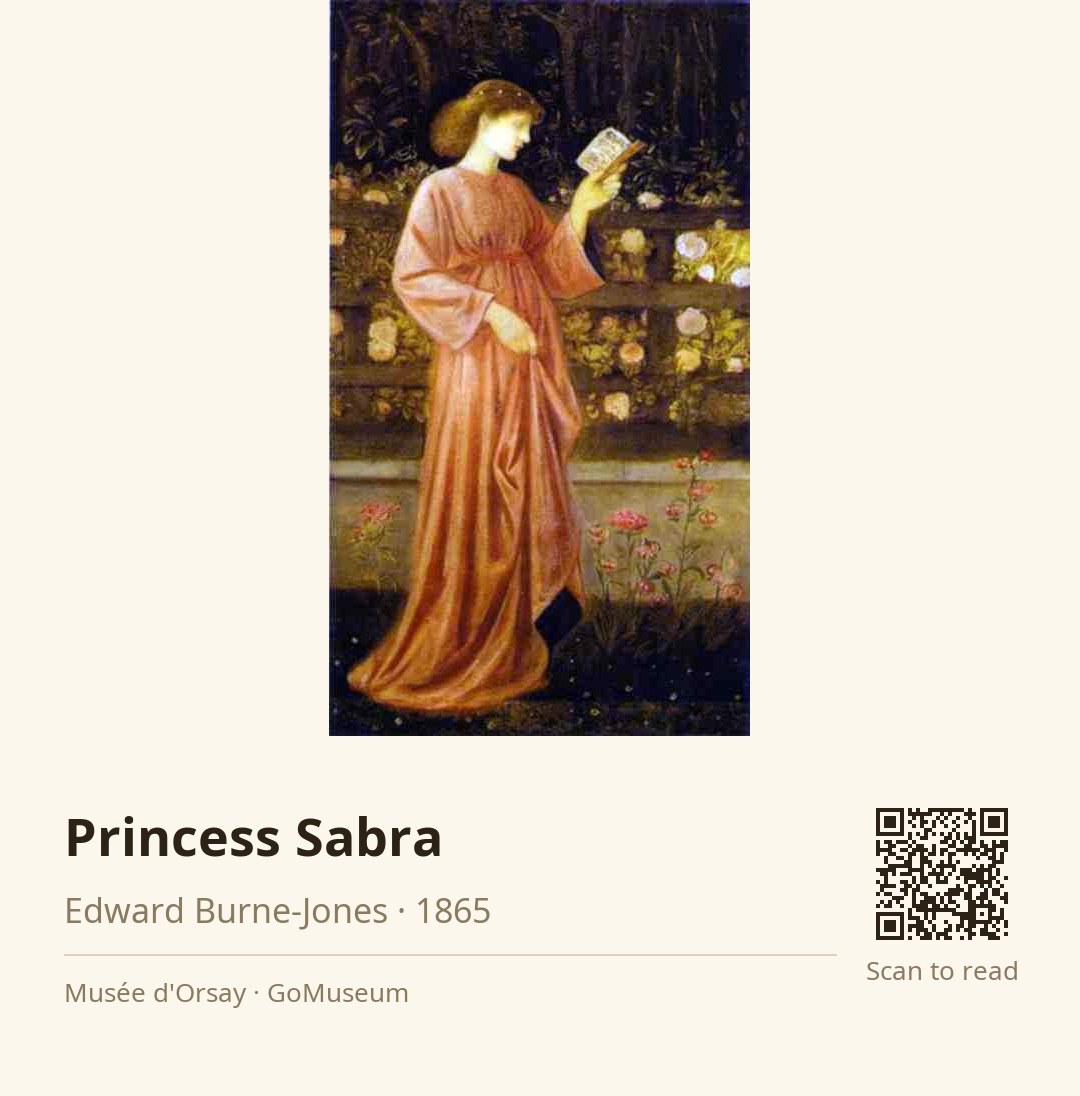
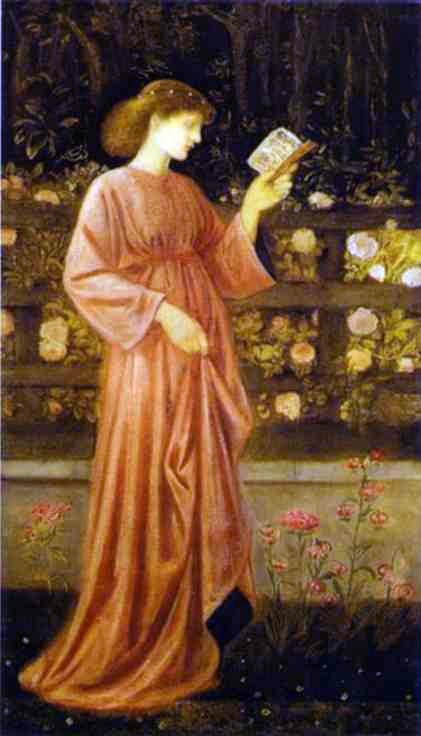
🎧 This work has audio narration — listen in the appTake a moment to really look at "Princess Sabra" by Edward Burne-Jones. Notice how her gaze seems to draw you in, almost as if she’s inviting you into her world. Look closely at the intricate details of her flowing gown and the delicate patterns that adorn it. Each swirl and fold tells a story of elegance and longing, capturing a moment suspended in time. These details matter because they reflect Burne-Jones's deep fascination with medieval themes and the romantic ideals of beauty. His work often explores the tension between desire and despair, and here, Princess Sabra embodies that struggle. The softness of her features contrasts with the weight of her situation, evoking empathy and intrigue. Burne-Jones created this painting in 1865, during a period when he was heavily influenced by the Pre-Raphaelite Brotherhood, which sought to revive the beauty and detail of earlier art. This piece is a perfect example of how he merged narrative and aesthetic, inviting viewers to not just see, but feel. As you stand here, think about what emotions the princess stirs within you. What story do you imagine lies behind her serene expression?
Sir Edward Coley Burne-Jones, born on August 28, 1833, in Birmingham, was a pivotal figure in the Pre-Raphaelite movement, known for his enchanting paintings and intricate designs. Orphaned shortly after birth, he was raised by his father and a devoted housekeeper, which shaped his sensitive and imaginative character. Initially pursuing a career in theology, Burne-Jones was inspired by the works of Dante Gabriel Rossetti and ultimately chose art, forming a lifelong partnership with William Morris.
His early works, influenced by romantic literature and medieval themes, showcased his talent for detail and narrative depth. By the 1870s, he had developed a distinctive style, marked by ethereal figures and dreamlike landscapes, earning acclaim in the Aesthetic Movement. His notable works, including "The Beguiling of Merlin," were exhibited at the Grosvenor Gallery, establishing him as a leading artist of his time.
Burne-Jones also excelled in decorative arts, contributing significantly to stained glass design, which revitalized this craft in the 19th century. His legacy endures in churches across the UK and beyond. Despite personal struggles, including a tumultuous affair and critical backlash, he remained a respected figure until his death on June 17, 1898. His funeral at Westminster Abbey marked a historic recognition of an artist's contribution to culture, solidifying his place in art history.
Edward Burne-Jones painted 'Princess Sabra' in 1865, during a pivotal time in his artistic journey. This piece emerged from his close ties with the Pre-Raphaelite Brotherhood, a group dedicated to reviving the intricate beauty of earlier art. His reputation soared after exhibiting there, particularly with pieces like 'The Beguiling of Merlin.' However, the reception of his work was not always warm; he faced harsh criticism in the press, especially during the 1870s, which led him to retreat from public exhibitions for a time. Despite this, 'Princess Sabra' remains a testament to his evolving style, showcasing his fascination with medieval themes and romantic ideals. The painting's journey through various collections reflects its enduring appeal, and it continues to be celebrated for its emotional depth and intricate detail.
As you gaze at 'Princess Sabra,' notice the way Burne-Jones's brushwork creates a sense of movement and fluidity. The delicate folds of her gown are rendered with a meticulous attention to detail, each stroke contributing to the overall elegance of her form. The use of soft, muted colors enhances the ethereal quality of the piece, inviting you to linger on the textures and patterns that adorn her attire. The composition is carefully structured, drawing your eye to her serene expression while the background remains subtly blurred, emphasizing her presence. This technique not only highlights the subject but also evokes a sense of longing and introspection. Burne-Jones’s choice of light plays a crucial role, casting gentle shadows that add depth and dimension, making the figure almost come alive. The scale of the painting allows for an intimate connection, as if you are sharing a moment with Princess Sabra herself.
Did you know that Edward Burne-Jones, the artist behind 'Princess Sabra,' initially set out to become a church minister? It was only after being inspired by the works of Dante Gabriel Rossetti that he pivoted to art. Imagine if he had stuck to theology—how different would the art world be today?
The affair with Maria Zambaco, which ended dramatically with her suicide attempt, caused Burne-Jones significant personal turmoil and led him to withdraw from public exhibitions for several years. This period of retreat was marked by harsh criticism of his work, particularly in the 1870s, which affected his public reputation and artistic output.
William Morris was not only a close friend but also a significant collaborator in Burne-Jones's career, as they founded a decorative arts company together. Their partnership allowed Burne-Jones to explore various artistic mediums, including stained glass and tapestries, which enriched his painting style and broadened his artistic influence.