Little Bretons Sitting
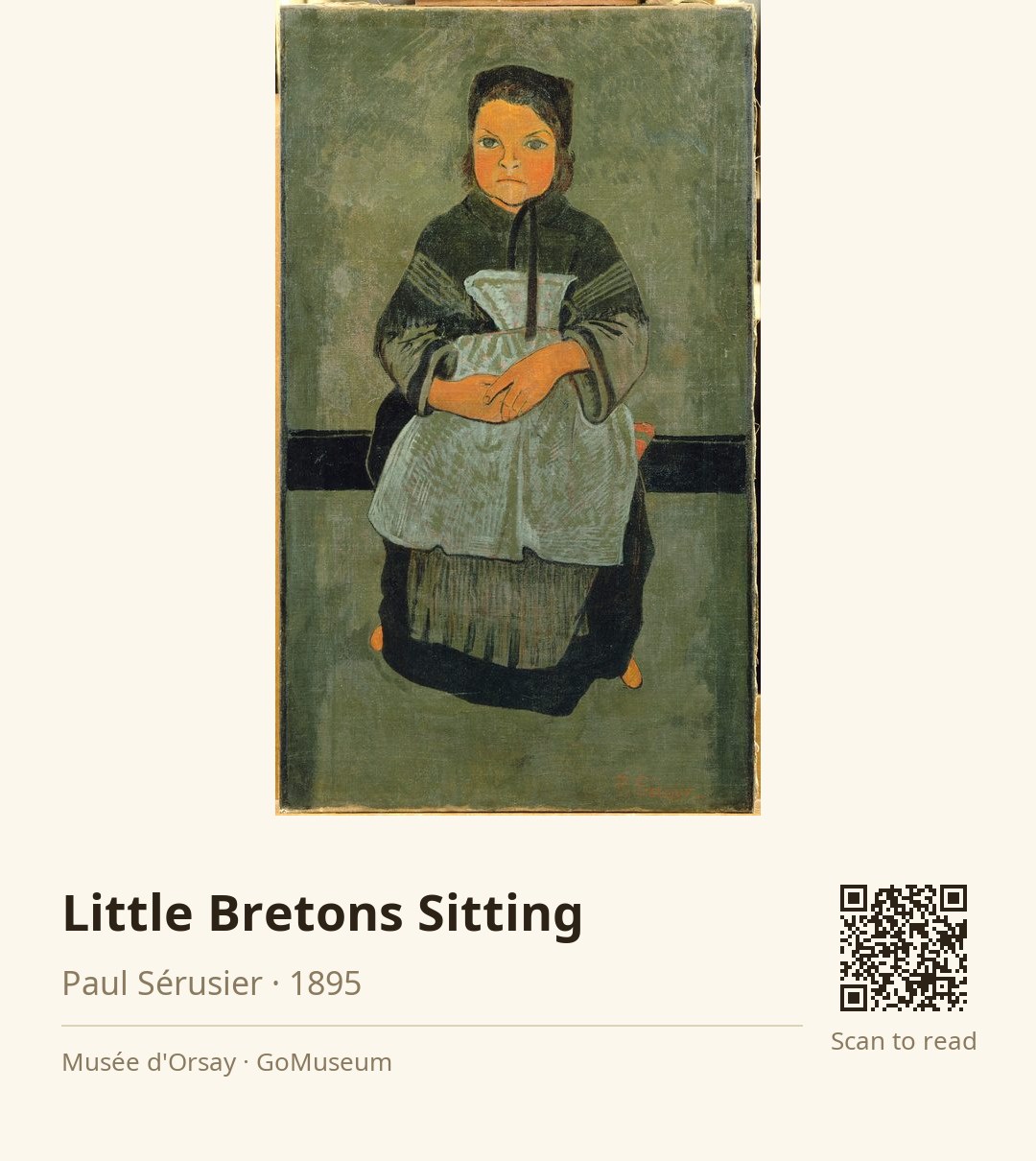
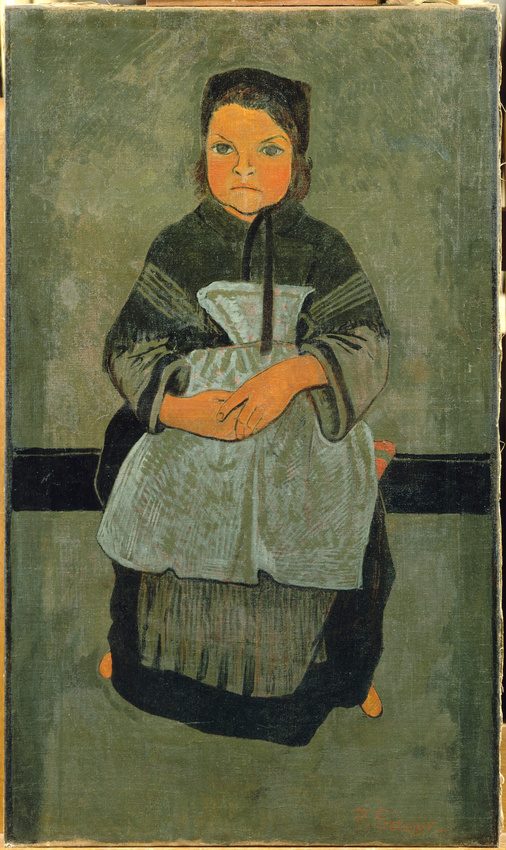
🎧 This work has audio narration — listen in the appIn 1895, Paul Sérusier captured the essence of a young Breton girl in "Little Bretons Sitting," a striking portrait that draws you in with its simplicity. The girl, dressed in a dark dress with a high collar and a white apron, sits with her hands clasped in her lap, her serious gaze fixed forward. The muted backdrop allows her presence to dominate the canvas, emphasizing her stillness and poise.
This focus on the girl’s expression and posture reveals the cultural significance of her attire, which reflects the traditional Breton dress, symbolizing her roots and the rural life of Brittany. Sérusier’s choice of earthy tones—greens, browns, and blacks—further grounds the work in the natural landscape of her homeland, creating a connection between the subject and her environment.
Sérusier was part of the Nabis movement, which sought to transcend mere representation and delve into emotional and symbolic depth. This painting, exhibited at the Salon des Indépendants the same year it was created, showcases his early exploration of these ideas, setting the stage for his later, more abstract works.
Consider how this young girl’s serious demeanor might reflect the weight of tradition in her life. What stories might she hold within her silence?
Paul Sérusier was a French painter born on November 9, 1864, in Paris, who became a pivotal figure in the evolution of abstract art. A student at the Académie Julian, he was influenced by Paul Gauguin during his time at the Pont-Aven artist colony, where he created "The Talisman," a work that exemplified Cloisonnism and hinted at pure abstraction. Sérusier was a founding member of the Nabis group, which sought to express deeper meanings through color and form, moving beyond mere representation. His character was marked by a friendly disposition and a collaborative spirit, fostering connections with fellow artists like Pierre Bonnard and Édouard Vuillard.
Throughout his career, Sérusier engaged in teaching and writing, publishing "ABC de la peinture" in 1921, which reflected his artistic philosophy. He spent his later years in Brittany, where he continued to explore themes of spirituality and symbolism in his work. Sérusier's contributions to the Nabis movement and his innovative approaches to color and composition solidified his place in art history as a precursor to modern abstraction, influencing generations of artists who followed. He passed away on October 7, 1927, leaving behind a legacy that bridged the gap between Impressionism and the avant-garde.
Sérusier's technique in 'Little Bretons Sitting' is strikingly smooth, with a deliberate brushwork that creates clear outlines around the girl, emphasizing her presence. The earthy palette of greens, browns, and blacks is not just a choice of color but a reflection of the Breton landscape, grounding the subject in her environment. The muted background serves to isolate the girl, drawing your focus to her serious expression and poised hands. The vertical format of the painting enhances the sense of stature and importance of the young girl, making her the undeniable focal point. Sérusier's careful handling of oil paint allows for a depth that invites viewers to ponder the emotional weight behind her gaze, while the simplicity of the composition underscores the cultural significance of her traditional attire.