Landscape at Eragny
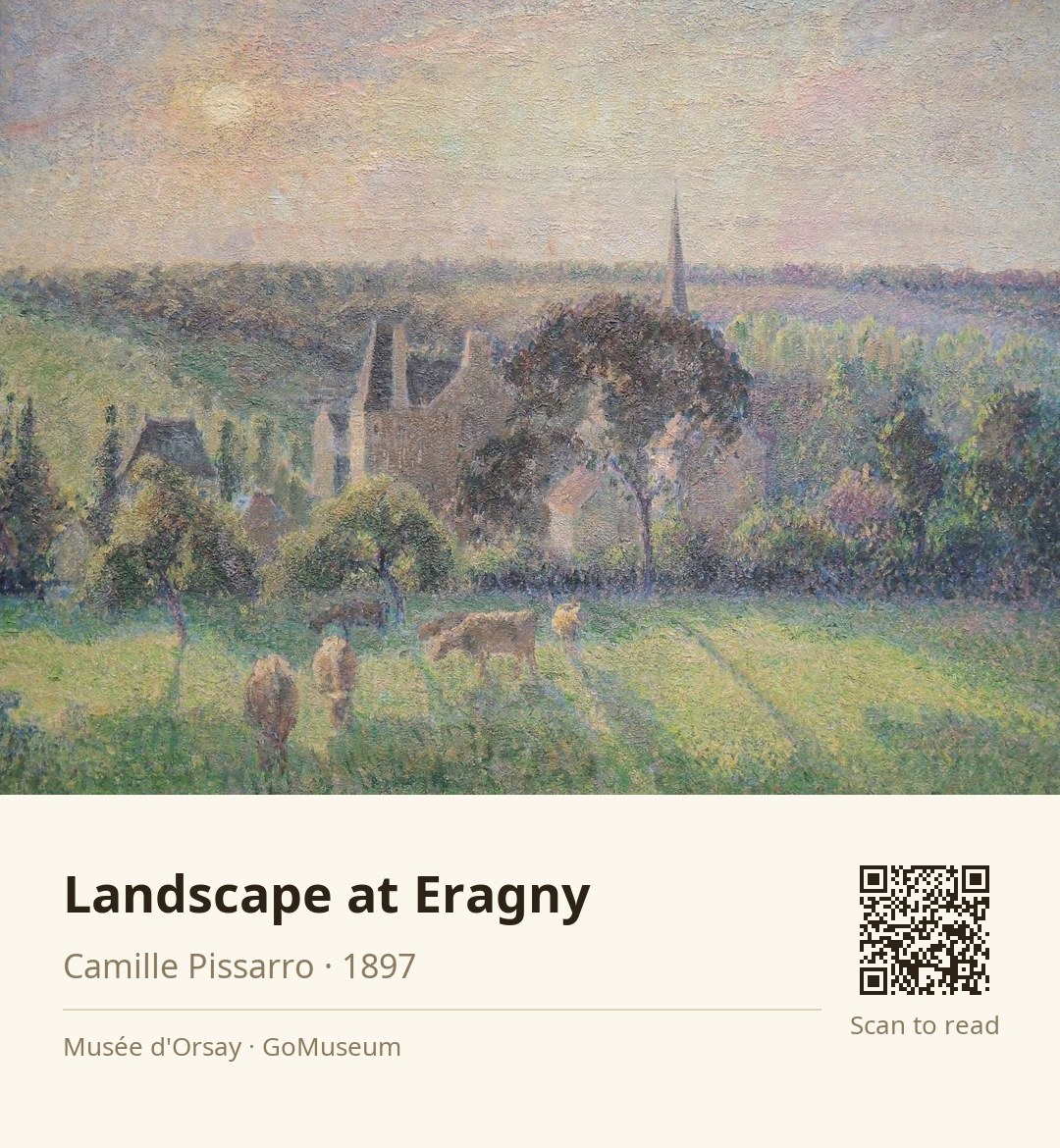
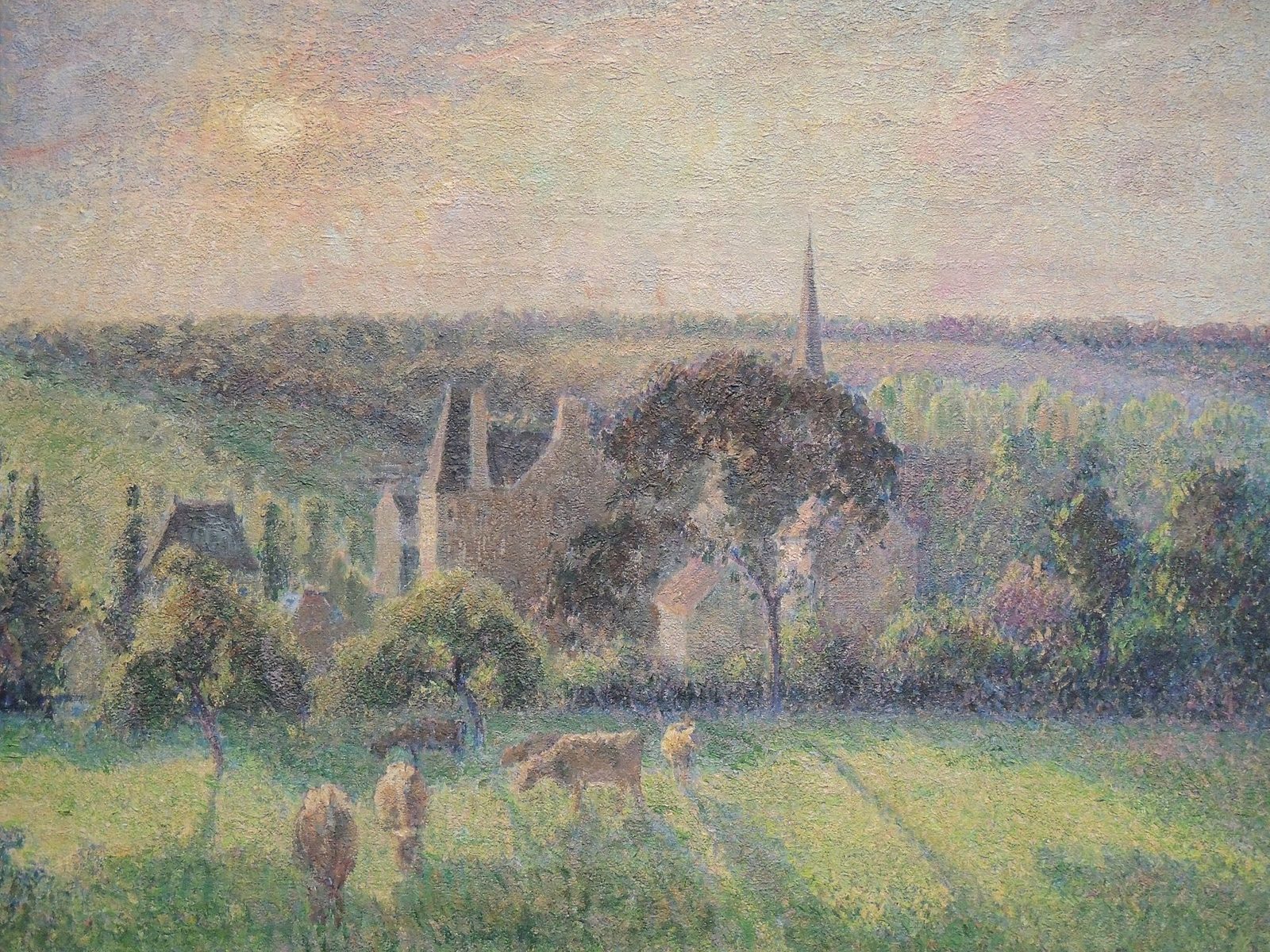
🎧 This work has audio narration — listen in the appA cluster of buildings rises gently against the horizon in Camille Pissarro's "Landscape at Eragny," with a church spire reaching skyward above the serene rural scene. Cows graze lazily in a sunlit field, their shadows stretching across the vibrant greens and soft pastels that define this impressionistic landscape. The delicate brushwork creates a sense of harmony, blending colors that evoke the tranquility of the French countryside.
This painting captures a moment in time, reflecting Pissarro's deep appreciation for rural life and the natural world. The church, likely a focal point for the local community, symbolizes the connection between the land and its inhabitants. The grazing cows and the lush meadow not only depict the pastoral beauty of Eragny but also highlight the simplicity and serenity of everyday life in the late 19th century. Pissarro's choice of colors and light emphasizes the peacefulness of the scene, inviting viewers to experience the calm of this idyllic setting.
Created in 1897, "Landscape at Eragny" showcases Pissarro's mastery of impressionism, a style he helped define while also serving as a mentor to many prominent artists of his time.
Jacob Abraham Camille Pissarro, born on July 10, 1830, in Saint Thomas, was a Danish-French painter pivotal to the Impressionist and Neo-Impressionist movements. His artistic journey began under the influence of masters like Courbet and Corot, and he later collaborated with Seurat and Signac, embracing Neo-Impressionism at age 54. Pissarro's dedication to depicting rural life and the working class set him apart; he painted everyday scenes without grandeur, focusing on authenticity.
As a mentor, Pissarro played a crucial role in the development of fellow artists, including Cézanne, Gauguin, and Van Gogh, earning him the title "dean of the Impressionist painters." His warm personality and wisdom made him a father figure within the art community. Pissarro was the only artist to exhibit in all eight Paris Impressionist exhibitions from 1874 to 1886, solidifying his legacy. Despite facing criticism for his subjects, he remained committed to his vision, advocating for a personal approach to classicism. Pissarro passed away on November 13, 1903, leaving an indelible mark on art history.
In "Landscape at Eragny," Pissarro employs oil paint on canvas, a medium that allows for rich color blending and texture. His brushwork is particularly noteworthy; he uses small, distinct strokes that create a sense of movement and life within the scene. The vibrant greens and soft pastels evoke the warmth of a sunny day, while the delicate layering of colors enhances the impressionistic quality. Pissarro's choice of composition is intentional; the church spire draws the eye upward, creating a vertical dynamic that contrasts with the horizontal lines of the grazing cows and the meadow. This interplay of shapes and colors invites viewers to not just see, but feel the tranquility of the landscape, making it a masterful representation of rural serenity.
James Gay Sawkins, a British painter and geologist, is thought to have inspired Pissarro during his youth in St. Thomas.