Haystacks, end of Summer
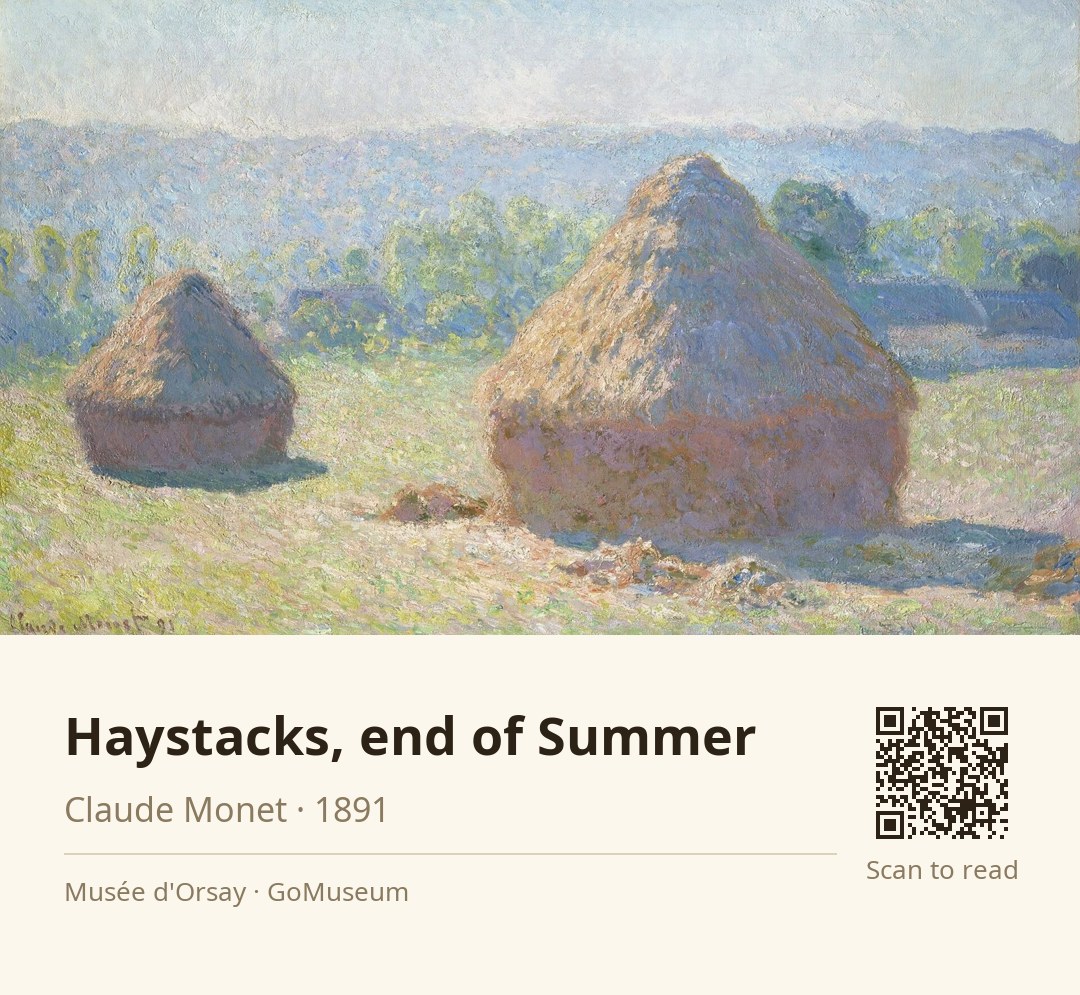
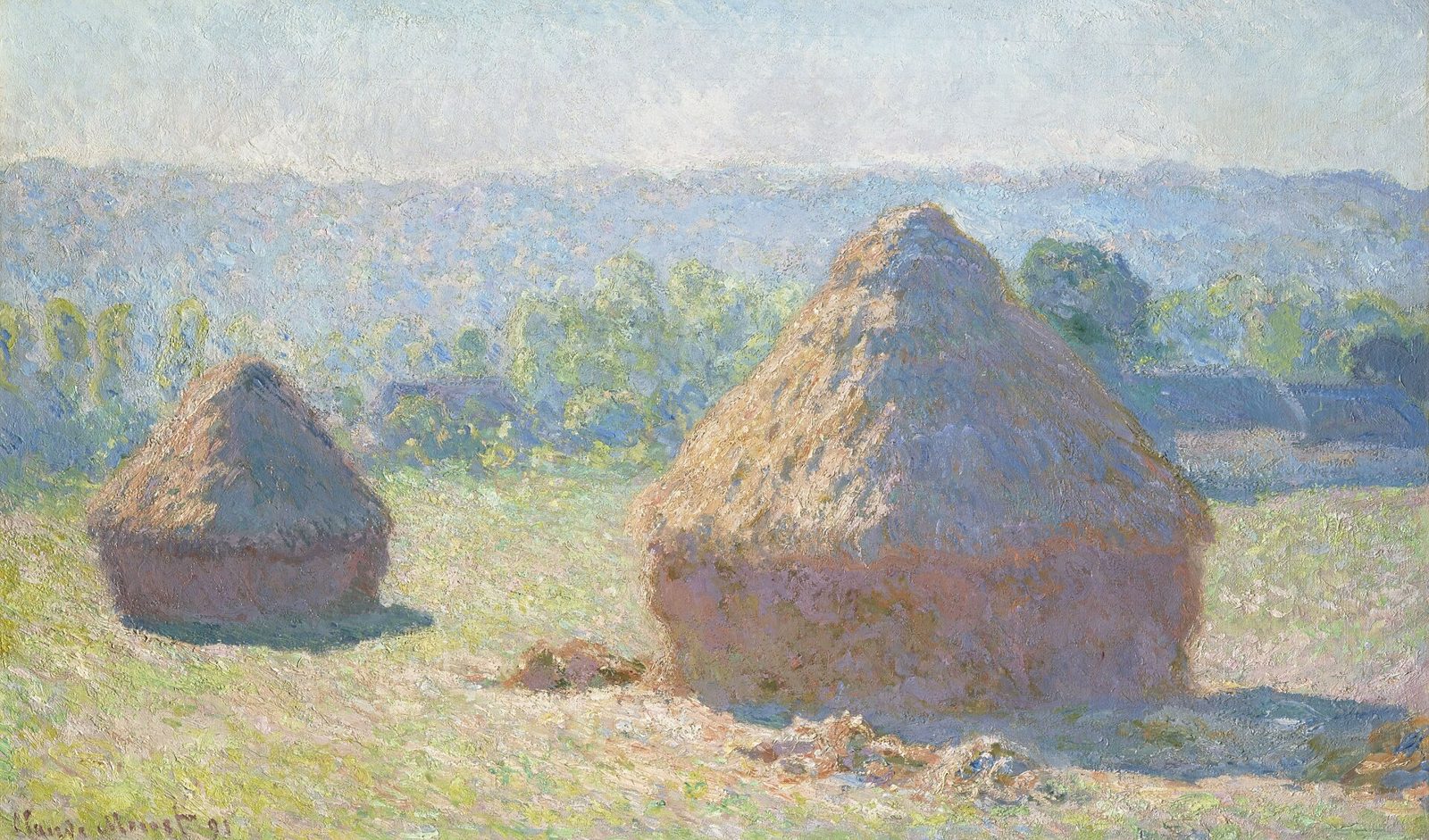
🎧 This work has audio narration — listen in the appTake a moment to really look at Monet's "Haystacks, End of Summer." Notice how the golden hues of the haystacks almost seem to glow against the soft blues and greens of the landscape. The way he captures the light filtering through the scene is nothing short of magical. These details matter because they reflect Monet's obsession with light and its changing qualities throughout the day and seasons. This painting is part of his series on haystacks, where he painted the same subject multiple times to explore how light transforms it. Here, you can almost feel the warmth of late summer, a fleeting moment preserved on canvas. Created in 1891, this piece is a testament to Monet's innovative approach as a founder of Impressionism. He sought to express his perception of nature, moving away from traditional techniques that focused on detail and realism. Instead, he embraced the spontaneity of the moment, capturing the essence of the scene rather than its exact likeness. As you stand here, think about how Monet's work invites you to see the world differently. What feelings or memories does this scene evoke for you?
Oscar-Claude Monet, born on November 14, 1840, in Paris, was a pioneering French painter and a founder of Impressionism, a movement that transformed the art world. Raised in Le Havre, he developed a passion for nature and painting early on, encouraged by his mother, while his father hoped he would pursue a business career. After his mother's death in 1857, Monet moved in with his aunt, who supported his artistic ambitions.
Monet's career began with caricatures, but he soon sought formal training, studying under Eugène Boudin, who introduced him to plein air painting. His breakthrough came in 1866 with "La Femme à la robe verte," which garnered attention at the Salon. The term "Impressionism" originated from his work "Impression, Sunrise," exhibited in 1874, marking a shift away from traditional art.
Throughout his life, Monet focused on capturing the essence of light and color in nature, creating series of paintings that depicted the same scenes under varying conditions, such as his famous haystacks and water lilies. He settled in Giverny in 1883, where he cultivated a beautiful garden that became his muse. Despite personal hardships, including the loss of loved ones and health issues, Monet's relentless dedication to his craft solidified his place in art history as a master of modernism, influencing countless artists and leaving a lasting legacy. He died on December 5, 1926, in Giverny, celebrated as one of the most significant figures in art.
Monet's 'Haystacks, End of Summer' was created in 1891, a pivotal year for the artist as he was fully immersed in his exploration of light and color. This particular painting was part of a series that he painted in Giverny, where he had settled into a life dedicated to capturing the essence of the French countryside. The work was first exhibited at the Galerie Durand-Ruel in Paris, a significant venue for Impressionist artists, in the same year it was completed. The reception was mixed; while some critics appreciated the innovative approach, others were puzzled by the loose brushwork and lack of detail, typical of the Impressionist style. Over the years, the painting changed hands several times, passing through notable collections, including that of the Comtesse de Brécey and Paul Durand-Ruel himself, who played a crucial role in promoting Monet's work.
As you take a closer look at 'Haystacks, End of Summer,' notice the brushwork that seems almost alive, each stroke contributing to a dynamic interplay of light and shadow. Monet employed a technique known as 'broken color,' where he applied dabs of pure color side by side, allowing the viewer's eye to blend them from a distance. This method creates a shimmering effect, making the haystacks appear to glow in the warm late summer light. The composition is structured yet fluid, guiding your gaze through the landscape with gentle undulations, mimicking the natural contours of the field. The scale of the painting, nearly 60 by 100 centimeters, invites you to step closer, immersing you in the scene. The soft blues and greens contrast beautifully with the warm golds of the hay, enhancing the feeling of warmth and tranquility that Monet aimed to convey. It's as if he captured a fleeting moment, a whisper of summer that invites you to linger.
This painting is part of a series where he painted the same subject under varying conditions, a method that profoundly influenced future generations of artists. By focusing on the fleeting effects of light on the haystacks, Monet shifted the art world’s perspective from detailed realism to a more subjective interpretation of nature. His work inspired countless artists to explore the interplay of color and light, marking a significant departure from traditional techniques and paving the way for modern art movements. Remember, this isn’t just a painting; it’s a moment in time, a glimpse into Monet’s vision that changed how we see the world around us.
One fascinating tidbit about 'Haystacks, End of Summer' is that Monet painted multiple versions of the same scene at different times of day and in various seasons. This practice wasn't just an artistic choice; it stemmed from his obsession with how light transforms the landscape.
Monet painted multiple versions of the same haystack scene at different times of day and in various seasons, showcasing his obsession with how light transforms the landscape throughout the day.