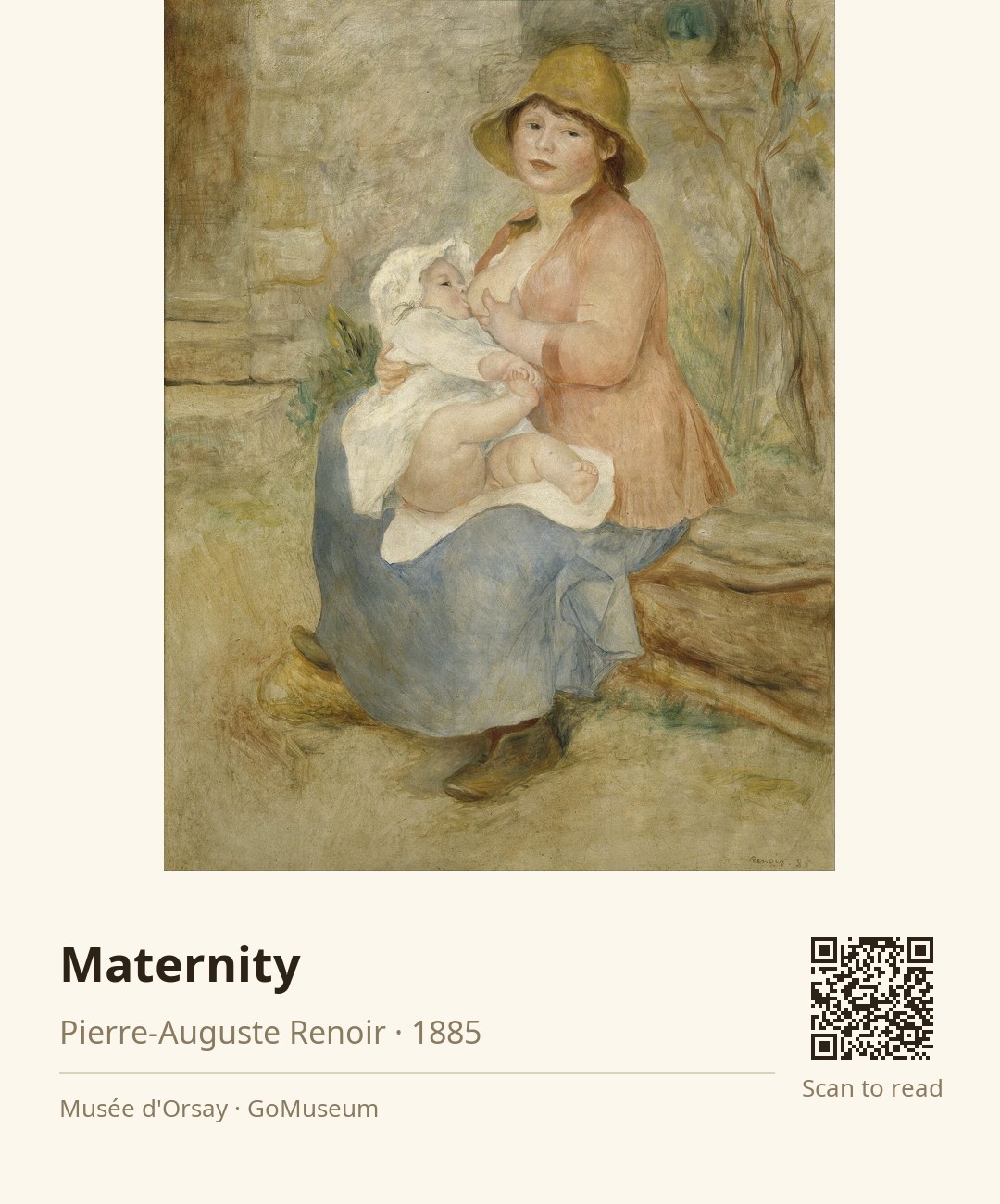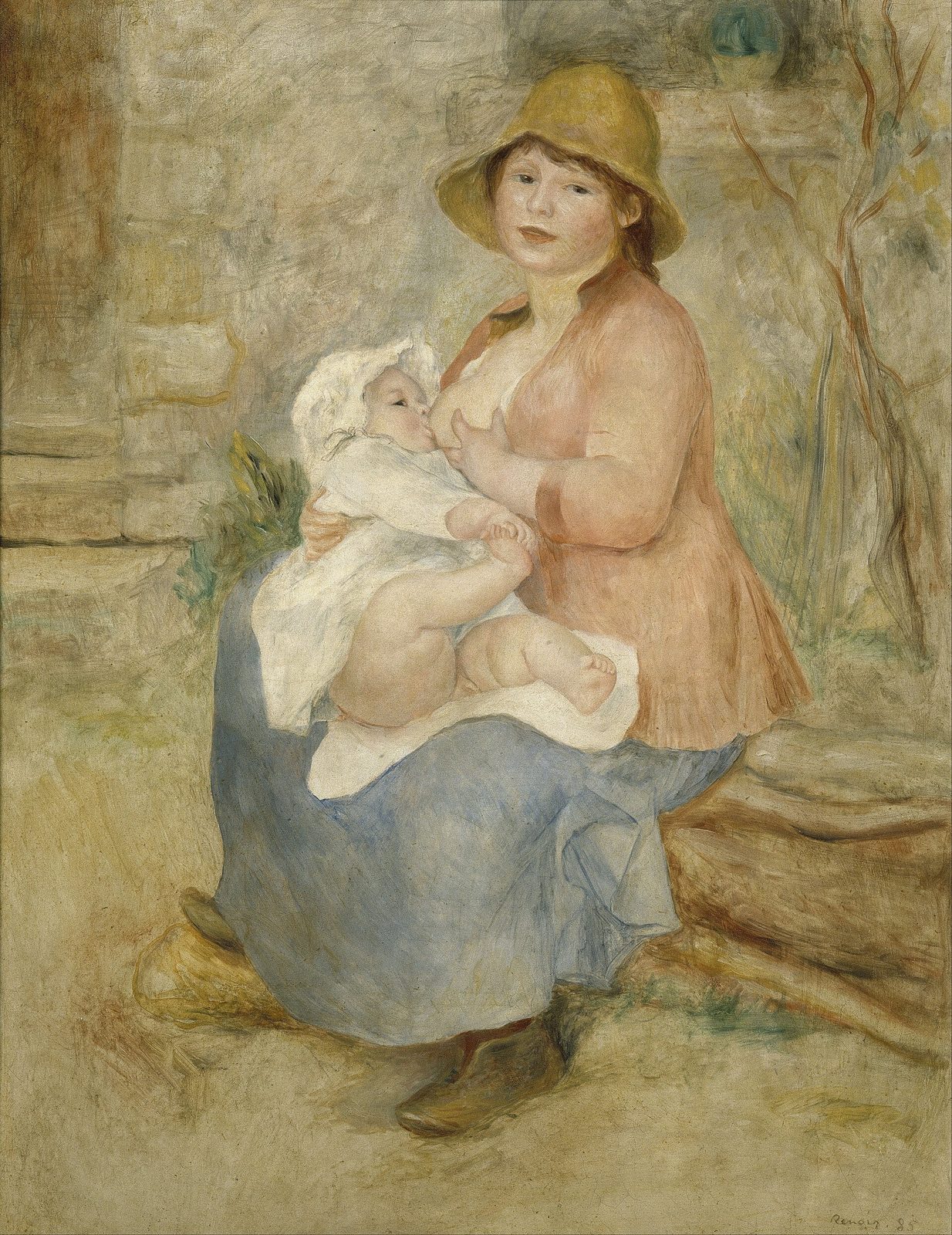
Take a moment to really look at Renoir's "Maternity." Notice the way the mother’s gentle gaze meets the viewer's, cradling her child with such tenderness. The soft brushstrokes create a warm, almost glowing atmosphere, inviting you into this intimate moment. This connection between mother and child is more than just a depiction; it speaks to the universal bond of love and care that transcends time. Renoir, known for celebrating feminine beauty, captures not just a scene, but an emotion that resonates deeply with anyone who has experienced the joys and challenges of parenthood. Painted in 1885, during a time when societal roles were rigidly defined, Renoir's choice to focus on this intimate domestic scene was revolutionary. It reflects a shift towards valuing personal experience and emotion in art, a hallmark of the Impressionist movement he helped pioneer. As you stand here, think about the stories behind this painting. What do you imagine the mother is feeling? What hopes and dreams might she have for her child? Let this artwork linger in your mind, and consider how it reflects the timeless nature of love and family.
Pierre-Auguste Renoir, born on February 25, 1841, in Limoges, France, emerged as a pivotal figure in the Impressionist movement. His early life in a modest family led him to Paris, where he honed his artistic skills amidst the masterpieces of the Louvre. Initially apprenticed in a porcelain factory, Renoir's passion for painting flourished, particularly after studying under Charles Gleyre, where he befriended fellow artists like Monet and Sisley.
Renoir's work celebrated feminine beauty and vibrant social scenes, exemplified in iconic pieces like "Dance at Le Moulin de la Galette." Despite facing criticism early on, he gained recognition, especially after participating in the first Impressionist exhibition in 1874. His style evolved over the years, transitioning towards realism influenced by classical masters like Raphael.
Throughout his life, Renoir balanced personal struggles, including health issues, with a prolific output, reportedly creating around four thousand works. He became a beloved figure in art history, known for his warm palette and expressive brushwork. Renoir passed away on December 3, 1919, leaving a legacy that continues to inspire artists and art lovers alike.
The painting titled 'Maternity' was created by Pierre-Auguste Renoir in 1885, a time when he was deeply engaged in exploring themes of family and motherhood. Although specific details about its commission are not widely documented, Renoir's works during this period often reflected his personal life, including his relationships and experiences as a father. This painting likely resonated with viewers who were captivated by the warmth and intimacy of familial bonds. Renoir's reputation was on the rise, and his works were being exhibited in various salons, gaining both acclaim and criticism. The painting's journey through exhibitions and collections remains less clear, but it is a testament to Renoir's evolving style and his dedication to capturing the essence of human connection. As you stand before 'Maternity,' consider how Renoir's own life experiences may have influenced this tender portrayal of motherhood.
As you gaze at "Maternity," pay attention to Renoir's masterful brushwork. The soft, fluid strokes create a sense of warmth and intimacy, almost as if the scene is alive. Notice how the light dances across the figures, illuminating the mother's face and casting gentle shadows that enhance the three-dimensionality of the composition. The color palette is rich yet soft, with warm tones that evoke a sense of comfort. Renoir's choice to place the mother and child slightly off-center draws your eye into the painting, inviting you to share in this private moment. The overall composition feels balanced yet dynamic, with the figures creating a natural focal point that holds your attention, making you feel like an unseen witness to their bond.
One surprising anecdote about Renoir is that he was once nearly thrown into the Seine River during the Paris Commune because some locals mistook him for a spy. Fortunately, a leader of the Commune recognized him and intervened, allowing him to continue painting amidst the chaos.