Portrait of Mlle Valtesse de la Bigne
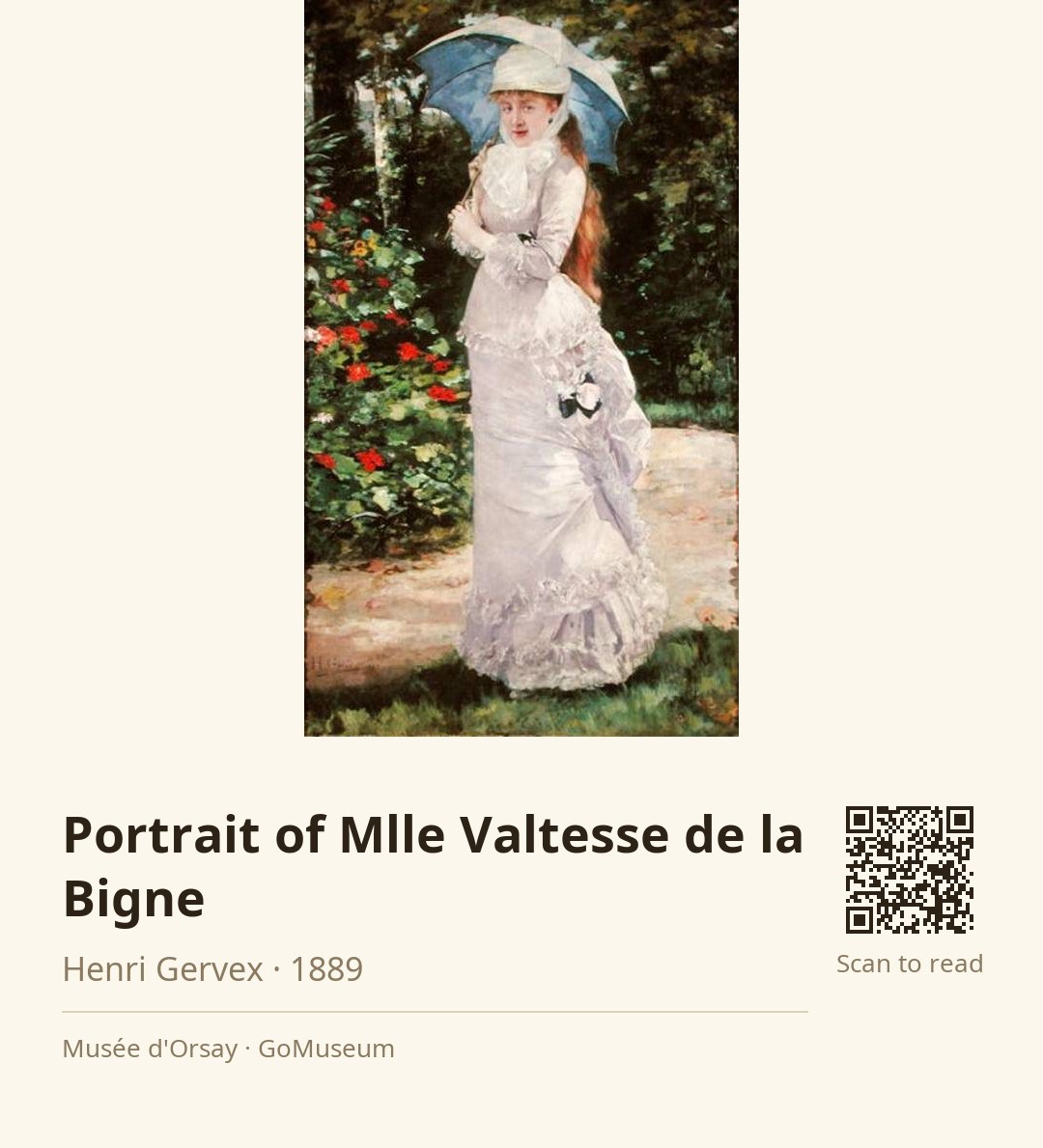
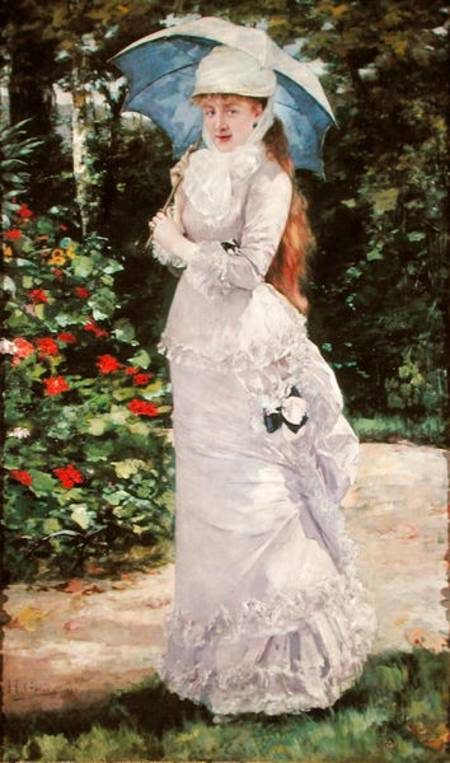
🎧 This work has audio narration — listen in the appAs you stand before “Portrait of Mlle Valtesse de la Bigne,” take a moment to really absorb the elegance radiating from this canvas. Notice how the light dances across her flowing gown, the delicate fabric almost shimmering under the artist's brush. And look closely at her expression—there’s a captivating mix of confidence and allure that draws you in. These details matter because they capture not just a moment in time, but the essence of a woman who was both a muse and a socialite in 19th-century Paris. Valtesse de la Bigne was a courtesan, and Gervex’s portrayal elevates her beyond mere beauty; it hints at her intelligence and the power she wielded in a male-dominated society. Henri Gervex painted this in 1889, a time when the art world was buzzing with new ideas and styles. He was known for his ability to blend realism with a touch of impressionism, and here, you can see that mastery in the way he captures both the intricate details of her attire and the soft, almost dreamlike quality of the garden behind her. So, as you take in this striking portrait, consider what stories Mlle Valtesse might have told if she could speak. What do you think her life was like, and how did it feel to be the subject of such a powerful work of art?
Henri Gervex was a prominent French painter born on December 10, 1852, in Montmartre. He trained under notable artists like Alexandre Cabanel and Eugène Fromentin, honing his skills in both classical and modern styles. Gervex's early works, primarily mythological, often sparked controversy, most notably with his painting "Rolla," which was rejected by the Salon for its provocative depiction of a nude. This scandal, however, propelled him to fame, leading to significant exhibitions and acclaim.
His relationship with the courtesan Valtesse de La Bigne not only influenced his art but also inspired Émile Zola's character in "Nana." Gervex's oeuvre evolved to include modern life representations, achieving success with works like "Dr Péan at the Salpétrière." He received numerous commissions for public buildings and was awarded the Legion of Honour for his contributions to art.
Gervex's legacy includes a diverse body of work, from portraits to grand historical scenes, and he played a vital role in the artistic community of his time, mentoring future artists. He passed away on June 7, 1929, leaving behind a significant mark on the art world, celebrated for both his technical skill and his bold explorations of contemporary themes.
In 1889, Henri Gervex created the captivating 'Portrait of Mlle Valtesse de la Bigne,' a striking representation of the famed courtesan who played a significant role in Parisian society. Commissioned by Valtesse herself, this painting showcases her in a lush garden, embodying both elegance and allure. The work was part of Gervex's broader exploration of modern life, a theme that resonated with audiences of the time. Initially, Gervex had made a name for himself with scandalous pieces like 'Rolla,' but this portrait marked a shift towards more refined subjects. Valtesse de la Bigne, not just a muse but a cultural icon, inspired not only Gervex but also Émile Zola, who used her as a model for his character in 'Nana.' This connection between art and literature highlights the intertwined lives of artists and their subjects during the late 19th century.
As you gaze at the portrait, pay attention to Gervex's masterful brushwork. The way he layers the oil paint creates a rich texture that brings Mlle Valtesse's gown to life, almost as if it could flutter in the breeze. Notice the soft transitions between light and shadow on her face, which adds a three-dimensional quality, making her expression feel alive and engaging. The composition is carefully structured; Mlle Valtesse is positioned slightly off-center, drawing your eye across the canvas to the lush garden behind her. This background, with its dreamy quality, contrasts with her sharp, confident gaze, suggesting a world of complexity beneath her poised exterior. The scale of the painting, quite large at 200 by 122 centimeters, envelops you, inviting you to step closer and immerse yourself in the details.
Interestingly, Gervex's relationship with Valtesse de la Bigne was not just professional; they were lovers for many years. This personal connection provided him with unique insights into her character, which he skillfully translated onto the canvas. Valtesse was not only a muse for Gervex but also inspired Émile Zola's famous character Nana, highlighting her impact on both art and literature.
The painting 'Rolla' caused a scandal when it was rejected by the Salon for immorality, yet this controversy propelled Gervex into the spotlight, leading to its exhibition in a private gallery where it became immensely popular and launched his career.
Gervex not only inspired Zola's character Nana but also became a character himself in Zola's novel 'L'Œuvre', where he was depicted as an opportunistic painter, reflecting the intertwined nature of art and literature during that era.