Madame Louis Joachim Gaudibert
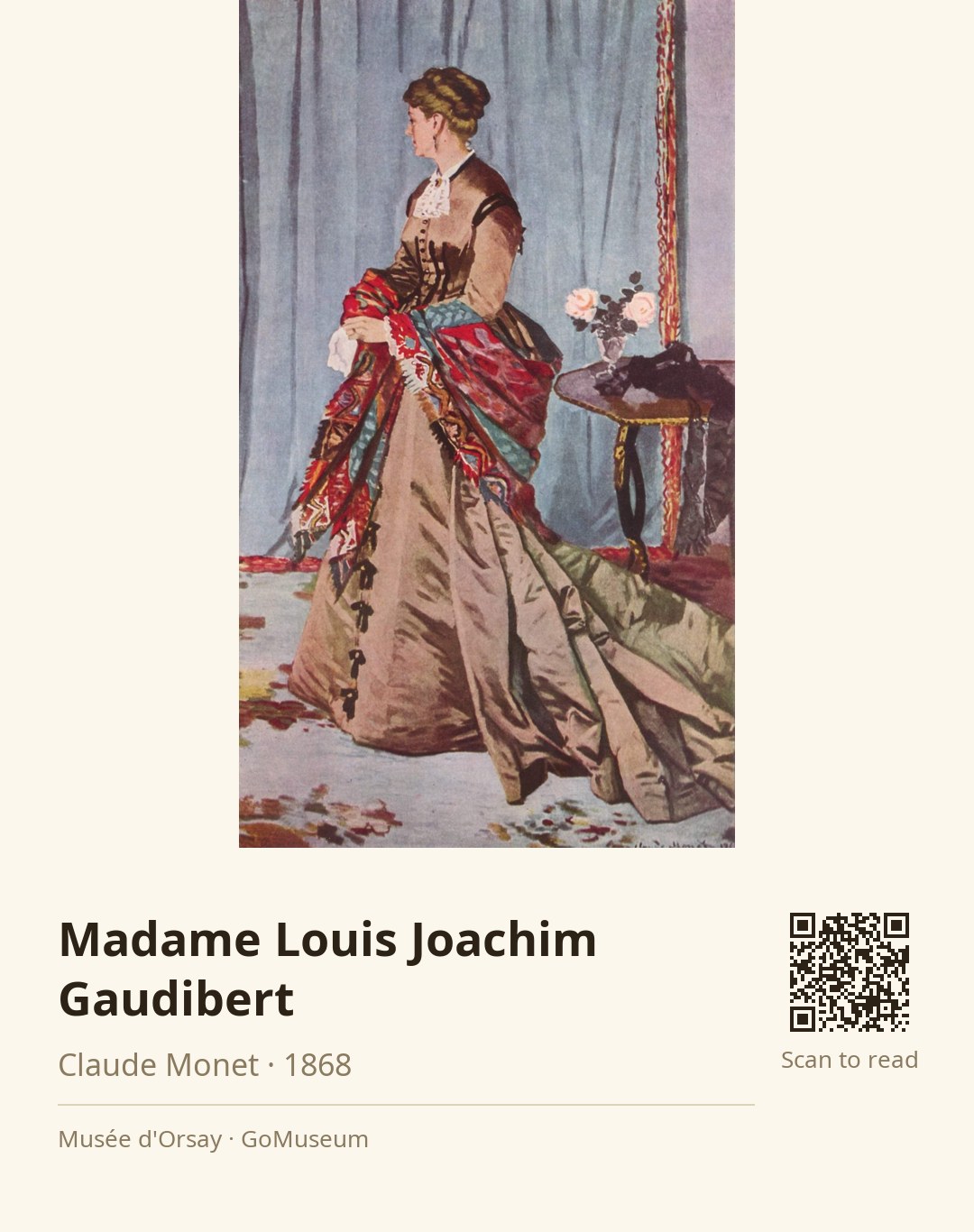
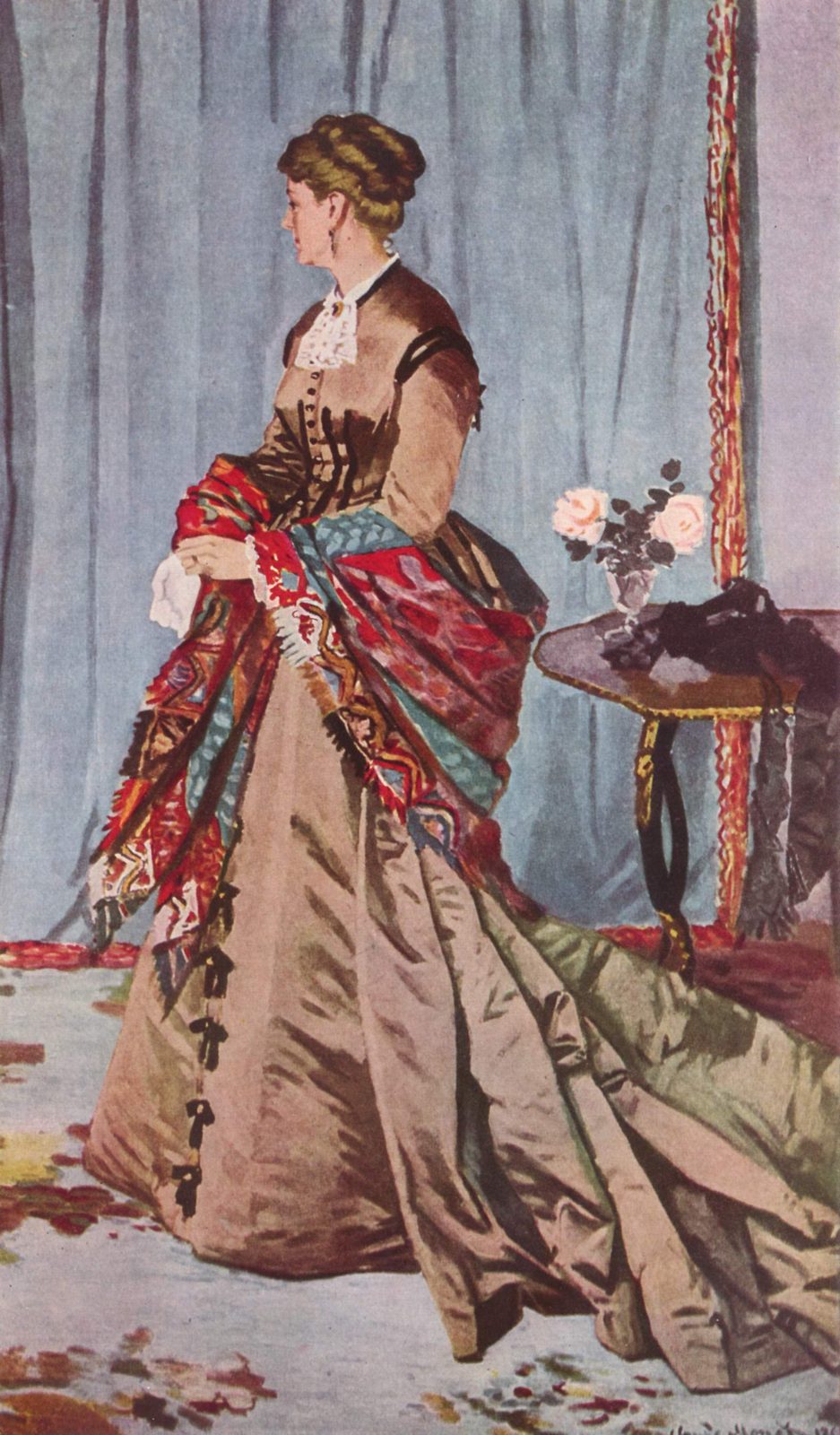
🎧 This work has audio narration — listen in the appTake a moment to really look at "Madame Louis Joachim Gaudibert." Notice how Monet captures the delicate drapery of her dress, almost as if it's alive, flowing with the slightest breeze. The way the fabric catches the light creates a sense of movement that draws you in, doesn’t it? This isn’t just a portrait; it’s a glimpse into the bourgeois life of the 19th century, a world Monet was keen to portray as both elegant and vibrant.
Painted in 1868, during a pivotal moment in Monet's career, this work reflects his evolving style and his desire to showcase the beauty of everyday life. The Gaudibert family, who commissioned this painting, were instrumental in supporting Monet during tough financial times. So, when you look at Madame Gaudibert, you're not just seeing a woman in a beautiful dress; you're witnessing a moment of artistic and personal triumph for Monet.
As you stand here, think about what this painting tells us about the society of its time. What stories do you think Madame Gaudibert could share if she could speak?
Oscar-Claude Monet, born on November 14, 1840, in Paris, was a pioneering French painter and a founder of Impressionism, a movement that transformed the art world. Raised in Le Havre, he developed a passion for nature and painting early on, encouraged by his mother, while his father hoped he would pursue a business career. After his mother's death in 1857, Monet moved in with his aunt, who supported his artistic ambitions.
Monet's career began with caricatures, but he soon sought formal training, studying under Eugène Boudin, who introduced him to plein air painting. His breakthrough came in 1866 with "La Femme à la robe verte," which garnered attention at the Salon. The term "Impressionism" originated from his work "Impression, Sunrise," exhibited in 1874, marking a shift away from traditional art.
Throughout his life, Monet focused on capturing the essence of light and color in nature, creating series of paintings that depicted the same scenes under varying conditions, such as his famous haystacks and water lilies. He settled in Giverny in 1883, where he cultivated a beautiful garden that became his muse. Despite personal hardships, including the loss of loved ones and health issues, Monet's relentless dedication to his craft solidified his place in art history as a master of modernism, influencing countless artists and leaving a lasting legacy. He died on December 5, 1926, in Giverny, celebrated as one of the most significant figures in art.
After achieving notable success with 'La Femme à la robe verte' at the Salon in 1866, he faced financial difficulties. The Gaudibert family, prominent merchants from Le Havre, commissioned him to paint several works, including this portrait of Madame Louis Joachim Gaudibert. This commission came as a relief to Monet, who was struggling to make ends meet. He painted this piece in September at the Château des Ardennes-Saint-Louis, near Le Havre. The painting remained within the Gaudibert family until it was acquired by the French state in 1951, thanks to an anonymous donation.
Monet's technique in 'Madame Louis Joachim Gaudibert' is a masterclass in capturing the essence of his subject through light and texture. Notice how he employs fluid brushwork to create the delicate drapery of Madame Gaudibert's dress, giving it a lifelike quality that seems to sway with the slightest movement. The interplay of light and shadow enhances the three-dimensionality of the fabric, making it almost tangible. The composition is structured yet dynamic, drawing your eye across the painting, inviting you to linger on the elegance of the subject and the richness of her surroundings.
Interestingly, this painting was part of a larger commission from the Gaudibert family, which included two additional works featuring Monsieur Gaudibert. This highlights how Monet was not only focused on individual portraits but also on creating a cohesive representation of the family's status and lifestyle during a time when such depictions were highly valued.
The Gaudibert family played a crucial role in Monet's early career by commissioning multiple works from him, which not only alleviated his financial difficulties but also helped establish his reputation in the art world. Their patronage allowed him to continue developing his unique style during a pivotal moment in his artistic journey.
Upon closer inspection, the intricate patterns and textures of Madame Gaudibert's dress reveal Monet's attention to detail and his desire to capture the essence of bourgeois fashion. These elements not only showcase the elegance of the period but also serve as a visual commentary on the societal status of the Gaudibert family.