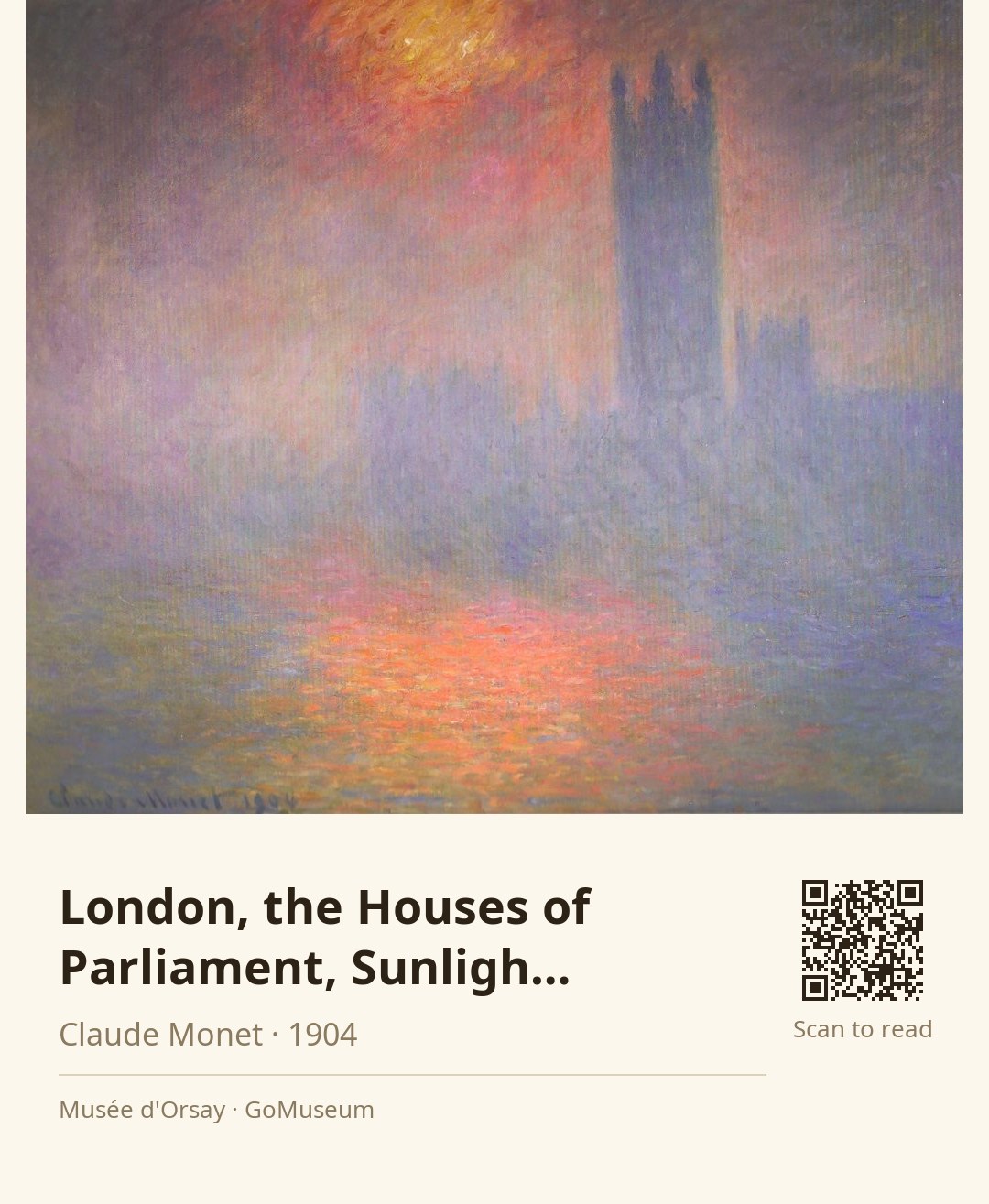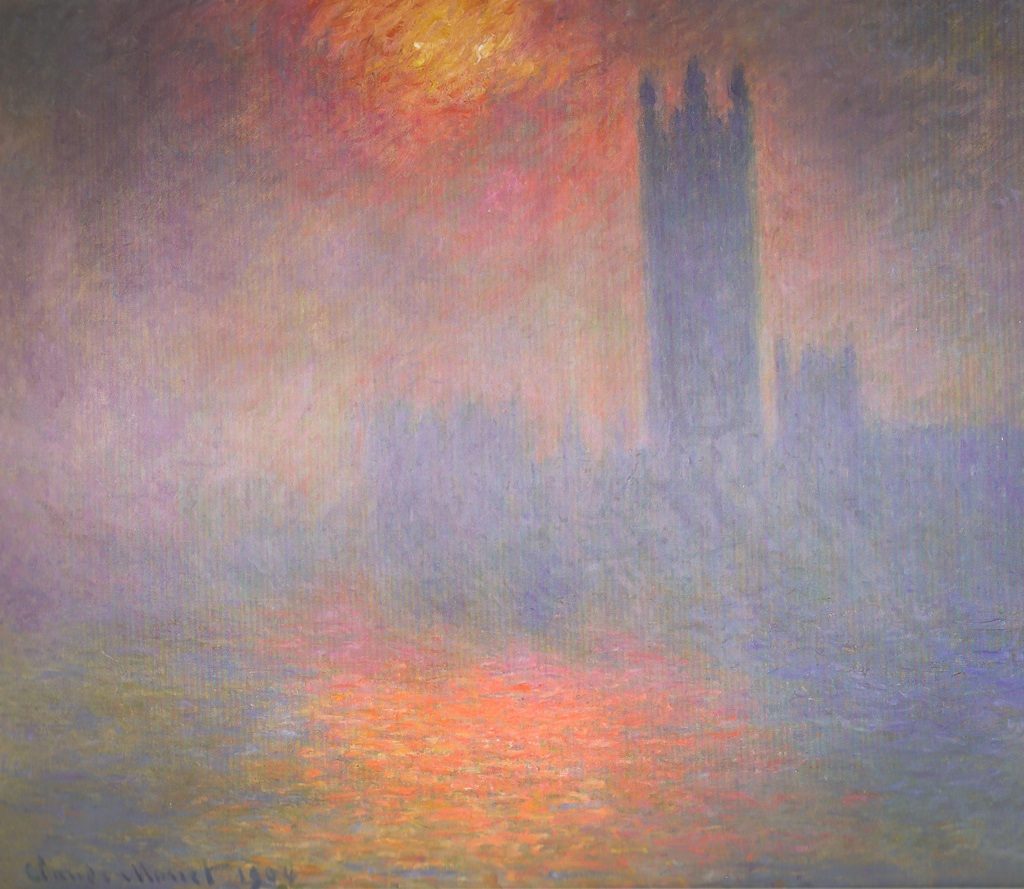
London, the Houses of Parliament, Sunlight Opening in Fog
🎧 This work has audio narration — listen in the appWarm hues of orange and pink bleed into the misty sky, suggesting the fleeting moments of dawn or dusk, while the shimmering water below reflects this ethereal light, enhancing the dreamlike quality of the scene.
Monet's loose brushwork creates a sense of movement, as colors blend seamlessly, capturing the ephemeral nature of light and atmosphere. The mist obscures the middle ground, inviting the viewer to contemplate the relationship between the solid structure and the surrounding environment, emphasizing the transitory beauty of the moment. This painting is part of Monet's exploration of London, where he sought to capture the effects of light on architecture, a theme he pursued throughout his career.
Created in 1904, this work was exhibited at the Durand-Ruel Gallery in Paris the same year, showcasing Monet's continued evolution as a master of Impressionism, a movement he helped pioneer.
Oscar-Claude Monet, born on November 14, 1840, in Paris, was a pioneering French painter and a founder of Impressionism, a movement that transformed the art world. Raised in Le Havre, he developed a passion for nature and painting early on, encouraged by his mother, while his father hoped he would pursue a business career. After his mother's death in 1857, Monet moved in with his aunt, who supported his artistic ambitions.
Monet's career began with caricatures, but he soon sought formal training, studying under Eugène Boudin, who introduced him to plein air painting. His breakthrough came in 1866 with "La Femme à la robe verte," which garnered attention at the Salon. The term "Impressionism" originated from his work "Impression, Sunrise," exhibited in 1874, marking a shift away from traditional art.
Throughout his life, Monet focused on capturing the essence of light and color in nature, creating series of paintings that depicted the same scenes under varying conditions, such as his famous haystacks and water lilies. He settled in Giverny in 1883, where he cultivated a beautiful garden that became his muse. Despite personal hardships, including the loss of loved ones and health issues, Monet's relentless dedication to his craft solidified his place in art history as a master of modernism, influencing countless artists and leaving a lasting legacy. He died on December 5, 1926, in Giverny, celebrated as one of the most significant figures in art.
In 1904, Claude Monet created 'London, the Houses of Parliament, Sunlight Opening in Fog,' a striking piece that captures the ethereal beauty of London's skyline. The painting was first exhibited at the Durand-Ruel Gallery in Paris the same year, where it received a warm reception from the public, reflecting Monet's growing reputation as a master of Impressionism. Over the years, the painting changed hands, eventually becoming part of the collection of Isaac Camondo, a prominent art collector. Its journey through various exhibitions and collections highlights the evolving appreciation for Monet's work, which was often initially met with skepticism but later celebrated for its innovative approach to light and atmosphere.
Monet's technique in this painting is a testament to his mastery of color and brushwork. The loose, fluid strokes create a sense of movement, as if the fog itself is swirling around the iconic structures of Parliament. The warm palette of oranges, pinks, and purples not only evokes the time of day but also enhances the dreamlike quality of the scene. Monet's choice to obscure the middle ground with mist invites viewers to engage with the painting on a deeper level, as they ponder the relationship between the solid forms of the buildings and the ephemeral nature of the atmosphere. This blending of colors, achieved through rapid brushwork, allows for a seamless transition between the sky and the water, creating a shimmering effect that draws the eye across the canvas. The scale of the work, measuring 81 by 92 centimeters, further immerses the viewer in this atmospheric experience, making it feel almost as if they are standing on the banks of the Thames, witnessing the scene unfold.
Interestingly, Monet painted this work during a time when he was deeply fascinated by the effects of light on architecture. He created multiple versions of the Houses of Parliament, each capturing different times of day and weather conditions. This particular piece reflects his obsession with the foggy atmosphere of London, which he found to be a unique challenge and opportunity for artistic expression. Monet's dedication to this subject matter illustrates his relentless pursuit of capturing the essence of a moment, a hallmark of his Impressionist philosophy.