The Rock of Vann
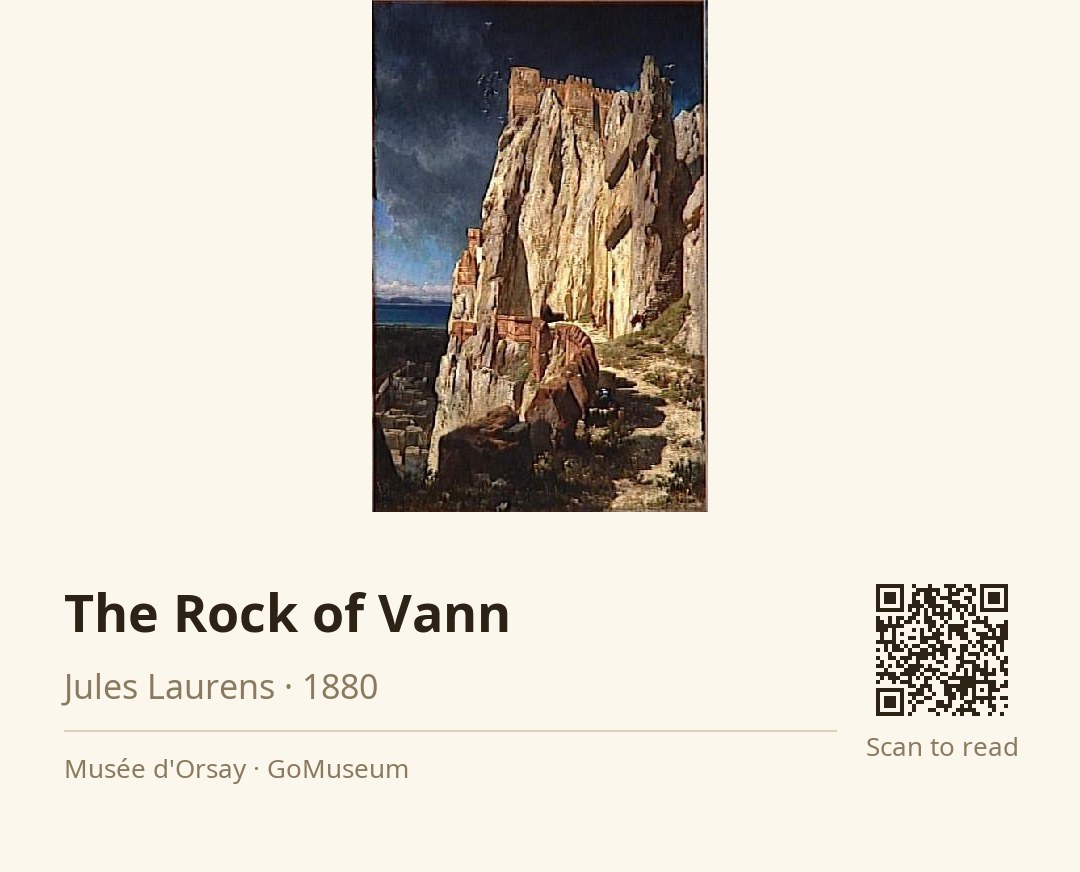
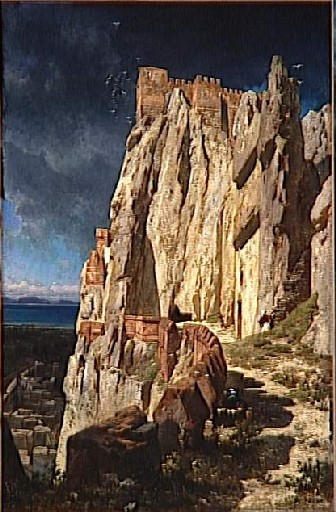
🎧 This work has audio narration — listen in the appTake a moment to really look at "The Rock of Vann." Notice how the rugged rock formation dominates the canvas, almost like a sentinel watching over the landscape. The way Jules Laurens captures the interplay of light and shadow on the rock's surface gives it a sense of depth and texture that pulls you in. The rock isn’t just a backdrop; it’s a character in its own right, embodying the rugged beauty of the region he explored. Created in 1880, this piece reflects Laurens' experiences and observations from his scientific expedition to Turkey and Iran, where he meticulously documented the landscapes and cultures he encountered. His ability to blend realism with a touch of romanticism invites you to imagine the stories that rock could tell. As you stand here, think about what it must have been like for Laurens to witness this scene firsthand. What stories do you think the landscape holds?
Jules Joseph Augustin Laurens, born on July 26, 1825, in Carpentras, was a notable French artist recognized for his contributions to drawing, painting, and lithography, particularly in the realm of Orientalism. At a young age, he moved to Montpellier to live with his brother, where he honed his artistic skills at the local art college and later at the École des Beaux-Arts in Paris under Paul Delaroche. His career took a significant turn when he joined a scientific expedition to Turkey and Iran from 1846 to 1848, where he created over a thousand drawings capturing the culture, landscapes, and people he encountered.
Laurens's works, including portraits of Iranian figures and depictions of Qajar art, were later published in various periodicals and contributed to the historical atlas of the journey. After returning to France in 1849, he became a prominent figure in the art scene, exhibiting regularly at the Salon and engaging with literary circles. His later works reflect his deep appreciation for both Oriental themes and rural French life, showcasing his versatility as an artist. Laurens's legacy endures through his extensive body of work, which remains influential in the study of 19th-century Orientalism and landscape painting. He passed away on May 5, 1901, leaving behind a rich artistic heritage.
Jules Laurens' 'The Rock of Vann' was created in 1880 and first exhibited at the Salon des Artistes français in Paris, where it was assigned the number 2152. This was a significant moment for Laurens, as the Salon was the premier venue for artists to showcase their work and gain recognition. The reception of Laurens' work during his lifetime was mixed; while he was appreciated for his technical skills, he often found himself overshadowed by more prominent contemporaries. However, his dedication to capturing the landscapes and cultures of the East left a lasting impression on those who encountered his work.
In 'The Rock of Vann,' Laurens employs a meticulous technique that showcases his mastery of light and shadow. Notice how the brushwork feels almost restless, creating a dynamic interplay across the rugged rock surface. The use of oil paint allows for rich texture, with thick applications in some areas that contrast with smoother passages, enhancing the sense of depth. The color palette is earthy, dominated by browns and greens, but it's the strategic placement of light that breathes life into the scene. The composition is structured to draw your eye toward the rock formation, which serves as both the focal point and a narrative anchor, inviting you to explore the surrounding landscape. This careful balance of elements not only highlights Laurens' skill but also evokes the grandeur of the natural world he sought to immortalize.
This work not only showcases Laurens' skill but also reflects the growing fascination with Orientalism in European art. Laurens' ability to blend realism with a romanticized vision of the landscape opened doors for future generations to explore and interpret foreign cultures through their own artistic lenses. This painting matters because it stands as a testament to the dialogue between East and West, shaping how landscapes were perceived and represented in art history.
One intriguing aspect of Laurens' career is his extensive collection of drawings and sketches made during his travels in Turkey and Iran. He created over a thousand pieces, many of which were later published, but what's fascinating is that these works not only served as artistic inspiration but also as historical documentation of the cultures he encountered.
During his expedition, Laurens not only created over a thousand drawings but also faced significant challenges, including the death of his expedition leader, Xavier Hommaire de Hell, which forced him to navigate the region alone and document the cultures he encountered.
After returning to France, Laurens integrated his experiences and observations from the East into his work, leading to a distinctive style that combined realism with romantic elements, particularly in his landscape paintings.