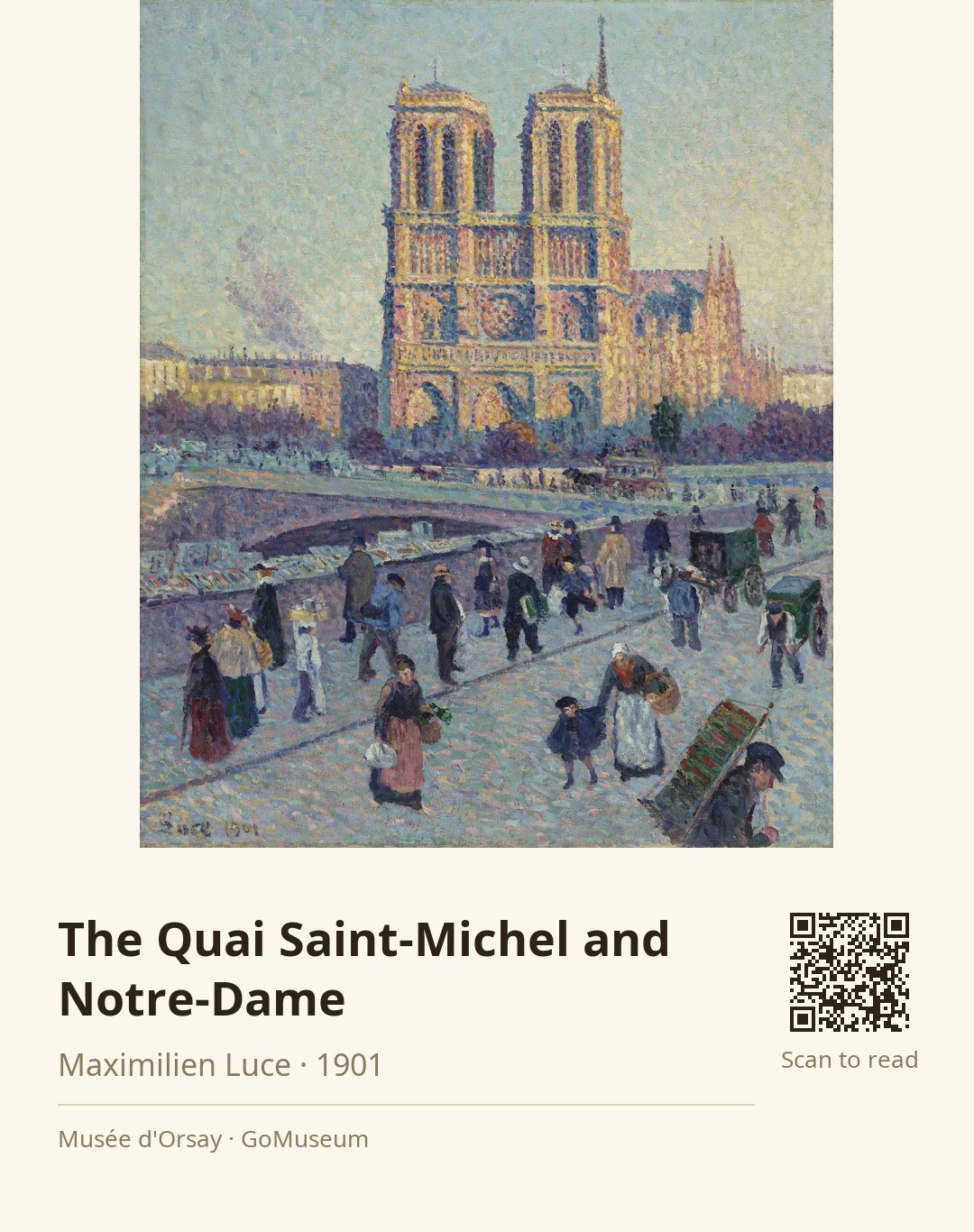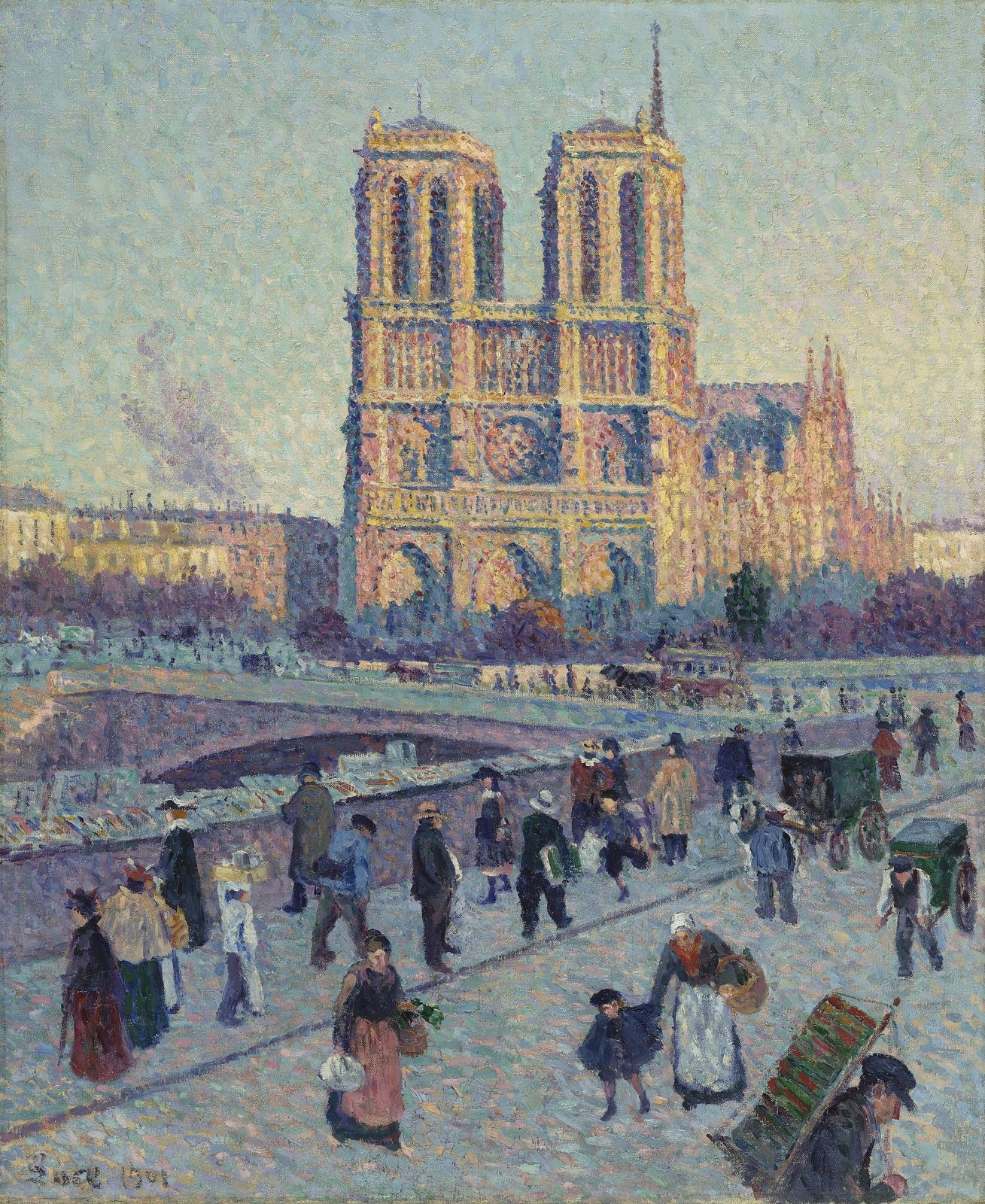
The Quai Saint-Michel and Notre-Dame
🎧 This work has audio narration — listen in the appTake a moment to really look at "The Quai Saint-Michel and Notre-Dame" by Maximilien Luce. Notice how the vibrant colors dance across the canvas, especially the dabs of blue and green that bring the Seine to life. And see how the light hits the iconic Notre-Dame, almost as if it’s glowing against the backdrop of a bustling Parisian scene.
These details matter because they showcase Luce's transition from the precise divisionism of Neo-Impressionism to a more expressive style. The way he captures light and movement reflects not just a moment in time, but the very spirit of early 20th-century Paris, filled with energy and change.
Luce painted this in 1901, during a pivotal moment in his artistic journey, as he began to embrace a more populist approach, stepping away from strict techniques to embrace a more heartfelt representation of everyday life.
As you stand here, think about the stories this scene might tell. What do you imagine the people in the painting are experiencing? What does this vibrant portrayal of Paris evoke for you?
Maximilien Luce was a French Neo-impressionist artist born on March 13, 1858, in Paris. Coming from a modest background, he began his artistic journey as a wood-engraver before transitioning to painting, influenced by the Impressionist and later Pointillist movements. His early life was marked by a strong sense of social justice, which fueled his anarchist activism. Luce's military service in Brittany introduced him to influential figures, including future French President Alexandre Millerand, further shaping his political views.
In the mid-1880s, Luce embraced the Divisionist technique pioneered by Georges Seurat, producing vibrant works that captured the effects of light with emotional intensity. His painting "On the Bank of the Seine at Poissy" exemplifies this period, celebrated for its lyrical celebration of nature. Luce was an active member of the Société des Artistes Indépendants, where he rose to leadership roles, advocating for artistic freedom and inclusivity.
Despite his later return to a more traditional Impressionist style, Luce's contributions to Neo-impressionism and his commitment to social causes left a lasting impact on the art world. He continued to exhibit until his death on February 6, 1941, remaining a significant figure in the evolution of modern art and a voice for the marginalized.
Maximilien Luce's 'The Quai Saint-Michel and Notre-Dame' was painted in 1901, during a transformative period in his artistic life. This piece is one of ten he created featuring the iconic Notre-Dame, showcasing his shift from the strict techniques of Neo-Impressionism to a more expressive style. The painting was later acquired by the Musée d'Orsay in 1981, marking its place in a prestigious collection.
As you gaze at 'The Quai Saint-Michel and Notre-Dame', take a moment to appreciate Luce's brushwork. His technique blends dabs of color that vibrate with life, creating a sense of movement that pulls you into the scene. Notice how he captures the light; it dances across the canvas, illuminating the Notre-Dame in a way that feels almost ethereal. The composition is structured yet lively, with the Seine flowing through the foreground, guiding your eye towards the majestic cathedral. The scale of the painting, at 72 by 60 centimeters, allows for an immersive experience, inviting you to step into this bustling Parisian moment. Luce's choice of colors—especially those bold blues and greens—evokes the energy of the city, making you feel the pulse of Paris in the early 1900s.
Painted in 1901, this work reflects the vibrant energy of Paris, capturing the essence of a city in flux. Luce's use of divisionism, a technique he mastered under the influence of Georges Seurat, not only showcases his technical prowess but also his emotional engagement with contemporary life. This painting is part of a series focusing on Notre-Dame, demonstrating Luce's dedication to portraying the iconic architecture of Paris. Remember, Luce didn’t just paint a scene; he painted the very heartbeat of Paris, influencing how artists would depict urban environments for years to come.
Interestingly, Luce was not just an artist but also an active anarchist. His political beliefs often intertwined with his art, leading him to create politically charged illustrations. This duality in his life adds a fascinating layer to understanding his work, as he sought to reflect both the beauty of everyday life and the struggles of the working class in his paintings.
Luce's use of vibrant dabs of blue and green not only brings the Seine to life but also reflects the changing moods of the water, suggesting movement and energy that resonates with the lively Parisian atmosphere.
As an active anarchist, Luce often infused his work with themes of social struggle and the beauty of everyday life, which can be seen in his portrayal of the working-class scenes and the vibrancy of Paris, highlighting both joy and hardship.