 Image: JackyM59
The Château des Papes in Avignon
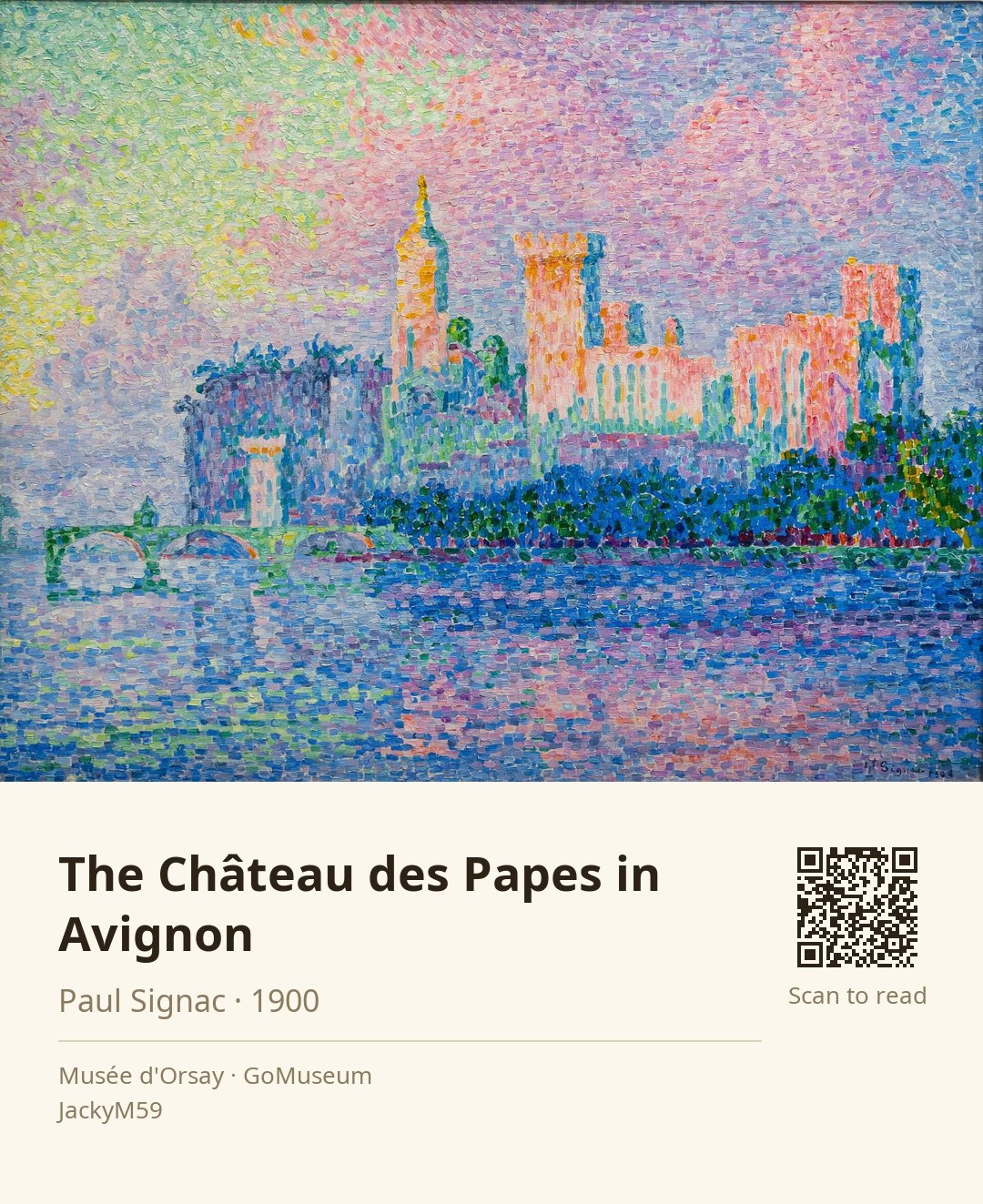
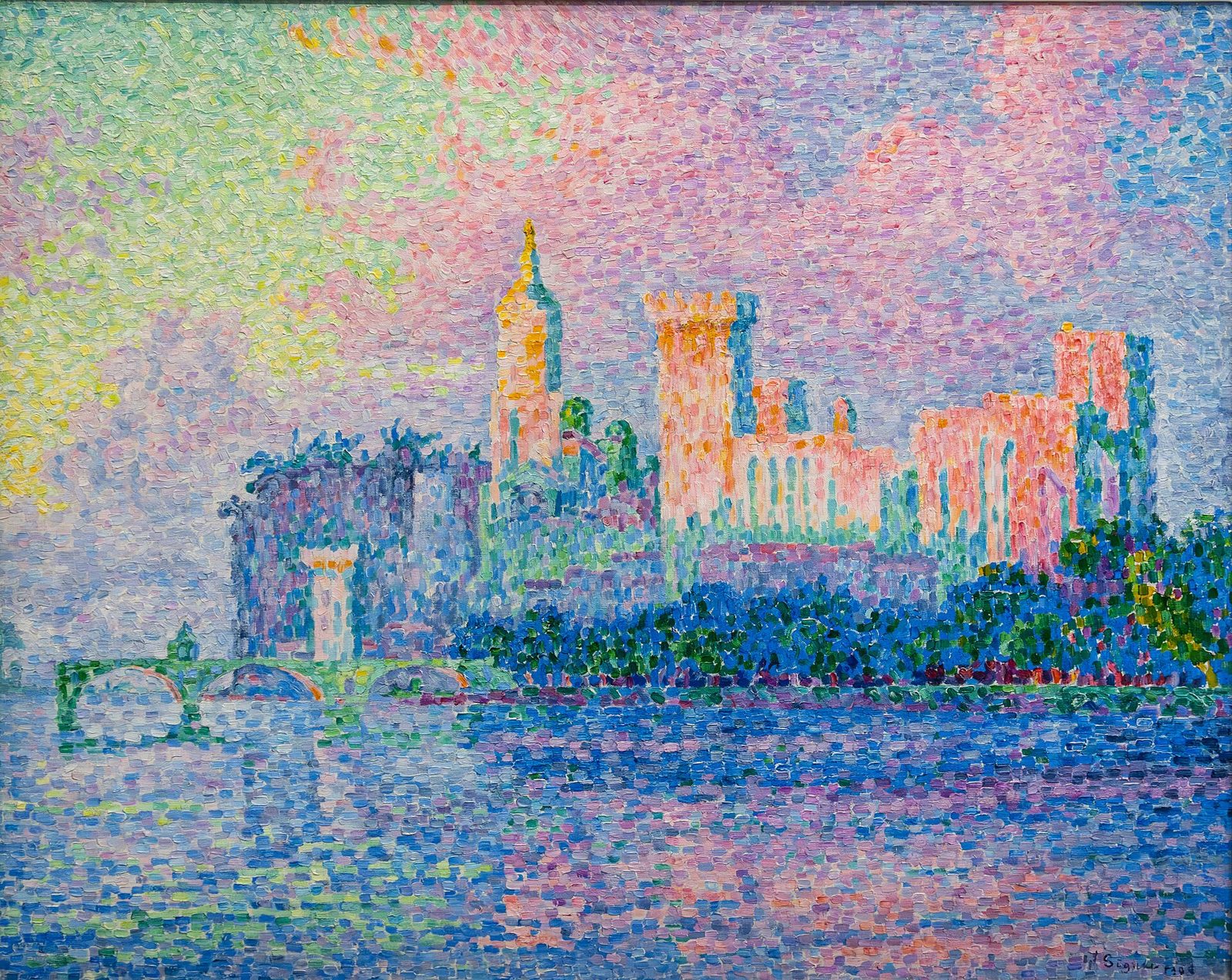
🎧 This work has audio narration — listen in the appThe vibrant hues of pink, yellow, and green blend seamlessly, creating a luminous backdrop that reflects off the Rhône, where the water shimmers with the same colors. A bridge arches gracefully over the river, connecting the castle to the bustling city, while the distinct pointillist technique gives life to the scene, with each dab of color contributing to a sense of movement and energy.
This painting encapsulates not just a landscape, but a moment in time, showcasing the architectural grandeur of the Palais des Papes, a symbol of papal authority during the 14th century. Signac’s choice of colors and technique invites viewers to experience the atmosphere of Avignon, a city steeped in history and culture. The interplay of light and color reflects his fascination with the natural world, a theme prevalent in his work as a leading figure of Neo-Impressionism.
Created in 1900, this piece was later exhibited at the Salon des Indépendants in Paris in 1912, where it contributed to the ongoing dialogue about color and form in modern art.
Paul Signac was a French Neo-Impressionist painter born on November 11, 1863, in Paris. Initially encouraged to pursue architecture, he chose to follow his passion for painting, inspired by the Impressionists and particularly by Claude Monet's works. His encounter with Georges Seurat in 1884 profoundly influenced his artistic direction, leading him to develop the technique of Pointillism, where small dots of pure color blend in the viewer's eye rather than on the canvas.
A passionate sailor, Signac often painted seascapes and coastal scenes, spending summers in the south of France, where he envisioned an anarchist utopia. He co-founded the Société des Artistes Indépendants, promoting artistic freedom and innovation, serving as its president from 1908 until his death in 1935. His friendships with notable artists like Vincent van Gogh and Henri Matisse enriched his creative journey, while his writings on color theory and art further solidified his role as a key figure in the evolution of modern art.
Signac's legacy endures through his influence on subsequent movements, particularly Fauvism, and his commitment to artistic independence, making him a pivotal figure in the transition from Impressionism to modern art.
Created in 1900, Paul Signac's 'The Château des Papes in Avignon' was a significant work that showcased his mastery of the pointillist technique. Commissioned by an unknown patron, it was later exhibited at the Salon des Indépendants in Paris in 1912, a venue known for its embrace of innovative and avant-garde art. This painting, with its vibrant colors and dynamic brushwork, contributed to the ongoing dialogue about color and form that was crucial in the early 20th century.
Signac's technique in this painting is a brilliant display of pointillism, where he meticulously applied small dabs of color to create a shimmering effect. The brushwork is both deliberate and spontaneous, allowing the colors to blend optically rather than physically. This method not only adds vibrancy but also a sense of movement, as if the scene is alive with the energy of the city and river. The composition is structured around the interplay of the castle's imposing towers and the flowing Rhône, drawing the viewer's eye across the canvas. The scale of the painting, measuring 73.5 by 92.3 centimeters, allows for an immersive experience, inviting you to step into the dreamlike atmosphere of Avignon. The luminous palette, rich in blues, pinks, and yellows, enhances the ethereal quality of the scene, making it feel almost like a memory captured in time.
An intriguing anecdote about Signac is that he was not just a painter but also a passionate sailor. His love for the sea and sailing profoundly influenced his artistic vision. He often took his boat out to paint en plein air, capturing the dynamic interplay of light and water in his works. This connection to the maritime world not only shaped his subject matter but also reflected his anarchist ideals, as he envisioned a utopian society by the sea, free from societal constraints.