The White Cat
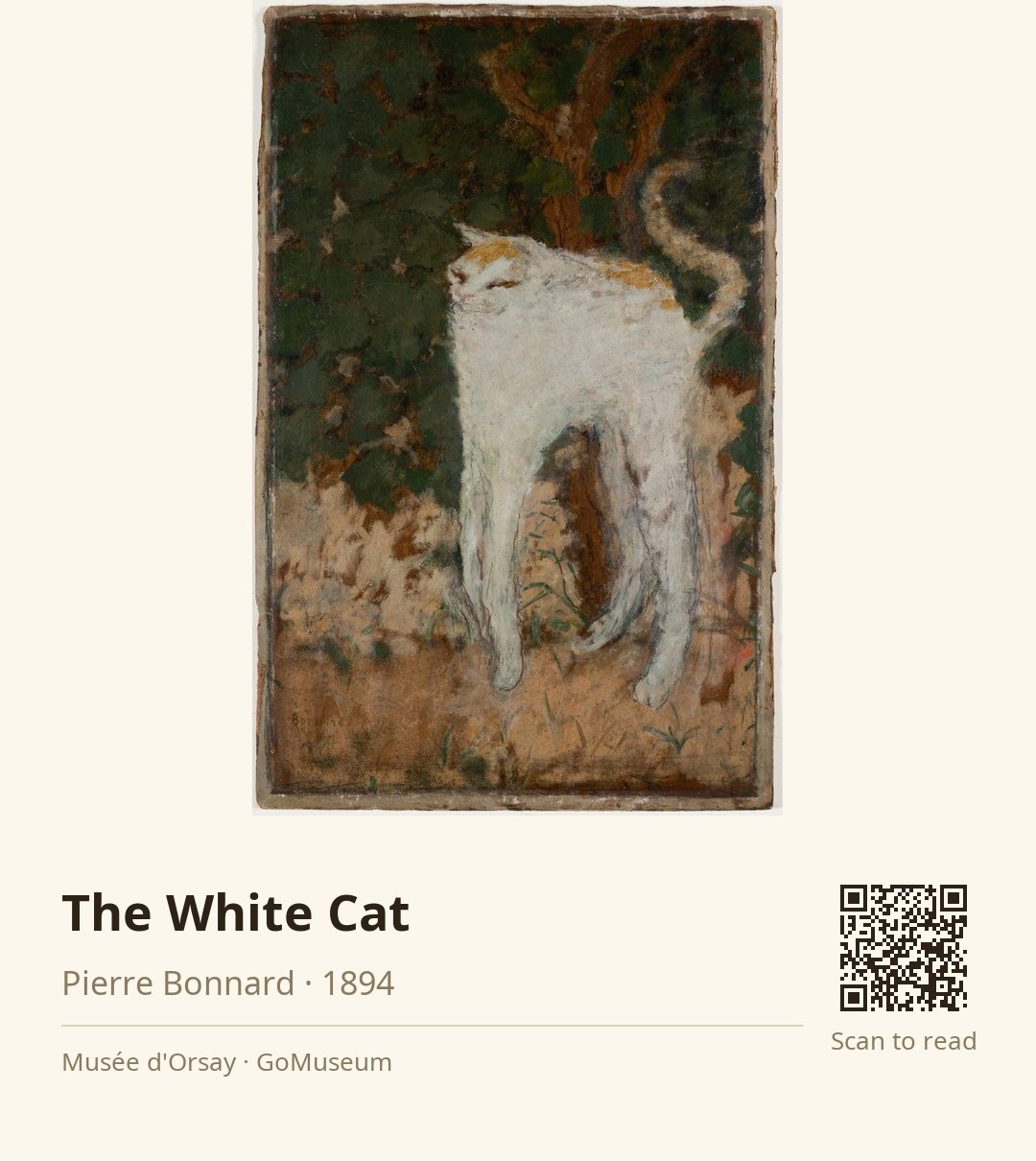
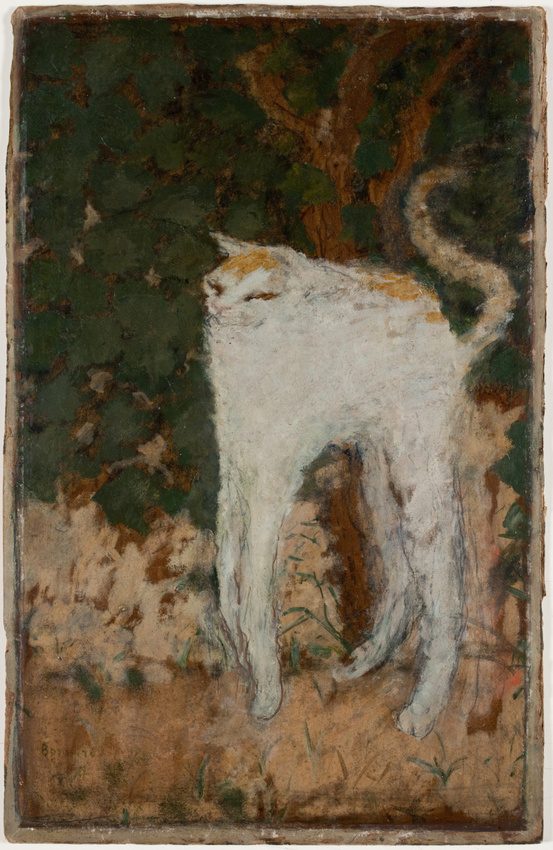
🎧 This work has audio narration — listen in the appTake a moment to really look at "The White Cat" by Pierre Bonnard. Notice how the cat is not just lounging; it’s arching its back, puffed up like it’s ready to pounce. Those oversized paws almost seem to dance on the canvas, don’t they? This playful exaggeration isn’t just for show; it captures the essence of the cat’s personality, a blend of grace and mischief that Bonnard loved to portray. Bonnard was part of the Nabis group, known for their bold colors and stylized forms. Here, he uses vibrant hues to create a sense of warmth and intimacy, inviting you into a cozy, domestic scene. The cat, with its striking white fur, stands out against the rich background, drawing your eye and making you feel the presence of this little creature in the room. Created in 1894, this painting reflects Bonnard’s transition from Impressionism to a more modern approach, where the emotional resonance of color takes center stage. It’s not just a cat; it’s a moment frozen in time, a glimpse into the artist’s affection for the everyday joys of life. As you stand here, think about your own pets or the animals that have brought you joy. What stories do they hold? How do they make you feel?
Pierre Bonnard was a French painter born on October 3, 1867, in Fontenay-aux-Roses. A founding member of the Post-Impressionist group Les Nabis, he was known for his vibrant colors and decorative style. His early influences included Paul Gauguin and Japanese art, which shaped his unique approach to painting. Bonnard's work often prioritized color and composition over subject matter, reflecting his belief in the emotional power of art.
Despite initially pursuing a career in law, Bonnard's passion for art led him to study at the Académie Julian and the École des Beaux-Arts, where he formed lasting friendships with fellow artists. His personal life was marked by a long relationship with Marthe de Méligny, who became his muse and model. Bonnard's paintings often depicted intimate domestic scenes, capturing the essence of everyday life with a sense of joy and nostalgia.
Over his prolific career, Bonnard transitioned from Impressionism to a more modern aesthetic, becoming one of the foremost colorists of the 20th century. His legacy endures as he is celebrated for his innovative use of light and color, positioning him as a significant figure in the evolution of modern art. Bonnard passed away on January 23, 1947, leaving behind a rich body of work that continues to inspire.
Created in 1894, 'The White Cat' by Pierre Bonnard is a captivating piece that reflects the artist's evolution during a transformative period in art history. Bonnard, a founding member of the Nabis group, was known for his bold colors and stylized forms. This painting was part of a private collection for many years, with notable provenance tracing back to Raux F., and later exhibited in prestigious venues like Haus der Kunst in Munich in 1966 and the Orangerie des Tuileries in Paris in 1967. The work has been appreciated for its intimate portrayal of domestic life, resonating with audiences who found joy in its playful spirit. Its journey through various collections, including a sale at Sotheby's in 1977, highlights its enduring appeal and the recognition it garnered over the decades.
Notice how he employs vibrant hues to create a warm, inviting atmosphere that draws you into the scene. The brushwork feels almost spontaneous, with thick strokes that give texture to the cat's fur and the surrounding environment. This lively application of paint captures the essence of the cat's personality, making it feel almost alive on the canvas. The composition is cleverly structured; the cat's exaggerated form dominates the painting, while the rich background enhances its presence. Bonnard's choice of colors, particularly the interplay of the white cat against darker tones, creates a striking contrast that commands attention. This technique not only highlights the subject but also evokes an emotional response, inviting viewers to connect with the playful spirit of the scene.
Pierre Bonnard's 'The White Cat' is a striking example of the Nabi movement, which sought to elevate color and form over realism. This painting, created in 1894, showcases Bonnard's unique ability to blend the everyday with the extraordinary, influencing generations of artists who followed. His bold use of color and stylized forms paved the way for modern art movements, emphasizing emotional resonance over mere representation. Bonnard's work invites viewers to experience the world through a vibrant lens, reminding us that art can capture not just what we see, but how we feel. Remember this: Bonnard didn't just paint a cat; he painted a moment of joy and intimacy, forever changing how we see domestic life in art.
Bonnard's use of thick, textured brushstrokes not only brings the cat to life but also creates a dynamic interplay between the subject and the background, enhancing the emotional resonance of the scene.