The Café Royal in London
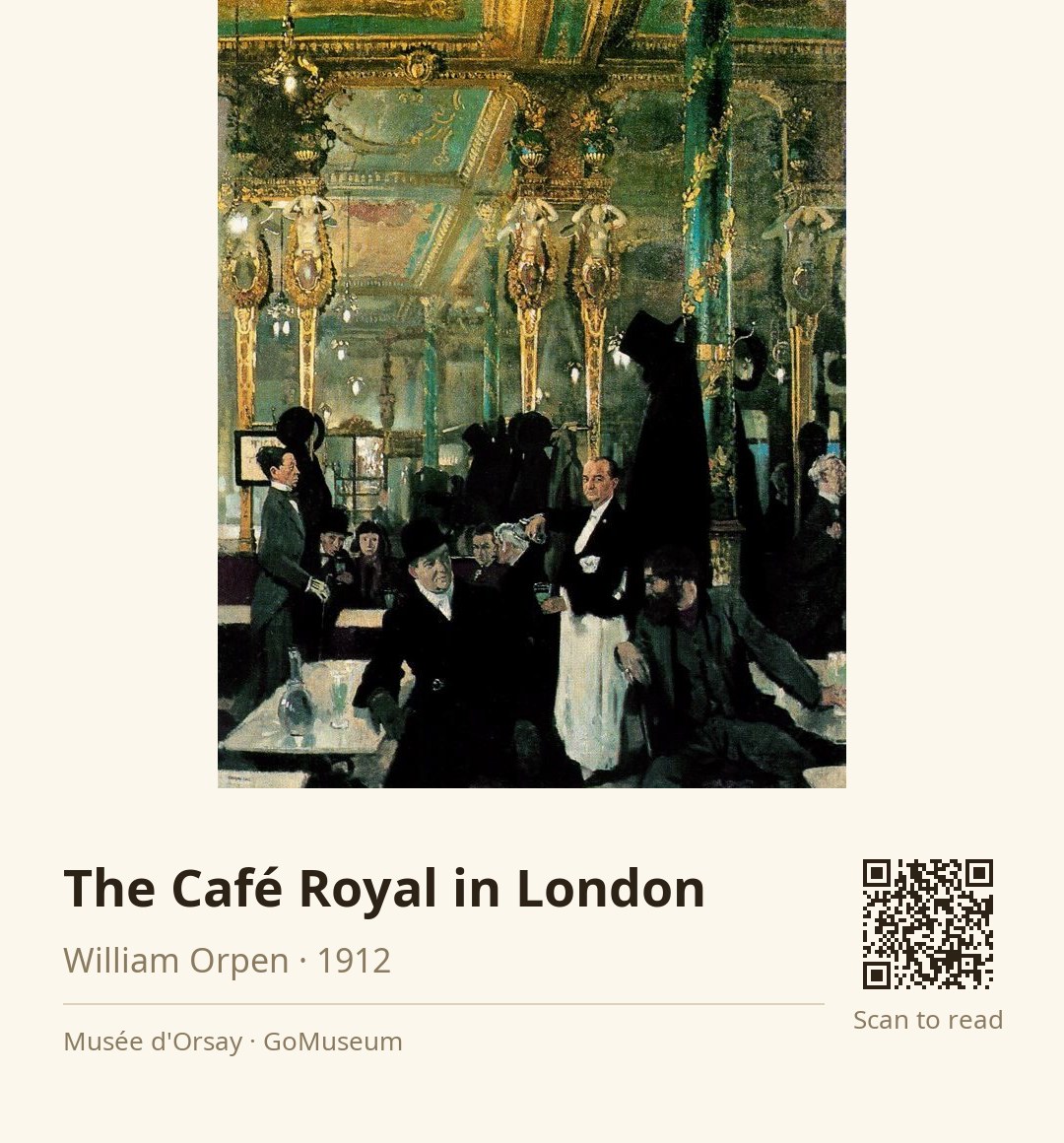
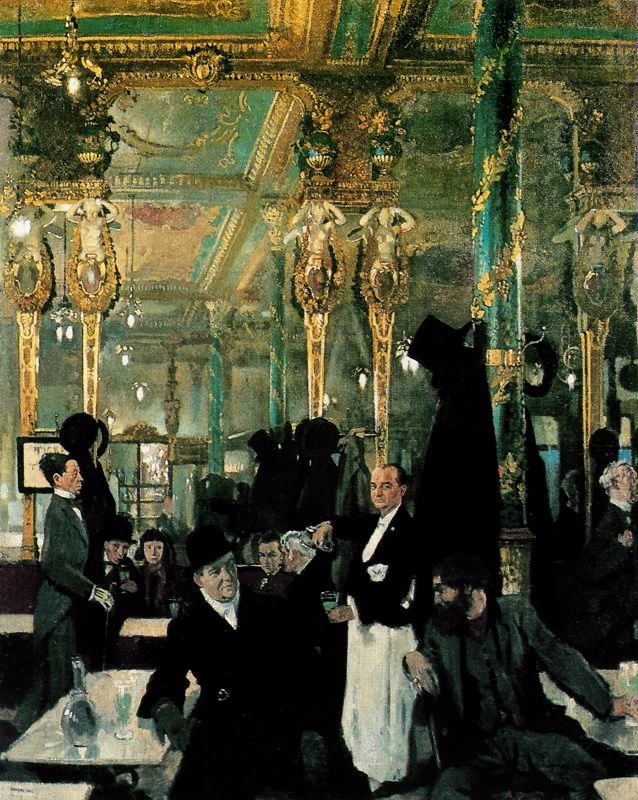
🎧 This work has audio narration — listen in the appTake a moment to really look at "The Café Royal in London." Can you feel the buzz of conversation and the clinking of glasses just by standing here? Notice the way Orpen captures the reflections in the mirrors and the intricate details of the columns. The light dances across the faces of the patrons, creating a lively atmosphere that pulls you right into the scene. The Café Royal was a hub for artists, writers, and intellectuals in early 20th-century London, and Orpen’s inclusion of various figures—like fellow artists and writers—hints at the vibrant cultural tapestry of the time. Painted in 1912, this work reflects Orpen's status as a prominent portraitist and his keen eye for the nuances of society. He was known for his ability to blend realism with a touch of the theatrical, making each figure come alive on the canvas. As you stand here, think about the conversations that might have taken place in this very café. What stories do you imagine these figures could tell?
William Orpen was an Irish artist born on November 27, 1878, in Stillorgan, County Dublin. A prodigious talent, he studied at the Dublin Metropolitan School of Art and the Slade School of Fine Art, where he honed his skills in oil painting and developed a distinctive style that often incorporated mirrors and references to other artworks. Orpen became a prominent portraitist in Edwardian society, capturing the likenesses of the wealthy and influential.
His career took a significant turn during World War I when he served as an official war artist, producing a remarkable body of work that documented the harsh realities of war, including portraits of soldiers and generals. His dedication to this role, while earning him accolades such as a knighthood and membership in the Royal Academy, ultimately took a toll on his health and reputation.
Despite his initial success, Orpen's work faced criticism after his death on September 29, 1931, leading to a long period of neglect. However, his contributions to art, particularly in the realm of war representation and portraiture, have been increasingly recognized since the 1980s, solidifying his place in art history as a significant figure who captured the complexities of his time.
In 1912, William Orpen painted 'The Café Royal in London,' a vibrant scene that captures the essence of Edwardian society. Commissioned by Davis Edmund, this piece was part of a series that showcased the lively atmosphere of the famous café, a hub for artists and intellectuals. The painting features a collective portrait of notable figures, including the likes of Augustus John and James Pryde, mingling in the café's opulent interior. Initially, it was well-received, celebrated for its lively depiction of social interactions. However, Orpen's reputation fluctuated over the years, and after his death in 1931, critics turned a critical eye on his work, leading to a period where his paintings were seldom exhibited. It wasn't until the 1980s that his contributions began to be reassessed, allowing this captivating piece to once again take its rightful place in the art world.
As you gaze at 'The Café Royal in London,' take a moment to appreciate Orpen's masterful brushwork. Notice how he employs a variety of techniques to create depth and texture. The light in the painting is not just a backdrop; it dances across the figures, enhancing their expressions and interactions. Orpen's use of color is particularly striking—rich, warm tones dominate, inviting you into the scene. The composition is carefully structured, with the reflections in the mirrors adding layers of complexity, almost like a visual echo of the conversations happening within the café. The scale of the painting, quite large at 137.5 by 113.5 centimeters, envelops you, making you feel as if you are part of the gathering rather than just an observer.
Painted in 1912, it reflects Orpen's mastery in blending portraiture with social commentary, influencing a generation of artists who sought to depict the complexities of modern life. His innovative use of mirrors and layered compositions invites viewers to explore not just the subjects, but the very act of seeing itself. Remember, this isn’t just a café scene; it’s a mirror reflecting the social dynamics of its time, a precursor to the more fragmented narratives that would emerge in the 20th century.
One surprising aspect of Orpen's career is that, during World War I, he became the most prolific official war artist for Britain, producing 138 works that documented the harsh realities of war. His experiences on the front lines deeply influenced his later works, including a shift in how he portrayed human emotion and social settings, as seen in 'The Café Royal in London.'
Orpen often included mirrors in his compositions, which allowed him to create images within images, adding layers of complexity and depth to his works.
Orpen's tumultuous personal life, including a troubled marriage and a long affair with an American millionairess, often provided him with rich emotional experiences that influenced his portrayal of human interactions and emotions in his art.
Orpen taught at the Dublin Metropolitan School of Art, influencing a generation of young Irish artists, including notable figures like Seán Keating and Grace Gifford, during a time of cultural revival in Ireland.