L'air du soir
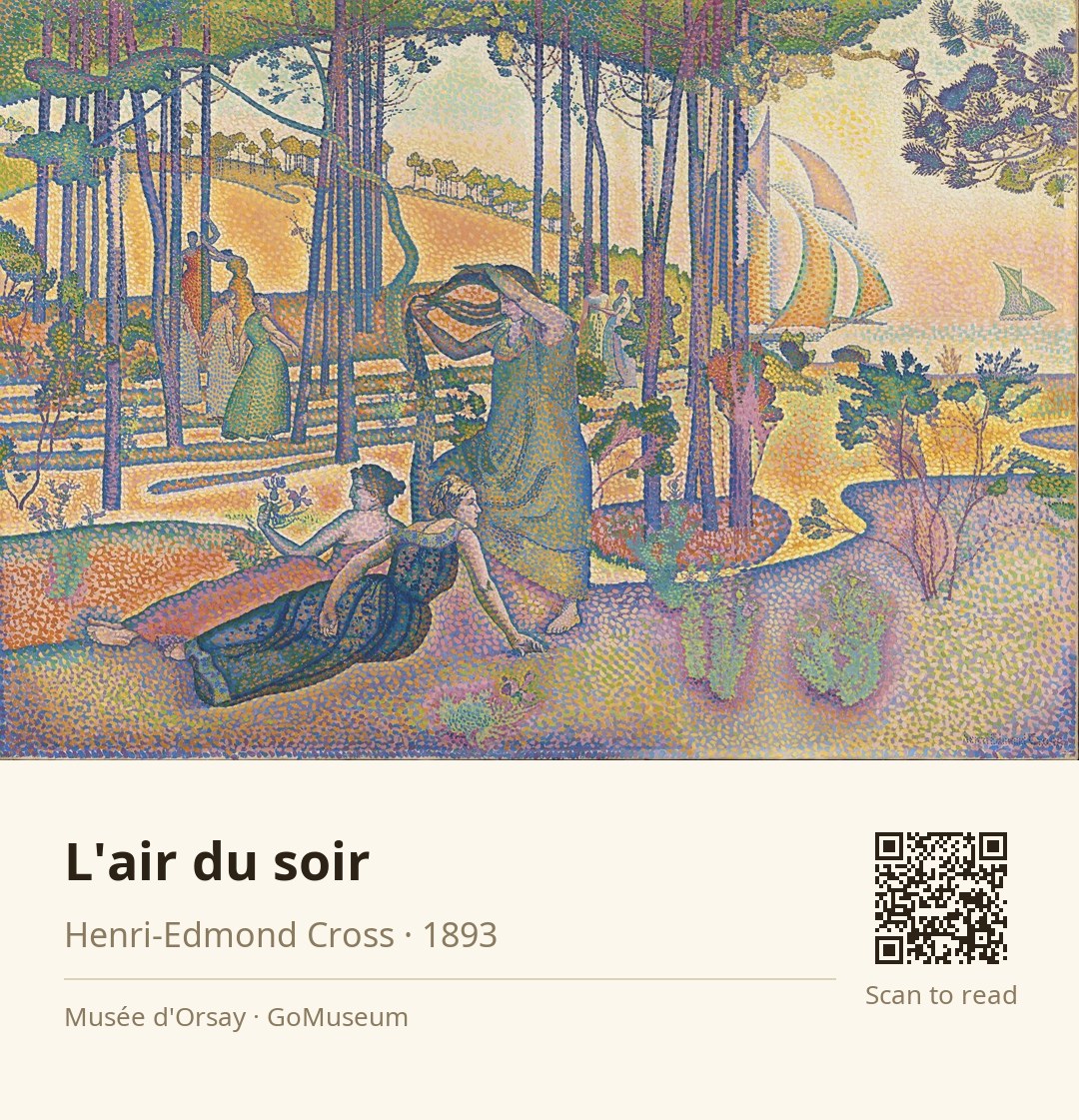
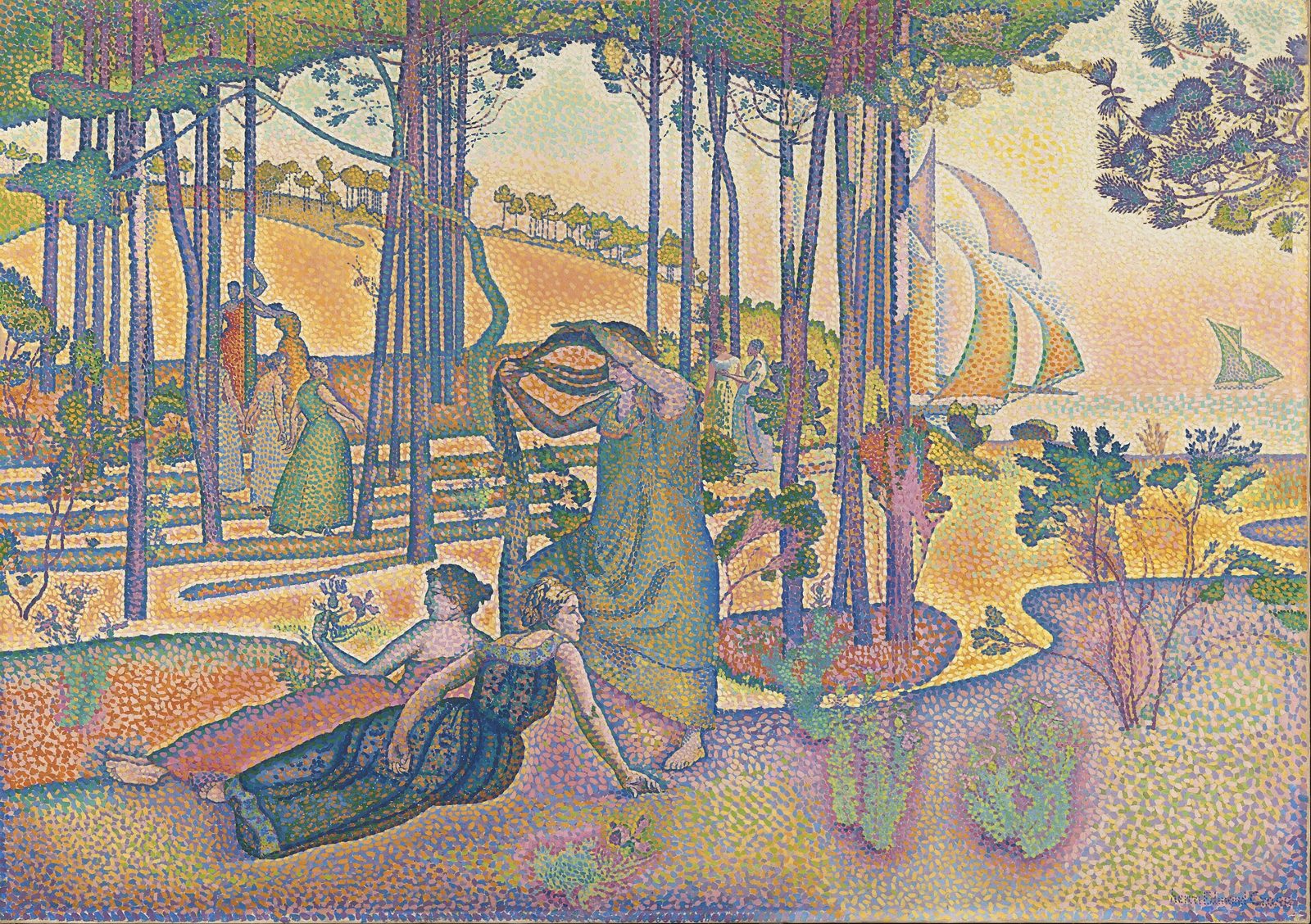
🎧 This work has audio narration — listen in the appTake a moment to soak in the warmth of "L'air du soir." Notice how the golden hues of the sunset spill across the canvas, enveloping the two sailing boats in a soft embrace. Look closely at the delicate brushstrokes that create the shimmering light filtering through the trees, almost as if you can feel the gentle breeze of that evening by the sea. These details matter because they capture the essence of a fleeting moment, a serene escape into nature that Henri-Edmond Cross masterfully conveys through his Neo-Impressionist style. The way he uses color and light not only reflects the beauty of the landscape but also evokes a sense of tranquility and nostalgia, inviting you to linger in this idyllic scene. Created in 1893, this painting was part of a movement that sought to break away from traditional techniques, focusing instead on the interplay of light and color. Cross, influenced by his friendships with artists like Paul Signac, embraced this innovative approach, which would later inspire the Fauvist movement. As you stand here, think about the feelings this scene stirs in you. What memories does it evoke of your own evenings by the water?
Henri-Edmond Cross, born on May 20, 1856, in Douai, France, was a pivotal figure in Neo-Impressionism and a precursor to Fauvism. Initially trained in Realism, he evolved his style under the influence of artists like Paul Signac and Georges Seurat, adopting a lighter palette and divisionist techniques. His early works, characterized by dark tones, transitioned to vibrant landscapes inspired by the Mediterranean light after he moved to southern France in 1891.
Cross's artistic journey was marked by a commitment to anarchist ideals, which shaped his subject matter, often depicting utopian scenes. He co-founded the Société des Artistes Indépendants, promoting unjuried exhibitions that fostered artistic freedom. His marriage to Irma Clare in 1893 further enriched his life and work, as she became a frequent subject of his paintings.
Cross's influence extended to notable artists like Henri Matisse, cementing his place in art history. His legacy is preserved in major collections worldwide, where his vibrant landscapes and innovative techniques continue to inspire. He passed away on May 16, 1910, leaving behind a rich body of work that reflects both his artistic evolution and his philosophical convictions.
Henri-Edmond Cross painted 'L'air du soir' around 1893, and it was showcased at the Salon des Indépendants in Paris the following year. This exhibition was a significant moment for artists seeking to break free from the constraints of traditional salons, where only select works were displayed. The painting was later owned by Paul Signac, a close friend and fellow artist, before passing to his daughter Ginette. In 1976, Ginette donated the piece to the public, and it has been part of the Musée d'Orsay's collection since 1977.
As you look at 'L'air du soir', pay attention to Cross's use of color and light. His brushwork is both delicate and dynamic, creating a shimmering effect that captures the essence of a sunset. Notice how he employs a divisionist technique, applying small dots and strokes of color that blend optically rather than physically. This method not only enhances the vibrancy of the scene but also evokes a sense of movement, as if the light itself is dancing across the canvas. The horizontal format draws your eye across the painting, inviting you to explore the tranquil waters and the lush greenery framing the boats. The composition feels balanced yet alive, a perfect harmony of nature's beauty and the artist's vision.
He shared anarchist ideals with his contemporaries, believing in a utopian society. This philosophy influenced his choice of subjects, as he often depicted idyllic scenes that reflected his hopes for a better world. His work was not only about beauty but also about a vision for society, making him a unique figure in the art world of his time.
He was originally named Henri-Edmond-Joseph Delacroix, but he changed it to avoid confusion with the famous Romantic painter Eugène Delacroix.
His close friendship with Paul Signac and other Neo-Impressionists significantly impacted his transition to the divisionist technique, which he fully embraced around 1891.
In 1891, he painted a portrait of Madame Hector France, whom he later married in 1893, highlighting a personal and professional intertwining in his artistic journey.