 Image: Sailko
The Seine and Louvre
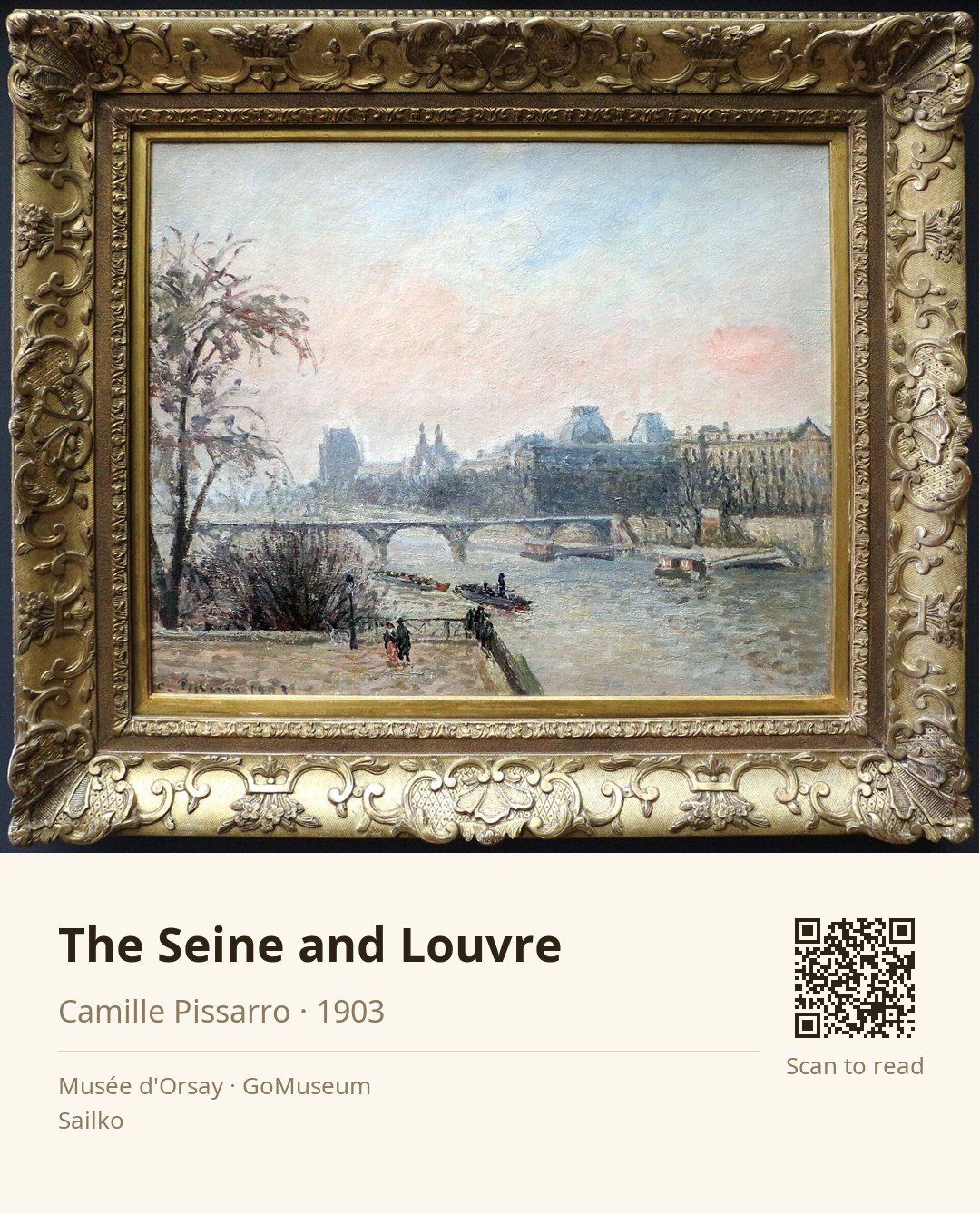
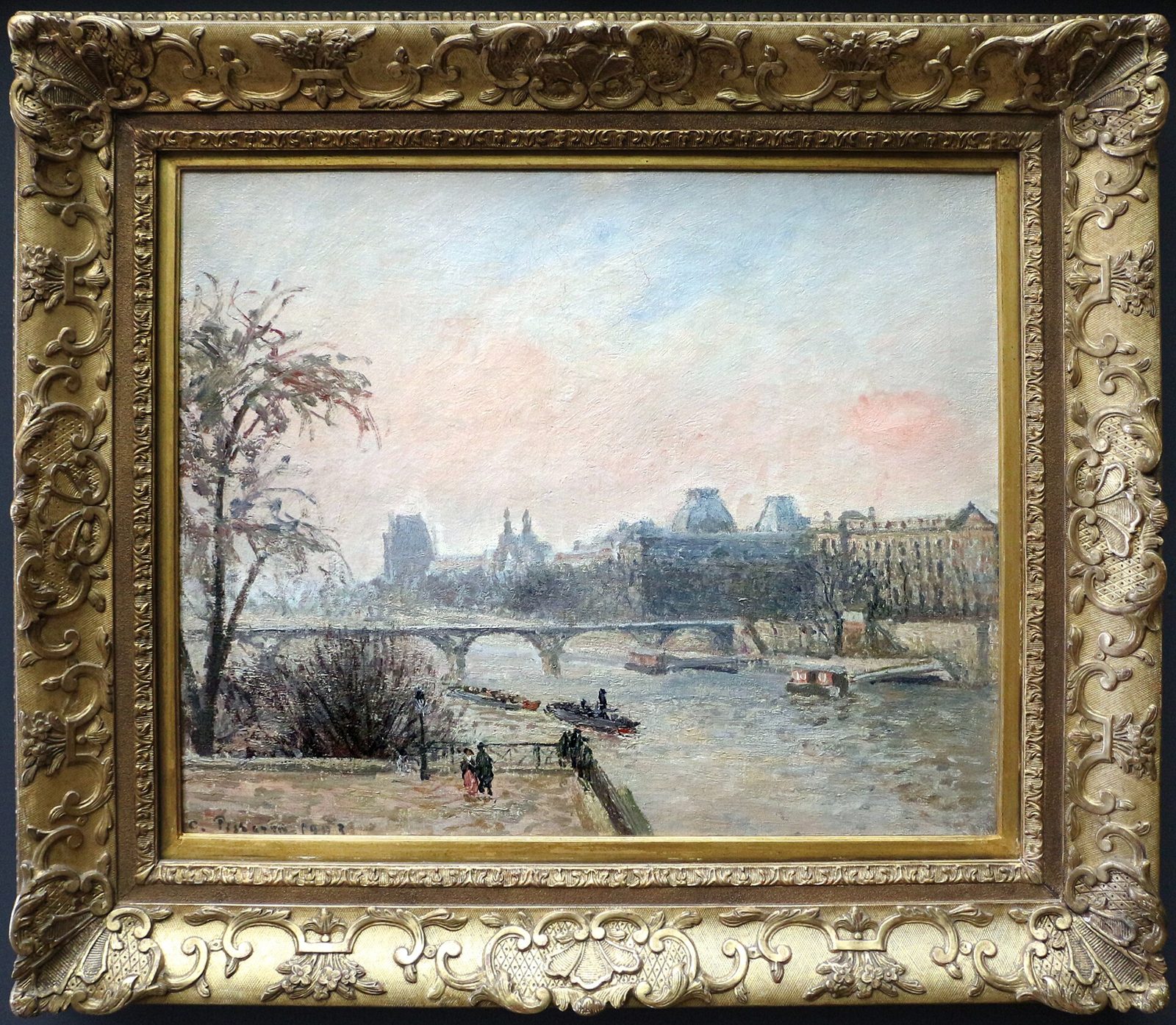
🎧 This work has audio narration — listen in the appThe Seine flows gently beneath the bridge in Camille Pissarro's 1903 painting, where the Louvre stands majestically in the background. Figures stroll along the riverside path, framed by lush trees and bushes, while small boats bob on the water, adding life to the tranquil scene.
This delicate brushwork captures not just the architecture of Paris but also the everyday moments of its inhabitants, reflecting Pissarro's commitment to portraying the common man in natural settings. The muted palette of soft blues and pinks creates a serene atmosphere, inviting viewers to immerse themselves in this peaceful riverside moment. Pissarro's choice of subject highlights the harmony between nature and urban life, a theme central to his work as he sought to depict the beauty of ordinary scenes.
Pissarro, known as a pivotal figure in the Impressionist movement, painted this scene during a time when he was deeply engaged with the interplay of light and color, striving to capture fleeting moments in the landscape.
Jacob Abraham Camille Pissarro, born on July 10, 1830, in Saint Thomas, was a Danish-French painter pivotal to the Impressionist and Neo-Impressionist movements. His artistic journey began under the influence of masters like Courbet and Corot, and he later collaborated with Seurat and Signac, embracing Neo-Impressionism at age 54. Pissarro's dedication to depicting rural life and the working class set him apart; he painted everyday scenes without grandeur, focusing on authenticity.
As a mentor, Pissarro played a crucial role in the development of fellow artists, including Cézanne, Gauguin, and Van Gogh, earning him the title "dean of the Impressionist painters." His warm personality and wisdom made him a father figure within the art community. Pissarro was the only artist to exhibit in all eight Paris Impressionist exhibitions from 1874 to 1886, solidifying his legacy. Despite facing criticism for his subjects, he remained committed to his vision, advocating for a personal approach to classicism. Pissarro passed away on November 13, 1903, leaving an indelible mark on art history.
Camille Pissarro's 'The Seine and Louvre' was painted in 1903, a pivotal year for the artist as he prepared for the eighth Impressionist exhibition. His commitment to capturing everyday life resonated with audiences, reflecting a shift in artistic focus towards the ordinary and the intimate. This piece, with its serene depiction of Parisian life, exemplifies Pissarro's dedication to portraying the harmony between nature and urbanity, a theme that would define his legacy.
In 'The Seine and Louvre,' Pissarro employs delicate brushwork that brings a lightness to the scene, allowing the viewer to feel the gentle flow of the river and the rustle of the trees. The oil paint glides smoothly across the canvas, creating soft transitions between the muted blues and pinks of the sky and water. This technique captures the fleeting effects of light, a hallmark of Impressionism. The composition is carefully balanced, with the bridge acting as a focal point that draws the eye across the canvas. Pissarro's choice to include small boats and strolling figures adds a dynamic element, inviting you into a moment of everyday life.
James Gay Sawkins, a British painter and geologist, is suggested to have inspired Pissarro's early artistic development.