The Seine in Argenteuil
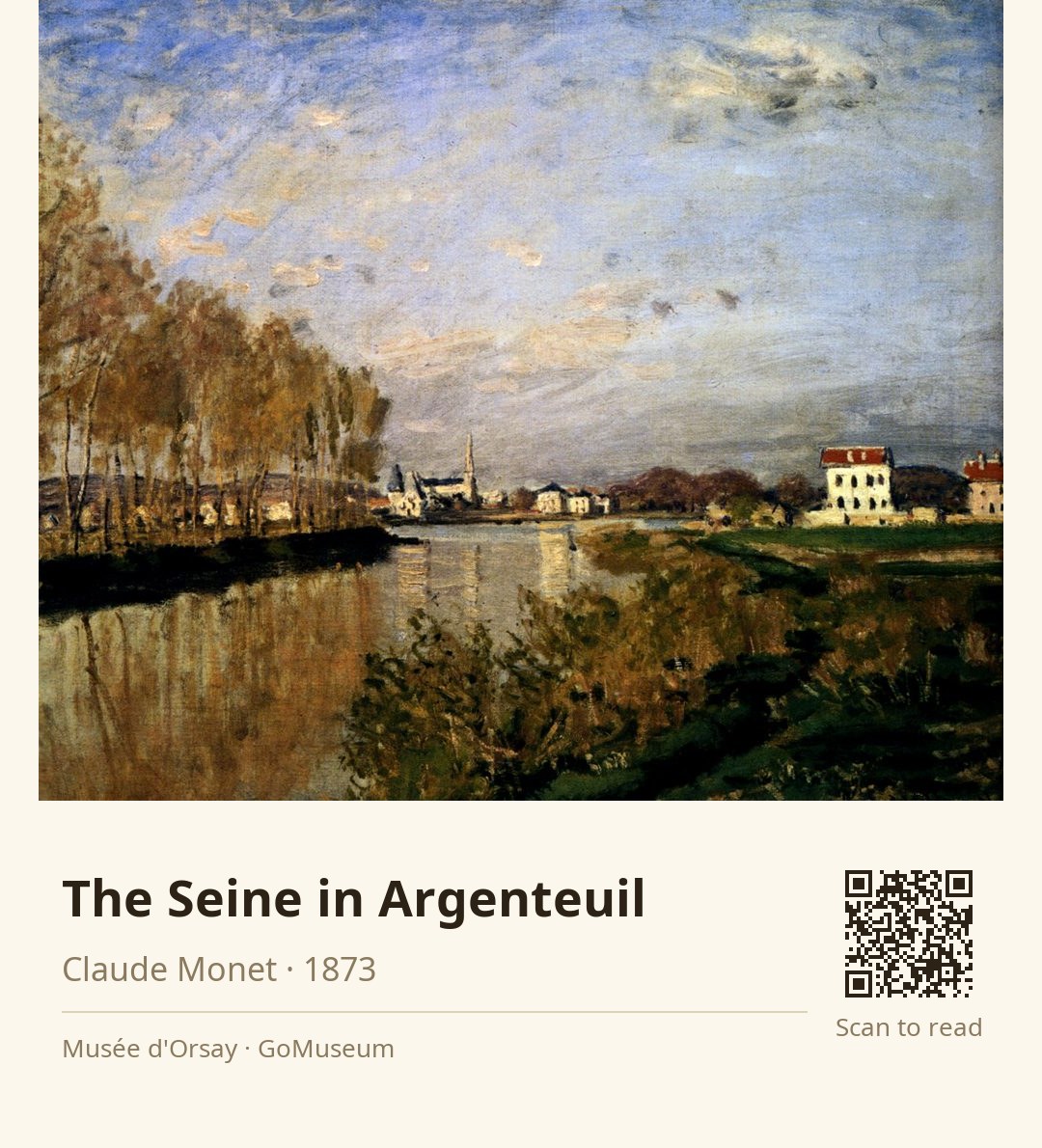
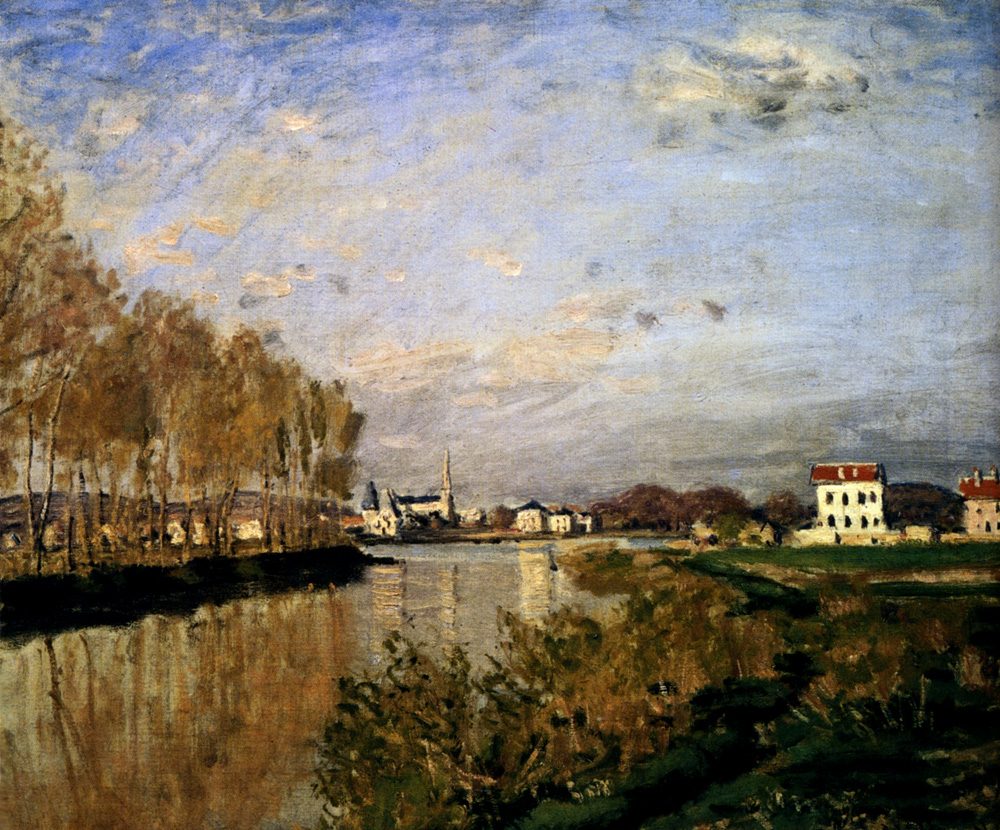
🎧 This work has audio narration — listen in the appTake a moment to really soak in the scene before you. Monet’s "The Seine in Argenteuil" captures a fleeting moment in time, where the shimmering water reflects the soft hues of the sky. Notice how the brushstrokes dance across the canvas, creating a sense of movement in the water and the gentle sway of the boats.
What’s remarkable here is Monet’s use of light. Look closely at the way he captures the sunlight glinting off the surface of the Seine, almost as if the water is alive. This technique is a hallmark of Impressionism, a movement Monet helped to pioneer, where the focus is on capturing the essence of a moment rather than detailing every single element.
Painted in 1873, this piece is part of a series Monet created while exploring the landscapes around Argenteuil, a town just outside Paris. It reflects his deep connection to nature and his desire to portray its beauty in all its changing forms.
As you stand here, think about how Monet was not just painting a river; he was capturing a feeling, a memory of a summer day. What feelings does this scene evoke for you? What stories might this river tell if it could speak?
Oscar-Claude Monet, born on November 14, 1840, in Paris, was a pioneering French painter and a founder of Impressionism, a movement that transformed the art world. Raised in Le Havre, he developed a passion for nature and painting early on, encouraged by his mother, while his father hoped he would pursue a business career. After his mother's death in 1857, Monet moved in with his aunt, who supported his artistic ambitions.
Monet's career began with caricatures, but he soon sought formal training, studying under Eugène Boudin, who introduced him to plein air painting. His breakthrough came in 1866 with "La Femme à la robe verte," which garnered attention at the Salon. The term "Impressionism" originated from his work "Impression, Sunrise," exhibited in 1874, marking a shift away from traditional art.
Throughout his life, Monet focused on capturing the essence of light and color in nature, creating series of paintings that depicted the same scenes under varying conditions, such as his famous haystacks and water lilies. He settled in Giverny in 1883, where he cultivated a beautiful garden that became his muse. Despite personal hardships, including the loss of loved ones and health issues, Monet's relentless dedication to his craft solidified his place in art history as a master of modernism, influencing countless artists and leaving a lasting legacy. He died on December 5, 1926, in Giverny, celebrated as one of the most significant figures in art.
Monet's 'The Seine in Argenteuil' was painted in 1873, a pivotal year in the artist's exploration of the Impressionist style. This piece was part of a series capturing the landscapes around Argenteuil, a town just outside Paris that held deep significance for Monet. The painting was exhibited at the prestigious Durand-Ruel gallery in New York in 1938, alongside other notable works. Over the years, it changed hands, eventually entering the collection of the Musée d'Orsay in Paris, where it remains a highlight.
As you gaze at 'The Seine in Argenteuil', pay attention to Monet's masterful brushwork. The strokes are not just random; they are deliberate, creating a sense of movement that mimics the gentle ripples of the water. Notice how he layers colors, allowing the vibrant blues and greens to blend seamlessly, evoking the shimmering surface of the Seine. The composition is structured yet fluid, guiding your eye across the canvas from the foreground to the horizon. Monet's choice of a horizontal format enhances the expansive feel of the landscape, inviting you to immerse yourself in this serene moment. The play of light is particularly striking; he captures the sunlight dancing on the water, almost as if the scene is alive. This technique, known as 'en plein air' painting, allows Monet to convey the ephemeral quality of the moment, making you feel as though you could step right into the scene.
This painting, created in 1873, reflects Monet's commitment to plein air painting, a technique that would inspire countless artists to embrace the outdoors as their studio. By portraying the serene beauty of the Seine, Monet not only highlighted the changing effects of light on water but also set the stage for future explorations of color and form. His work encouraged a departure from traditional realism, influencing a generation of artists who sought to express their perceptions of the world rather than merely replicate it.
Did you know that 'The Seine in Argenteuil' played a role in popular culture? It was featured in the 2001 film 'Vanilla Sky', where the main character, David, owns the painting.
Monet's use of 'en plein air' painting is particularly significant in 'The Seine in Argenteuil', as it allowed him to capture the natural light and atmosphere of the scene directly from nature, enhancing the painting's sense of immediacy and movement.
Monet had a deep personal connection to Argenteuil, as he frequently painted the landscapes there, reflecting his fondness for the area and its significance in his artistic development.