The Wheel of Fortune
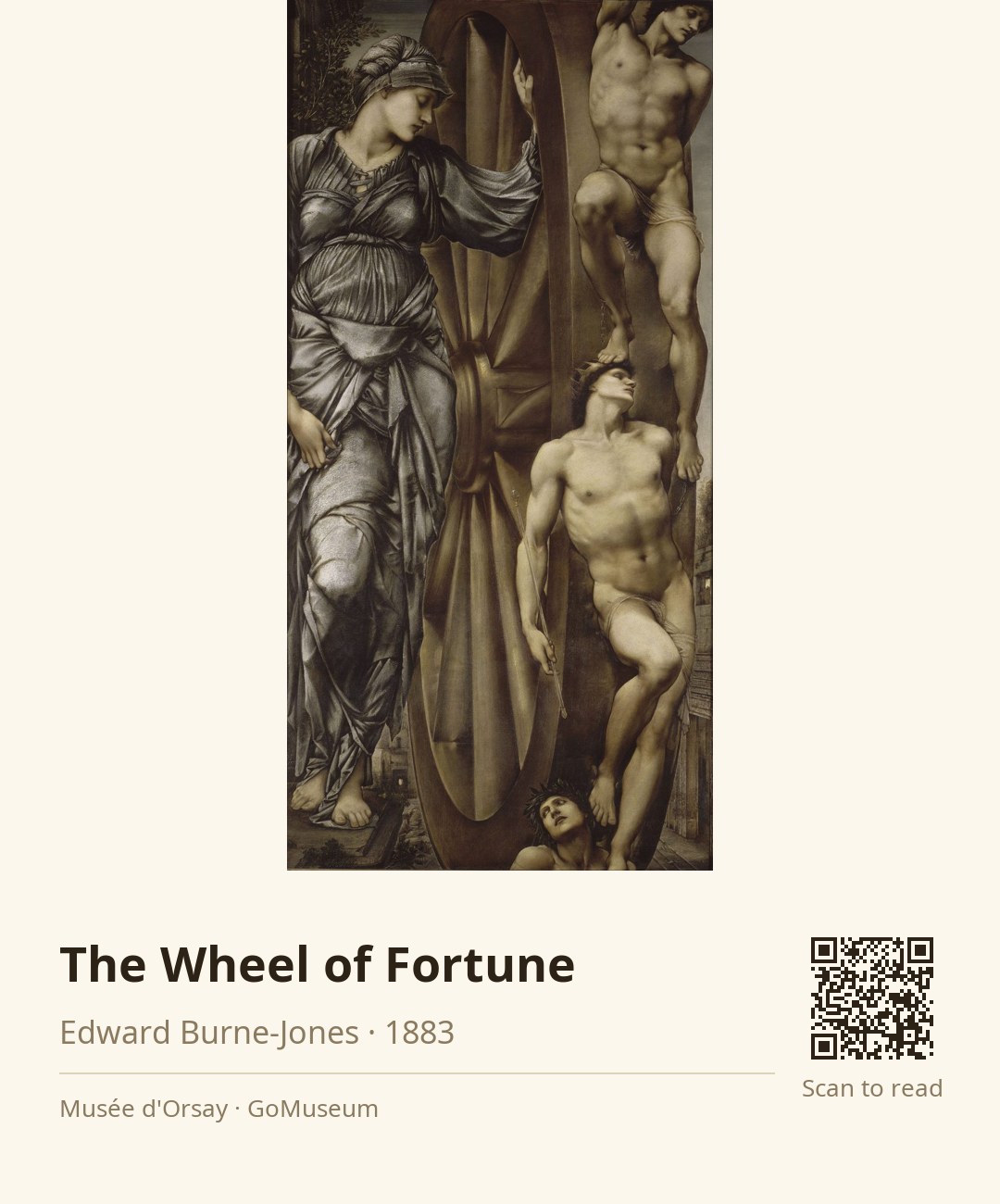
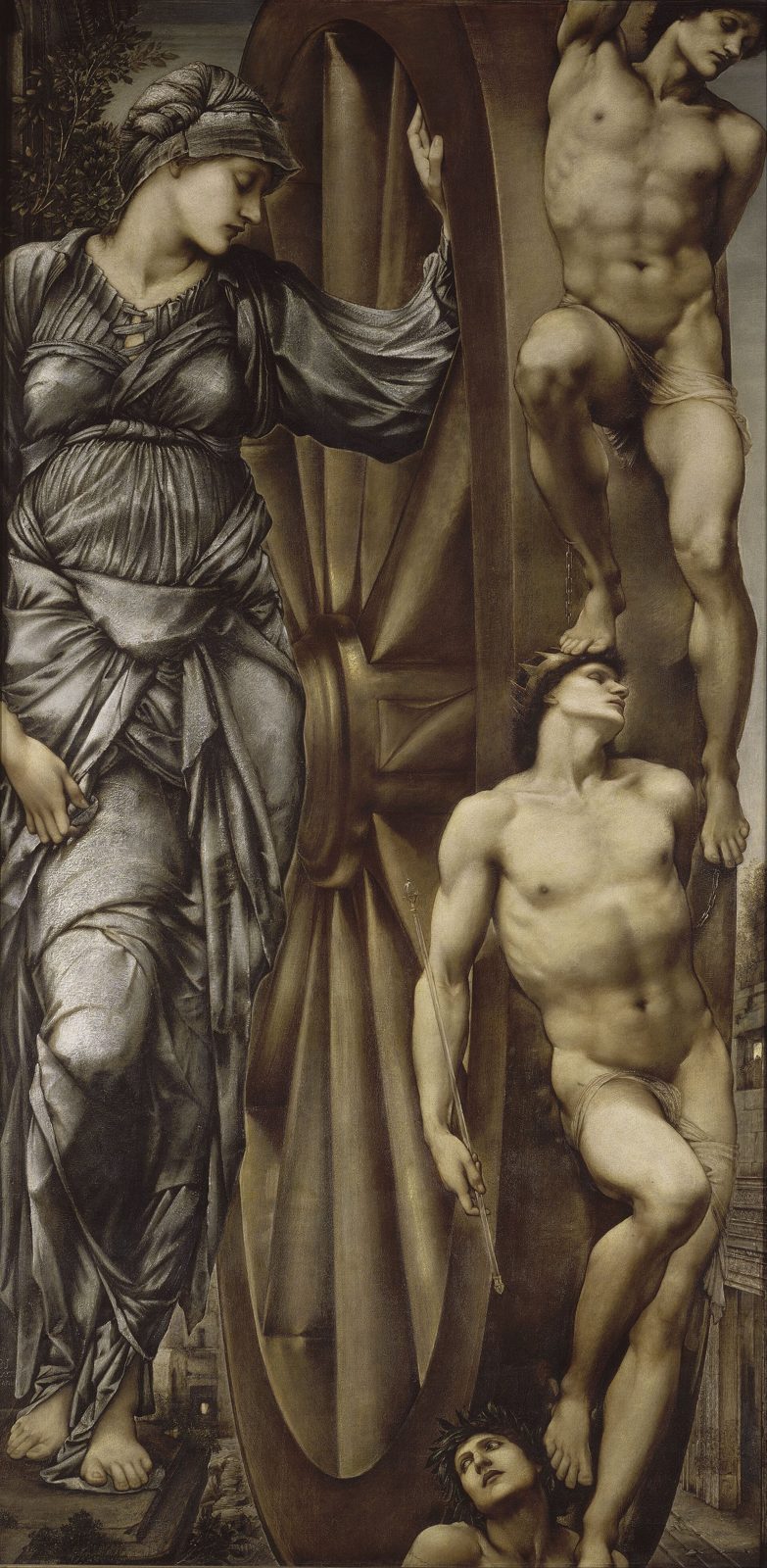
🎧 This work has audio narration — listen in the appTake a moment to really absorb the scene in front of you. Edward Burne-Jones’ “The Wheel of Fortune” is not just a painting; it’s a vivid narrative of life’s unpredictable twists. Notice the towering figure of Fortune herself, draped in a flowing blue gown, her eyes closed as she turns the massive wheel. This isn’t just a decorative choice; it symbolizes the blind nature of fate, indifferent to who it lifts or casts down.
Now, look closely at the three figures caught in the wheel’s relentless motion: a slave, a king, and a poet. Each one represents different walks of life, yet they’re all subject to the same fate. This detail is crucial because it reminds us that no matter our status, we are all at the mercy of fortune’s whims. Burne-Jones was deeply influenced by classical themes, and this painting serves as a modern reflection on the age-old concept of vanitas—the fleeting nature of life and success.
Created between 1875 and 1883, this piece was originally intended as part of a larger triptych that never came to fruition. It’s fascinating to think about how this single work encapsulates so much of Burne-Jones’ artistic vision and the Pre-Raphaelite ethos.
As you stand here, consider this: What moments in your own life have felt like a turn of the wheel? How does the idea of fortune resonate with your experiences? Let that thought linger as you take in the rest of this remarkable piece.
Sir Edward Coley Burne-Jones, born on August 28, 1833, in Birmingham, was a pivotal figure in the Pre-Raphaelite movement, known for his enchanting paintings and intricate designs. Orphaned shortly after birth, he was raised by his father and a devoted housekeeper, which shaped his sensitive and imaginative character. Initially pursuing a career in theology, Burne-Jones was inspired by the works of Dante Gabriel Rossetti and ultimately chose art, forming a lifelong partnership with William Morris.
His early works, influenced by romantic literature and medieval themes, showcased his talent for detail and narrative depth. By the 1870s, he had developed a distinctive style, marked by ethereal figures and dreamlike landscapes, earning acclaim in the Aesthetic Movement. His notable works, including "The Beguiling of Merlin," were exhibited at the Grosvenor Gallery, establishing him as a leading artist of his time.
Burne-Jones also excelled in decorative arts, contributing significantly to stained glass design, which revitalized this craft in the 19th century. His legacy endures in churches across the UK and beyond. Despite personal struggles, including a tumultuous affair and critical backlash, he remained a respected figure until his death on June 17, 1898. His funeral at Westminster Abbey marked a historic recognition of an artist's contribution to culture, solidifying his place in art history.
Edward Burne-Jones' 'The Wheel of Fortune' was created over an eight-year span, from 1875 to 1883, and was first exhibited at the Grosvenor Gallery in London in the same year. The painting was part of a larger vision for a triptych that never materialized, yet it stands alone as a powerful statement on fate and fortune. Following its debut, it was well-received and became part of Balfour's collection until his death in 1930. The artwork changed hands within the Balfour family until it was sold to the vicomte Charles de Noailles in 1932. In 1980, it was acquired by the French state and has since been housed in the Musée d'Orsay in Paris, where it continues to draw attention for its rich narrative and emotional depth.
As you gaze at 'The Wheel of Fortune', pay attention to the way Burne-Jones handles color and light. The palette is muted, dominated by greys, browns, and deep blues, creating a somber mood that reflects the weight of fate. Notice how the figures are arranged around the massive wheel, their nudity emphasizing vulnerability against Fortune's indifferent power. The brushwork is meticulous, almost delicate, capturing the flowing drapery of Fortune's gown and the muscular forms of the men. The composition is structured yet dynamic, with the wheel acting as a central axis around which the figures rotate, reinforcing the theme of life's cyclical nature. The closed eyes of Fortune suggest a blindness to the outcomes of her actions, inviting you to ponder the randomness of fortune itself.
Edward Burne-Jones's 'The Wheel of Fortune' is a striking embodiment of the Pre-Raphaelite ethos, merging classical and medieval themes to explore life's unpredictable nature. This painting not only showcases Burne-Jones's unique style but also influenced a generation of artists grappling with similar themes of fate and mortality. The vivid imagery of the wheel turning, with figures representing different societal roles—an enslaved man, a king, and a poet—invites viewers to reflect on their own positions in the cycle of fortune. Its legacy is profound, as it helped cement the Pre-Raphaelite Brotherhood's impact on the art world, pushing boundaries and encouraging emotional depth in narrative painting. Remember, this isn't just a depiction; it's a commentary on the human condition, reminding us that fortune can elevate or crush us all.
Burne-Jones originally conceived 'The Wheel of Fortune' as part of a larger triptych that focused on the Fall of Troy, which ultimately never came to fruition.
While the wheel and figures dominate the canvas, subtle details like the fragments of a wall and a tree in the background add depth and context, suggesting a world beyond the immediate drama of Fortune's wheel.