 Image: Sailko
The Beach at Trouville
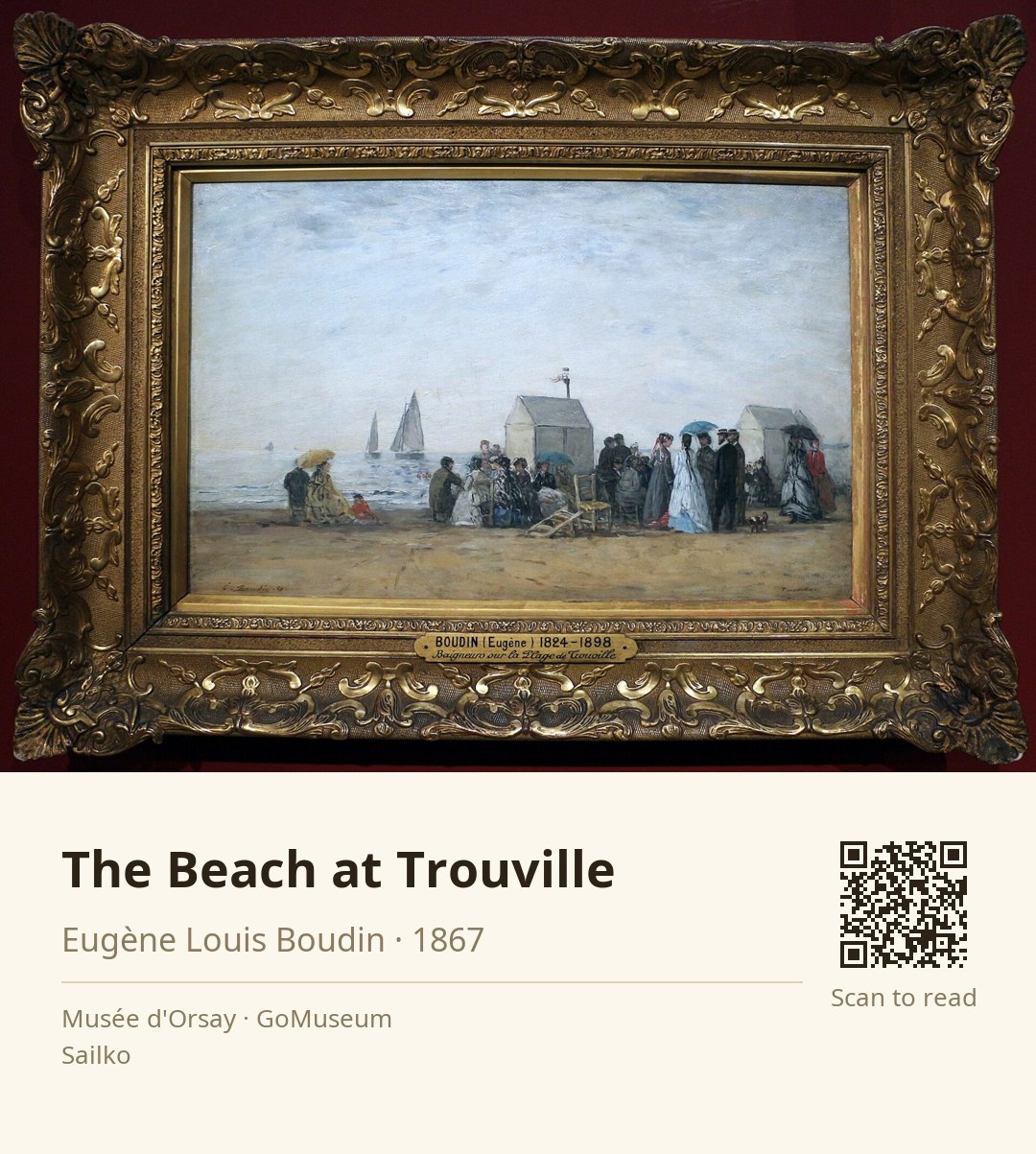
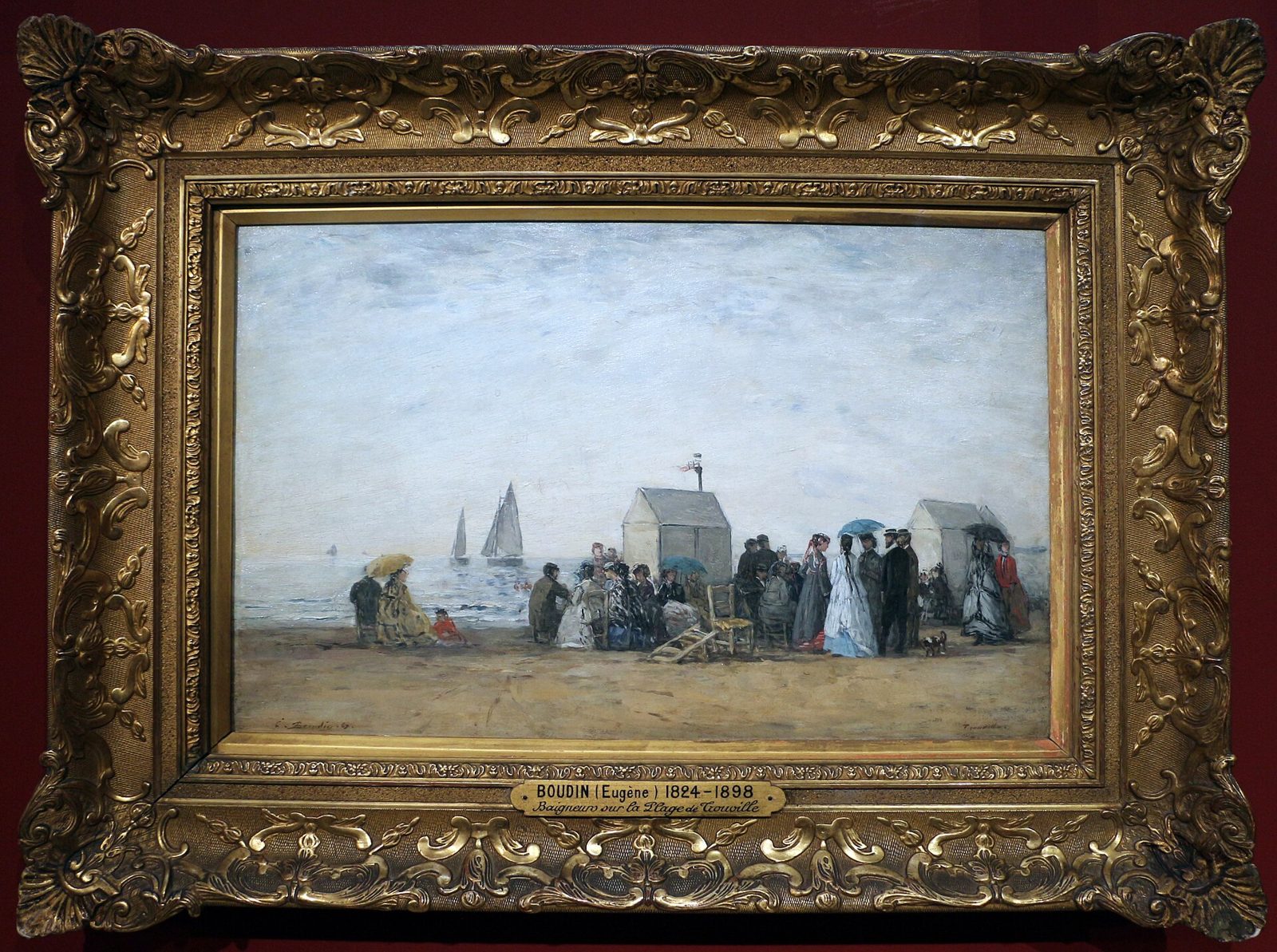
🎧 This work has audio narration — listen in the appA small dog plays at the feet of elegantly dressed figures on the sandy shores of Trouville, where the calm sea meets an overcast sky. Women in long dresses hold parasols, creating a striking contrast against the muted blues and grays of the landscape. This scene captures a moment of leisure, where conversations unfold and the tranquility of the beach invites a sense of relaxation.
Boudin's choice to depict this fashionable gathering at the beach reflects the growing popularity of seaside resorts in the 19th century, a trend that coincided with the rise of leisure culture among the bourgeoisie. The beach, once a simple natural setting, transformed into a social stage where people showcased their attire and engaged in leisurely activities. The presence of beach huts hints at the burgeoning tourism industry, while the gentle waves and distant sailboats evoke a serene coastal atmosphere.
Eugène Boudin, known for his mastery of outdoor painting, created "The Beach at Trouville" in 1867, capturing not just a picturesque view but also a cultural moment in time. His work stands as a testament to the evolving relationship between society and nature during this period.
Eugène Louis Boudin, born on July 12, 1824, in Honfleur, was a pioneering French landscape painter known for his outdoor work, particularly marine scenes. The son of a harbor pilot, Boudin's early life revolved around the sea, shaping his artistic focus. He transitioned from a stationery shop owner to a full-time painter at 22, influenced by artists like Constant Troyon and Jean-François Millet. His exposure to the Dutch masters and encouragement from Johan Jongkind led him to embrace plein air painting, a practice that would define his style.
Boudin became a mentor to Claude Monet, instilling in him a passion for capturing light and color in nature. Although he participated in the first Impressionist exhibition in 1874, he never saw himself as a radical innovator. His works, characterized by their atmospheric quality and vibrant pastels, earned him acclaim, including a gold medal at the 1889 Exposition Universelle. Despite facing personal losses, including the death of his wife, Boudin continued to paint until his passing on August 8, 1898, in Deauville. His legacy endures through the Eugène Boudin Prize and his influence on the Impressionist movement, marking him as a significant figure in art history.
Boudin's technique in 'The Beach at Trouville' showcases his mastery of oil paint on panel, allowing for rich textures and vibrant colors. The brushwork is fluid and spontaneous, capturing the movement of the sea and the gentle sway of the figures. The overcast sky is painted in soft blues and grays, creating a serene backdrop that contrasts beautifully with the bright, elegant attire of the figures. The composition is carefully balanced, with the figures and beach huts drawing the eye towards the horizon, inviting viewers into the scene. Boudin's choice to paint en plein air is evident in the way he captures the fleeting effects of light and atmosphere, making the viewer feel the cool breeze and hear the distant waves.
Interestingly, Boudin was one of the first artists to paint outdoors, a practice that was not common at the time. This innovative approach not only influenced his own work but also inspired a generation of artists, including Claude Monet, who credited Boudin with teaching him the importance of painting directly from nature.
Boudin played a crucial role in Monet's artistic development by encouraging him to focus on landscape painting instead of caricatures, fostering Monet's love for color and light.
Growing up in a maritime environment and working on a steamboat likely deepened Boudin's connection to the sea, which became a central theme in his paintings.