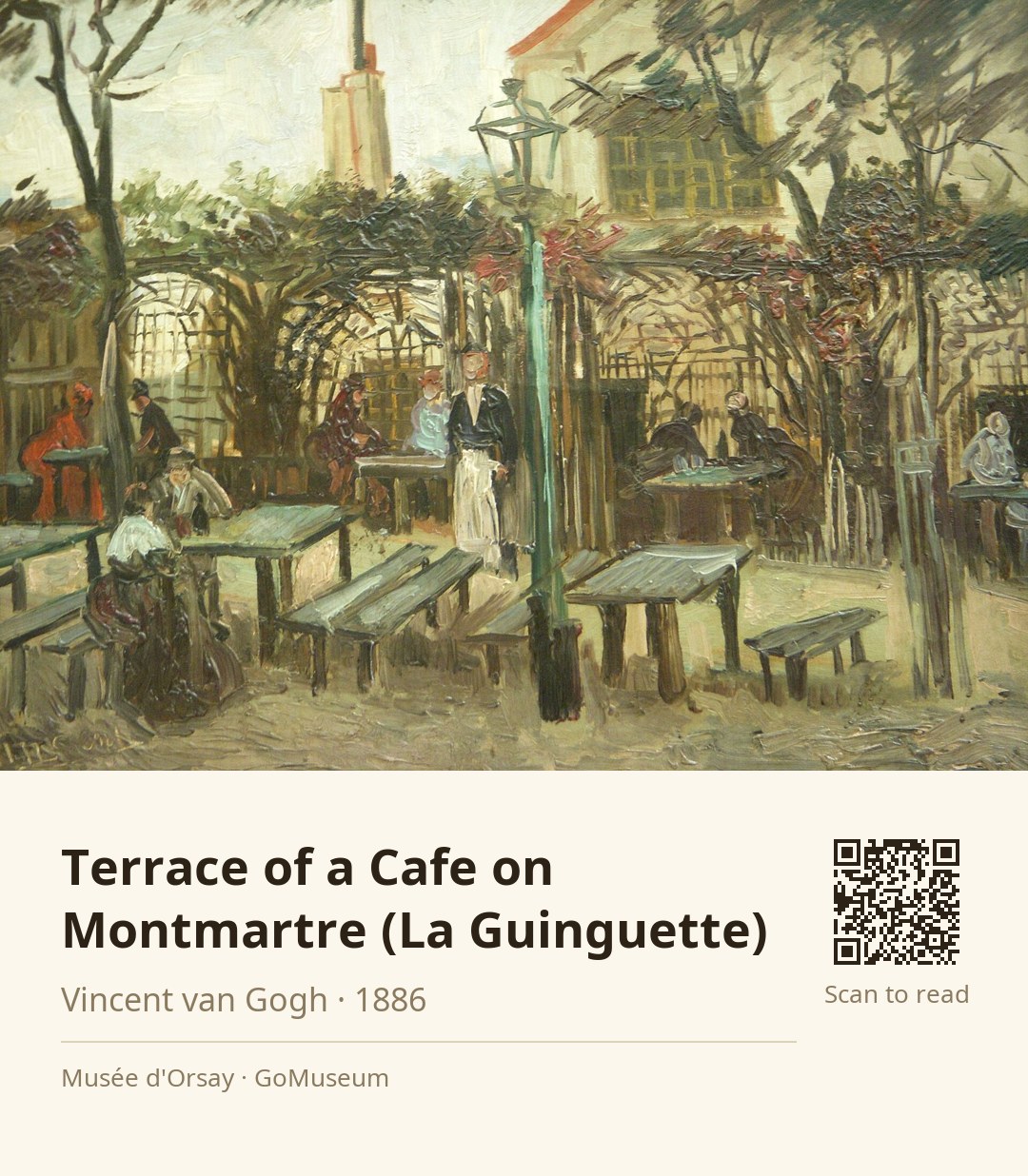
Terrace of a Cafe on Montmartre (La Guinguette)
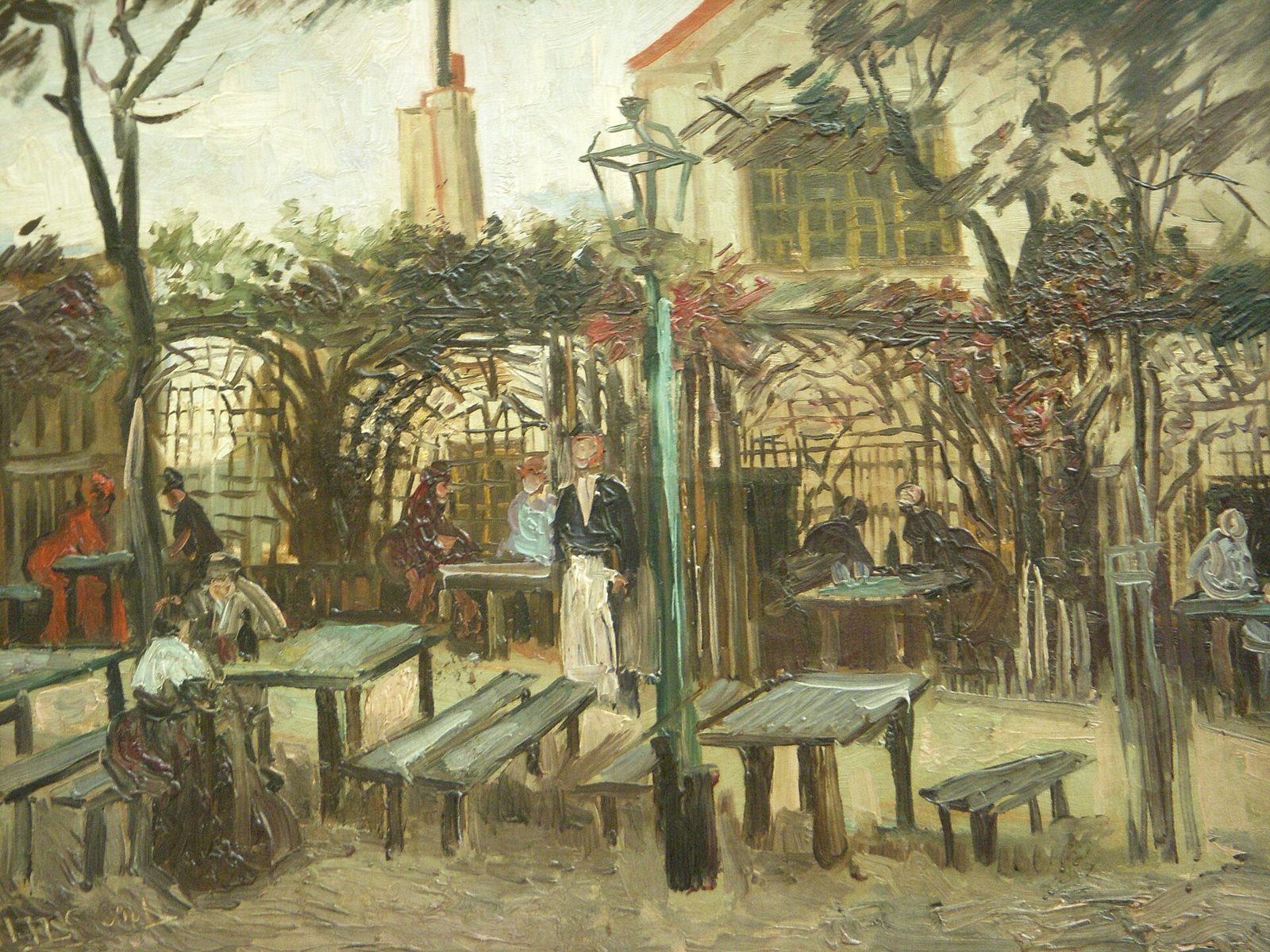
🎧 This work has audio narration — listen in the appTake a moment to really soak in the vibrant energy of Van Gogh's "Terrace of a Cafe on Montmartre." Notice how the warm yellows and oranges of the café's lights contrast with the deep blues of the evening sky. This isn’t just a painting; it’s a snapshot of life in Paris, bustling with the laughter and chatter of patrons enjoying their night out. Look closely at the way Van Gogh captures the flickering light on the tables and the foliage. Those brush strokes are not just for show; they pulse with the excitement of the moment, drawing you into the scene as if you were sitting there, enjoying a drink with friends. This technique reflects Van Gogh's fascination with capturing the essence of life around him, a hallmark of his post-Impressionist style. Painted in 1886, during his time in Paris, this work marks a significant shift in Van Gogh's artistic journey. Here, he begins to embrace brighter colors and bolder forms, influenced by the avant-garde artists he met. It’s a pivotal moment that sets the stage for his later masterpieces. As you stand here, think about the stories that might have unfolded in this café. Who were the people sitting at those tables? What dreams and conversations were shared under the glow of those lights? Let your imagination wander through the lively streets of Montmartre, where art and life intertwined in the heart of Paris.
Vincent van Gogh was a Dutch Post-Impressionist painter born on March 30, 1853, in Zundert. He is renowned for his vibrant use of color and expressive brushwork, which laid the groundwork for modern art. Despite creating around 2,100 artworks in just over a decade, including 860 oil paintings, he struggled with mental illness and poverty throughout his life. His early career as an art dealer was marked by disillusionment, leading him to pursue painting in 1881.
Van Gogh's intense passion for art was evident in his correspondence with his brother Theo, who provided emotional and financial support. His works evolved significantly after moving to Paris in 1886, where he mingled with avant-garde artists. His time in Arles in 1888 marked a peak in his creativity, producing iconic series like sunflowers and wheat fields.
Tragically, van Gogh's life ended in suicide at 37, after years of battling his demons. Initially unrecognized, he gained fame posthumously, becoming a symbol of the tortured artist. His legacy influenced movements like Fauvism and Expressionism, securing his place as one of the most significant figures in art history.
Vincent van Gogh's 'Terrace of a Cafe on Montmartre,' painted in 1886, emerged during a transformative period in his life. This vibrant work was created while he was living in Paris, a city that was a hotbed of artistic innovation. Van Gogh was influenced by the avant-garde artists he encountered, which led him to experiment with brighter colors and bolder forms. The painting was later shown at the Bernheim-Jeune Gallery in Paris in 1908 and subsequently at the Druet Gallery in 1909, marking its early public reception. Over the years, it changed hands, eventually coming into the possession of Pierre Goujon. The painting's journey reflects not only its artistic evolution but also the shifting perceptions of Van Gogh's work, which was largely unrecognized during his lifetime. It wasn't until after his tragic death that his genius began to be celebrated, paving the way for his lasting legacy in the art world.
As you gaze at 'Terrace of a Cafe on Montmartre,' pay attention to Van Gogh's dynamic brushwork. The thick, expressive strokes create a sense of movement, almost as if the scene is alive with the laughter and chatter of patrons. Notice how he uses contrasting colors—those warm yellows and oranges of the café lights against the deep blues of the night sky—to evoke a feeling of warmth and vibrancy. The composition draws your eye across the canvas, leading you from the illuminated café to the shadowy figures in the background. Van Gogh's choice of a slightly elevated perspective allows you to feel as though you’re part of the scene, inviting you to share in the experience. The way he captures light, with dashes of paint that seem to flicker, reflects his fascination with the interplay of illumination and shadow, a hallmark of his post-Impressionist style.
Painted in 1886 during his time in Paris, it showcases his bold use of color and expressive brushwork, which would later influence movements like Fauvism and Expressionism. This painting captures the lively atmosphere of Parisian nightlife, reflecting a shift from traditional Impressionism to a more emotional and personal interpretation of reality. Van Gogh's innovative approach to color and light in this work not only transformed his own artistic trajectory but also laid the groundwork for future generations of artists seeking to convey deeper emotional truths through their work.
Did you know that Van Gogh painted 'Terrace of a Cafe on Montmartre' during a time when he was deeply influenced by the vibrant Parisian art scene? This piece, created in 1886, captures the lively atmosphere of a café, a popular social hub in Montmartre. Interestingly, the café depicted was a real place, frequented by artists and bohemians of the time. Van Gogh's choice of colors and brushwork here reflects not just his evolving style but also the excitement of being in a city buzzing with creativity and inspiration.
The café's design may have been influenced by the popular outdoor dining culture in Paris at the time, which was characterized by lively social gatherings and illuminated spaces, reflecting the city's nightlife.