The Carmencita
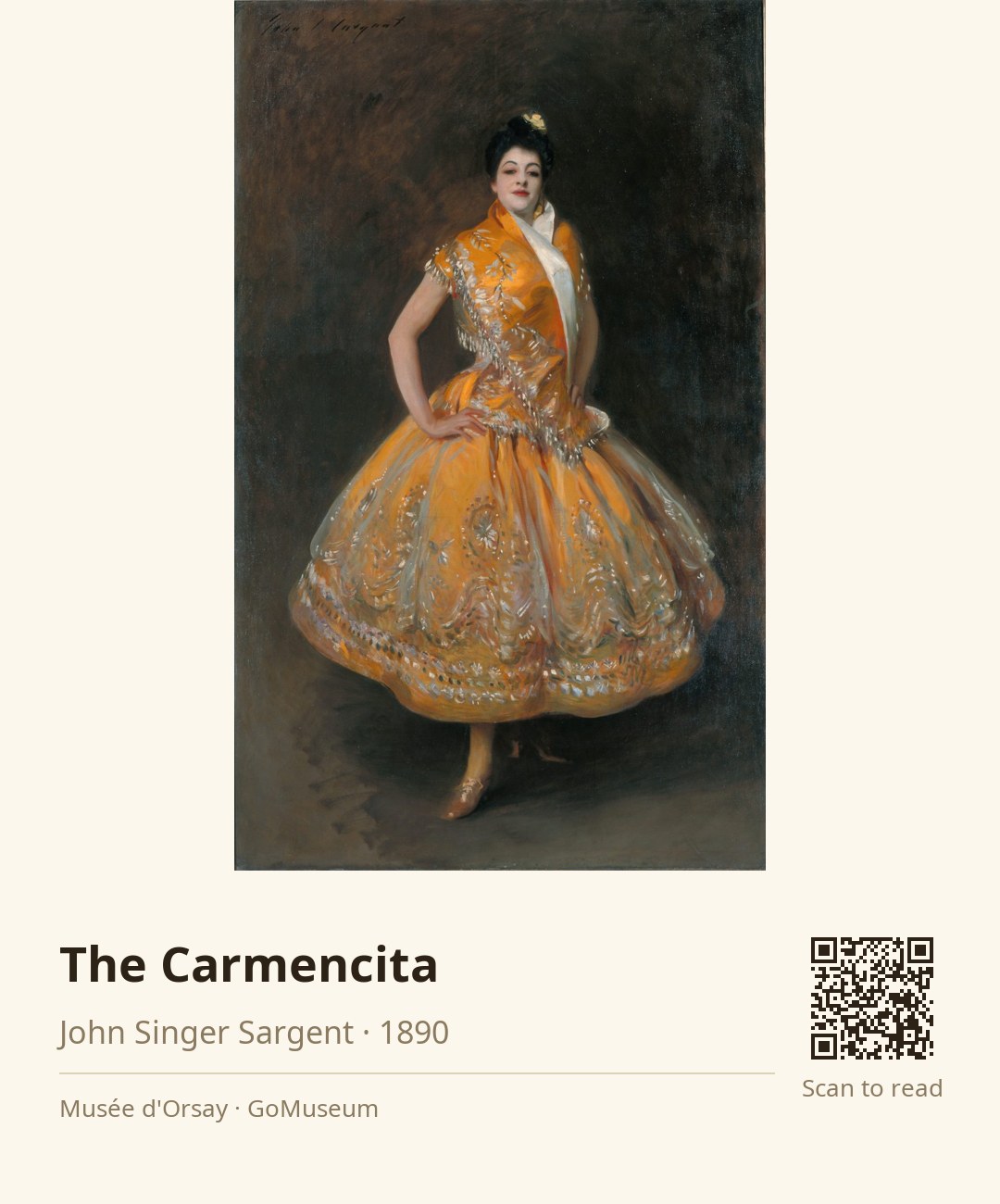
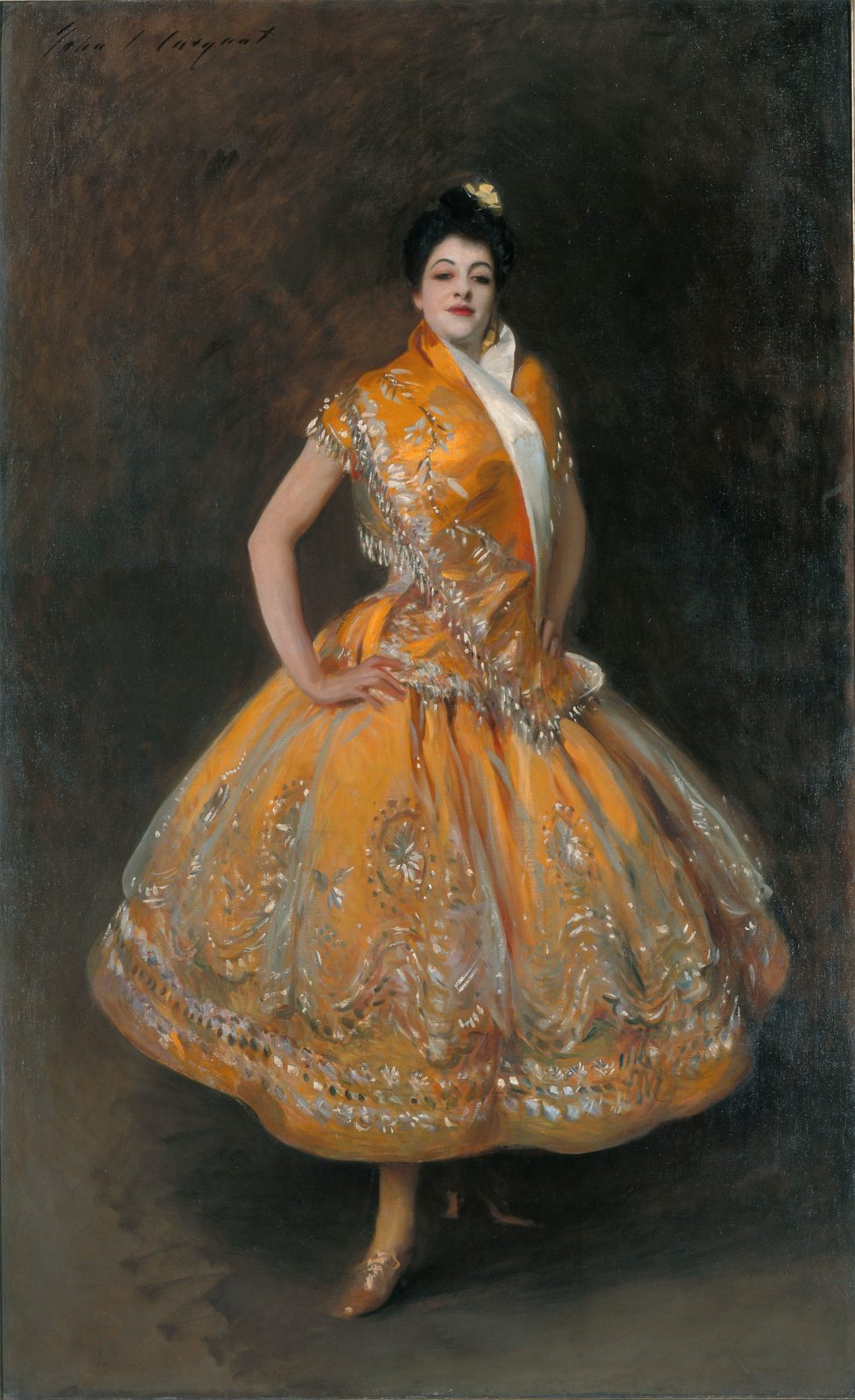
🎧 This work has audio narration — listen in the appCarmencita stands confidently in her vibrant orange gown, a striking figure against the dark backdrop. The intricate floral patterns and voluminous skirt of her dress draw the eye, while her poised expression and hand on her hip exude elegance and self-assurance. This portrayal captures not just her physical beauty but also a sense of pride and presence that speaks to her identity as a Spanish dancer.
The choice of color and texture in Sargent's brushwork enhances Carmencita's vivacity, making her the focal point of the composition. The smooth application of paint captures the sheen of her gown, contrasting beautifully with the muted tones surrounding her. This technique not only highlights her figure but also reflects Sargent's mastery in portraying fabric and form, a hallmark of his style. The painting, created in 1890, is a testament to the artist's ability to blend realism with a theatrical flair, showcasing the subject's character and cultural background.
Commissioned shortly after its completion, "The Carmencita" was exhibited at the Salon de la Société Nationale des Beaux-Arts in Paris in 1892, where it garnered attention for its bold representation of a contemporary performer.
John Singer Sargent was an American painter born on January 12, 1856, in Florence, Italy, to expatriate parents. Renowned as the leading portrait artist of his time, he captured the opulence of the Belle Époque and Edwardian eras through approximately 900 oil paintings and over 2,000 watercolors. Sargent's artistic journey began in Florence and continued in Paris, where he studied under prominent artists, honing his technical skills and developing a unique style that blended traditional portraiture with elements of Impressionism.
His early career was marked by controversy, particularly with the scandal surrounding his painting "Portrait of Madame X," which ultimately led him to settle in England. Sargent's portraits of the elite, including notable figures like Theodore Roosevelt and John D. Rockefeller, showcased his remarkable ability to convey character and emotion. Despite his success, he felt constrained by the demands of formal portraiture, later exploring mural painting and outdoor landscapes.
Sargent's legacy was largely overlooked until the late 20th century, when exhibitions of his male nudes and explorations of themes such as race, gender nonconformity, and same-sex relationships prompted a reevaluation of his work. Today, he is celebrated not only for his artistic brilliance but also for his progressive views, making him a significant figure in the history of art. He passed away on April 15, 1925, in London, leaving behind a rich and diverse body of work that continues to inspire.
Created in 1890, 'The Carmencita' was commissioned shortly after its completion and made its debut at the Salon de la Société Nationale des Beaux-Arts in Paris in 1892. This exhibition was a significant event for Sargent, as it showcased his ability to capture the essence of contemporary performers. The painting quickly garnered attention, celebrated for its bold portrayal of a Spanish dancer, which was a departure from the more traditional subjects of the time. Following its exhibition, the French government acquired the work, ensuring its place in the prestigious collection at the Musée d'Orsay, where it remains today.
'The Carmencita' was acquired by the French government soon after its exhibition, securing its position in the esteemed collection of the Musée d'Orsay.