Justine Dieulh
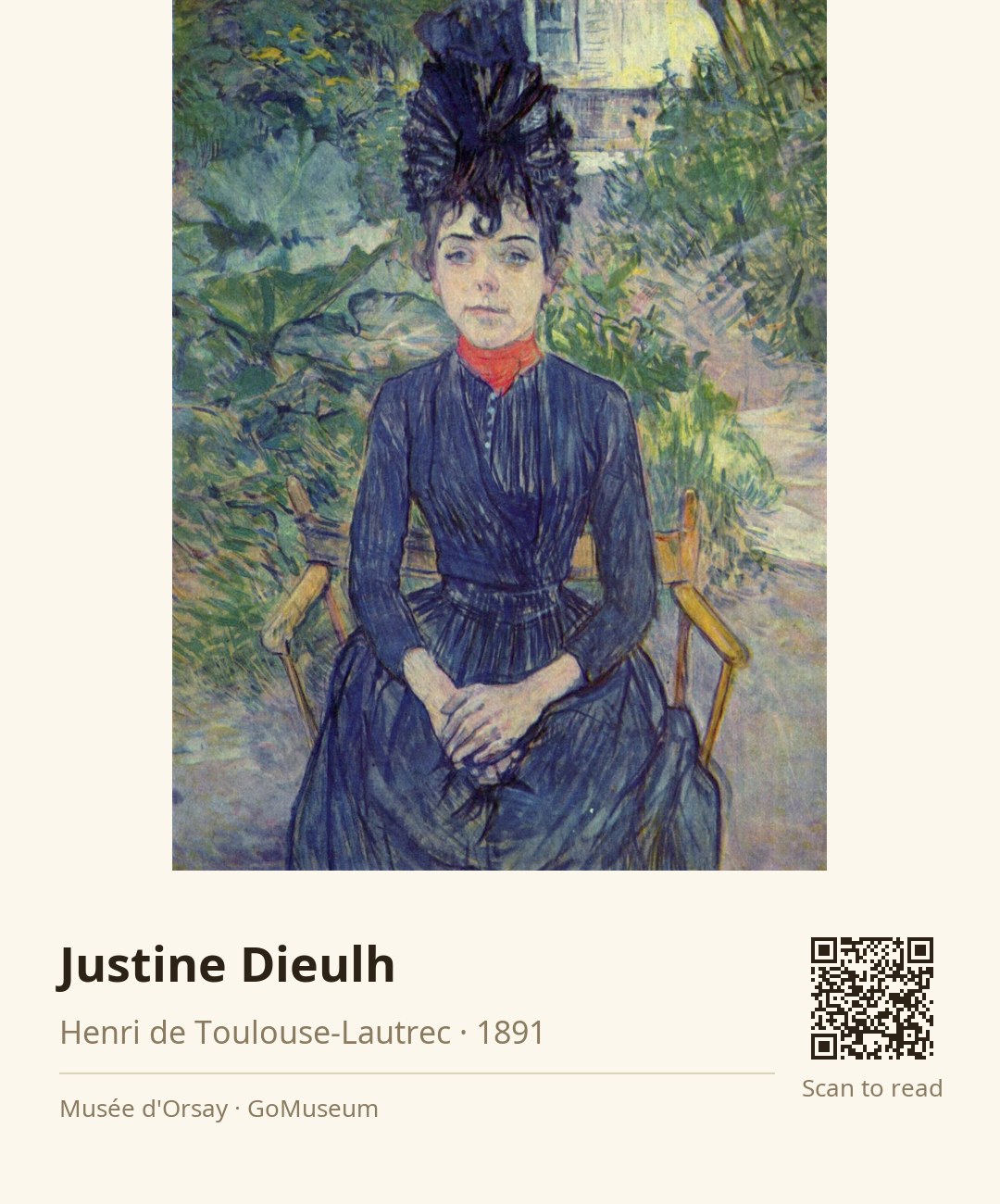
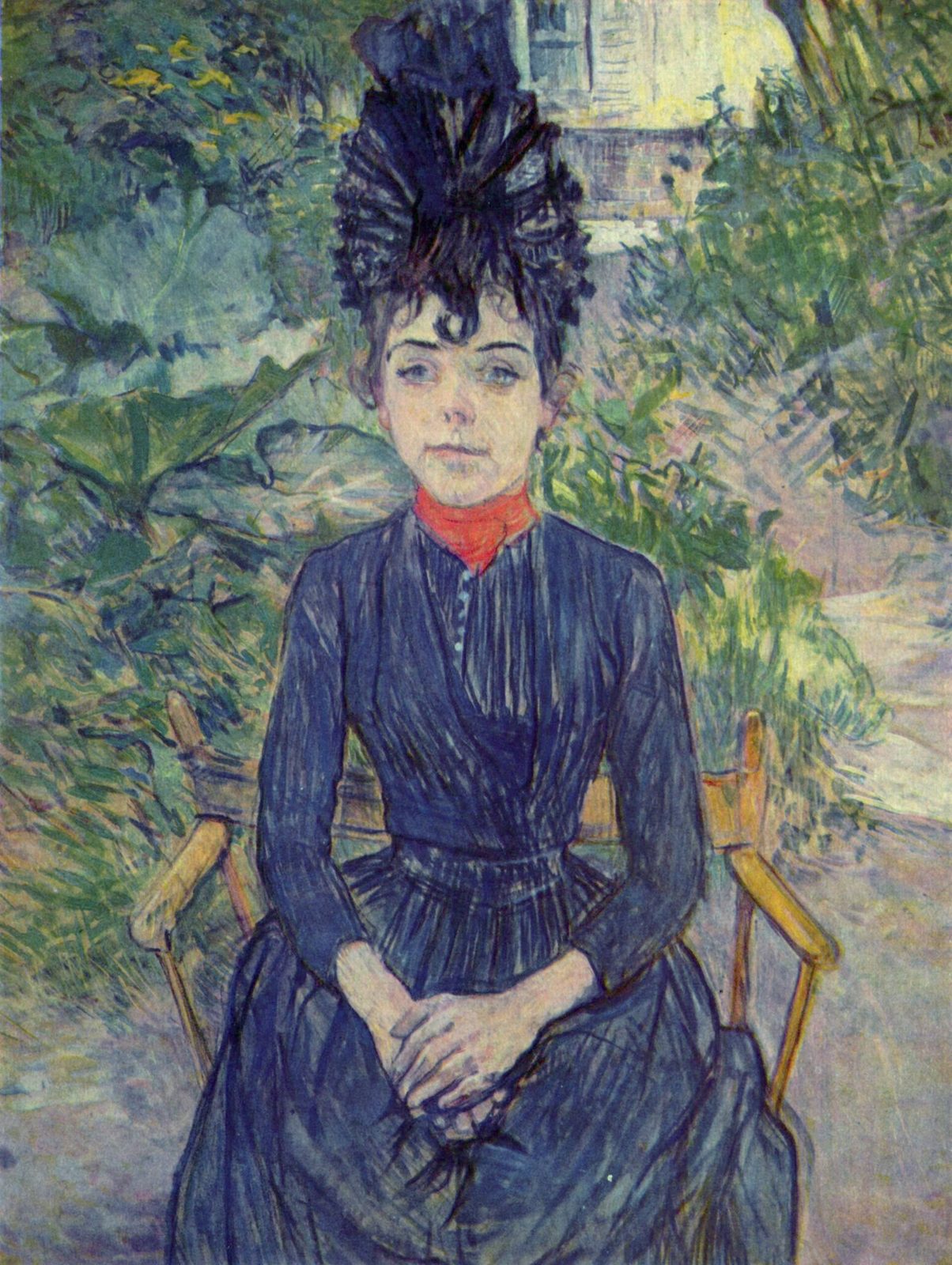
🎧 This work has audio narration — listen in the appJustine Dieulh sits gracefully in a garden, her dark pleated dress contrasting with the vibrant greenery around her. The elaborate black hat she wears, adorned with feathers, draws the eye, while her hands are neatly clasped in her lap, suggesting a moment of quiet contemplation.
This portrait captures not just a woman, but the essence of the late 19th-century Parisian society, where fashion and nature intertwined in the lives of the elite. Toulouse-Lautrec’s choice of deep blues and greens, along with visible brushstrokes, creates a lively texture that breathes life into the scene, emphasizing the elegance and poise of Justine Dieulh against the lush backdrop. The garden setting, with hints of architecture peeking through, reflects the social spaces of the time, where leisure and beauty were paramount.
Painted in 1891, this work showcases Toulouse-Lautrec's mastery of portraiture, a skill honed through his immersion in the vibrant culture of Montmartre. The painting was once part of the collection of Matsukata Kōjirō before entering public collections in France in 1959.
Henri de Toulouse-Lautrec, born on November 24, 1864, in Albi, France, was a pivotal figure in the Post-Impressionist movement. Despite his aristocratic background, his life was marked by physical challenges, including a genetic disorder that stunted his growth. This condition shaped his unique perspective and deep empathy for the marginalized, particularly the vibrant characters of Paris's Belle Époque, including prostitutes and performers.
Toulouse-Lautrec's artistic journey began in earnest when he moved to Paris, where he immersed himself in the bohemian lifestyle of Montmartre. His work, characterized by bold colors and dynamic compositions, captured the essence of nightlife, cabarets, and the human condition. He became known for his posters and illustrations, which brought the world of the Moulin Rouge to life. His relationships with fellow artists, such as Vincent van Gogh, and his romantic entanglements, notably with Suzanne Valadon, influenced his creative output.
His legacy endures as he is celebrated for his innovative approach to art and his ability to convey the spirit of an era. Toulouse-Lautrec's works continue to resonate, offering a glimpse into the exuberance and struggles of a society on the brink of modernity, solidifying his place in art history as a masterful chronicler of the human experience. He passed away on September 9, 1901, leaving behind a rich body of work that remains influential to this day.
Painted in 1891, 'Justine Dieulh' was previously part of the collection of Matsukata Kōjirō before entering public collections in France in 1959. The painting has been exhibited in various notable shows, including 'Art Français' in San Francisco in 1916, 'Impressionnistes à nos jours' in Baden-Baden in 1946, and 'Toulouse-Lautrec' at the Orangerie des Tuileries in Paris in 1951.
This portrait features Justine Dieulh seated on a wooden chair, dressed in a dark, pleated dress with a high collar and a striking red necktie. Her elaborate black hat, adorned with feathers, adds a touch of sophistication. The lush garden background is alive with large green leaves, and hints of architecture peek through in the upper right corner. The color palette is rich, dominated by deep blues and greens, with touches of yellow that bring vibrancy to the scene. The visible brushstrokes create a textured effect, enhancing the overall liveliness of the composition.
'Justine Dieulh' has been featured in several significant exhibitions, including 'Art Français' in San Francisco in 1916 and 'Impressionnistes à nos jours' in Baden-Baden in 1946.