 Image: Sailko
Jeanne Lanvin
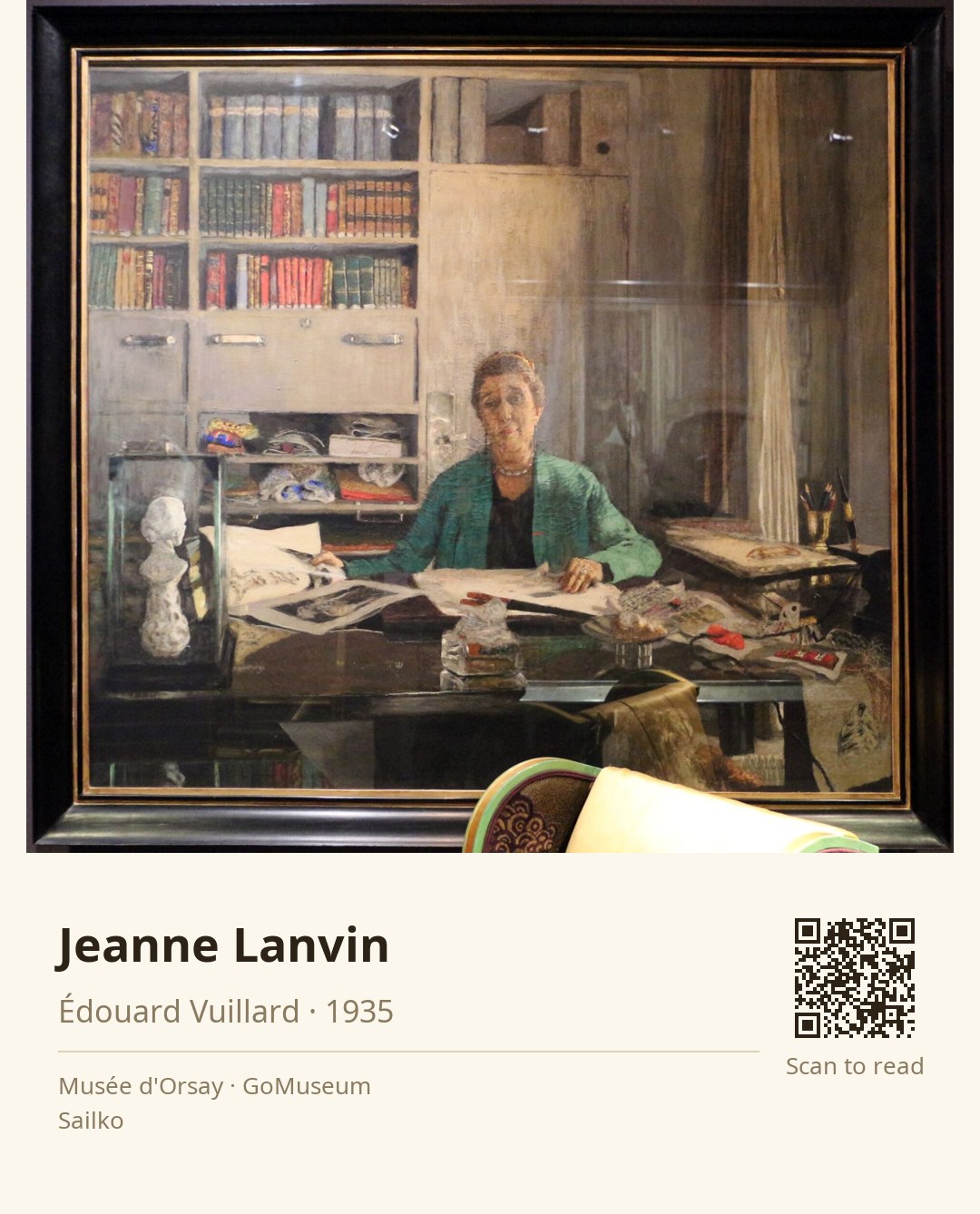
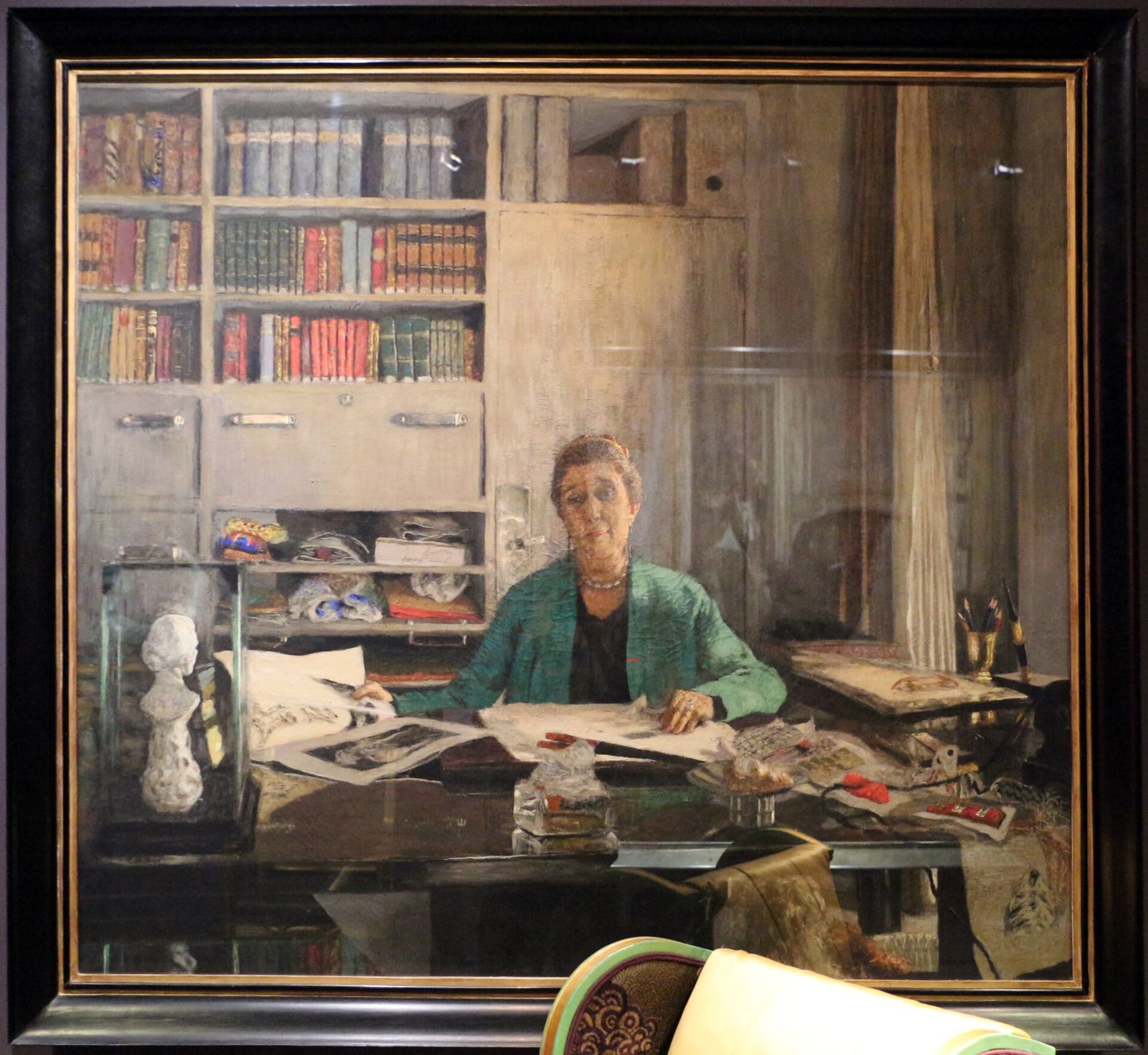
🎧 This work has audio narration — listen in the appJeanne Lanvin sits poised at her desk, her green jacket and pearl necklace catching the light as she gazes directly at you. Papers are spread before her, hinting at the creative process, while a small bust in a glass case to her left adds an air of artistry to the scene. The shelves behind her overflow with colorful books, suggesting a life rich in knowledge and inspiration.
This intimate portrayal captures not just a moment but the essence of a woman deeply engaged in her work, embodying the spirit of the fashion world she helped shape. The cluttered desk, filled with writing tools and a striking red object, reflects the vibrant chaos of creativity, while the muted palette of earthy tones creates a warm, inviting atmosphere. Vuillard's technique, influenced by his earlier experiences with the Nabis, emphasizes the interplay of color and form, allowing the viewer to feel the weight of Lanvin's presence in her own space.
Created in 1935, this painting showcases Vuillard's shift towards realism, focusing on the details of everyday life and the personalities within it. Édouard Vuillard, a prominent figure in French art, painted Jeanne Lanvin during a time when he was increasingly drawn to the intimate settings of his subjects.
Jean-Édouard Vuillard was a French painter and printmaker born on November 11, 1868, in Cuiseaux. He grew up in a modest Parisian family, influenced by his mother and surrounded by a circle of future artists at the Lycée Condorcet. Vuillard became a founding member of the avant-garde group Les Nabis, which sought to transform art through color and symbolism. His early works featured intimate interior scenes, characterized by flattened planes of color and intricate patterns, drawing inspiration from Japanese prints and the post-impressionist movement, particularly Paul Gauguin.
Vuillard's artistic journey evolved from the experimental style of the Nabis to a more realistic approach in the early 20th century, where he painted detailed landscapes and portraits of figures in their environments. His work often captured the essence of domestic life, portraying his mother and friends in their familiar settings, which earned him the title of an "intimist" artist. Throughout his career, Vuillard also contributed to theater decoration and created decorative panels, showcasing his versatility.
Despite facing challenges, including the loss of his father and the impact of World War II, Vuillard remained dedicated to his craft until his death on June 21, 1940. He left behind a rich legacy, recognized for his unique blend of color, form, and emotional depth, solidifying his place in art history as a pivotal figure in the transition from impressionism to modernism.
Édouard Vuillard's painting of Jeanne Lanvin was created in 1935, during a pivotal moment in the artist's career. After its completion, the painting was exhibited at the Galerie Charpentier in Paris in 1948, where it garnered attention for its intimate portrayal of a woman deeply engaged in her work. The provenance of the piece traces back to the Comtesse Jean de Polignac, adding a layer of aristocratic history to its narrative.
The muted earthy tones invite warmth, while the soft lighting enhances the intimate atmosphere of Lanvin's workspace. His brushwork is both fluid and precise, allowing for intricate details like the sheen of her pearl necklace and the vibrant chaos of the desk clutter. The composition is thoughtfully arranged, with Lanvin's direct gaze drawing you into her world, while the surrounding objects—books, a small bust, and writing tools—tell a story of creativity and inspiration.
Interestingly, Vuillard's relationship with his subjects often went beyond mere representation; he was known for surprising them in their own environments, capturing candid moments that felt genuine and alive. This approach is evident in the way he depicts Lanvin, not as a distant icon but as a relatable figure immersed in her creative process.
The painting's provenance connects it to the Comtesse Jean de Polignac, which introduces an aristocratic element to its history.
Vuillard often surprised his subjects in their own spaces, which allowed him to capture authentic, candid moments that added depth to his portraits.
Vuillard was influenced by several post-impressionist artists, including Paul Gauguin, which shaped his artistic development and style.