Jeanne avril dansant
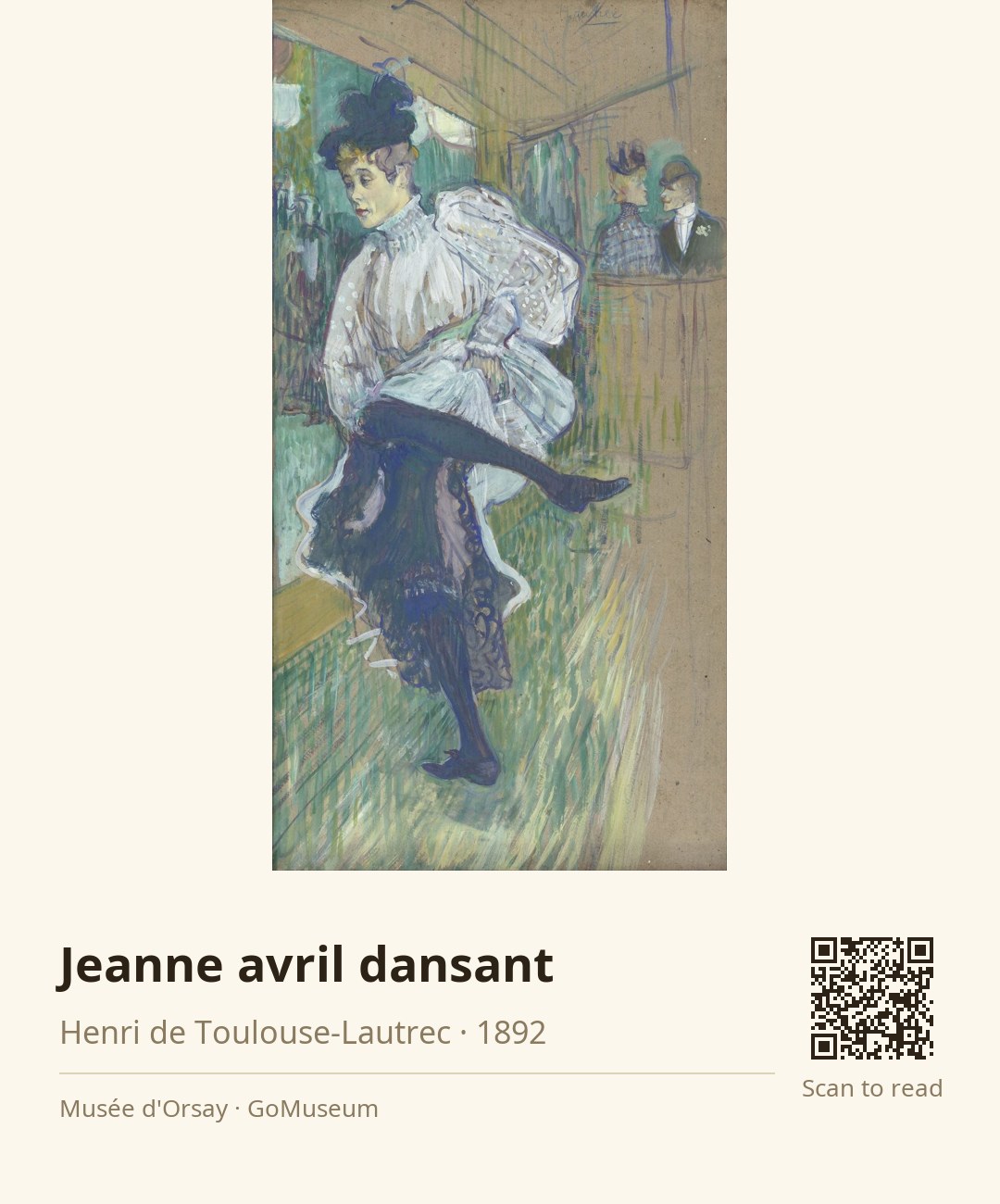
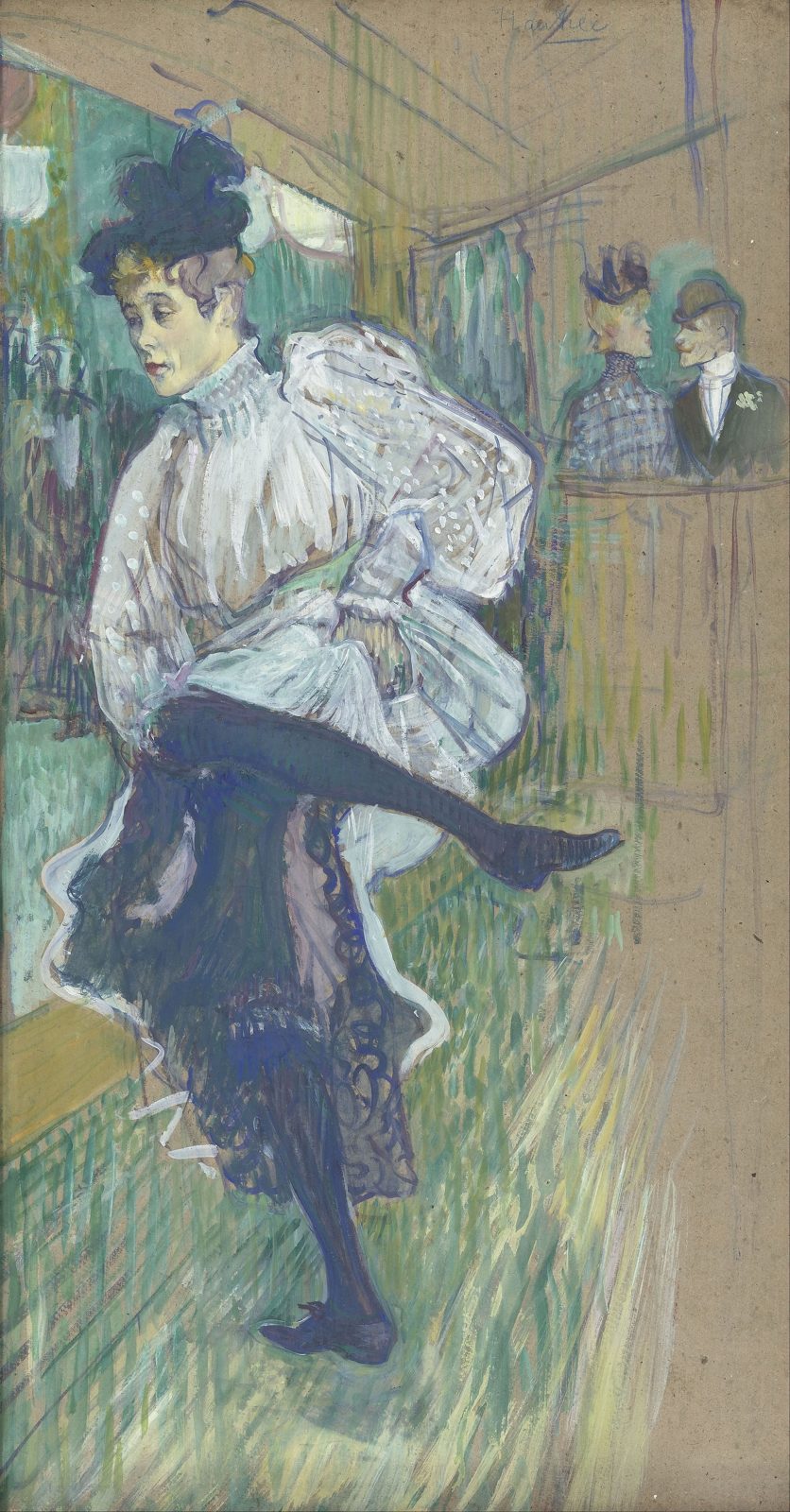
🎧 This work has audio narration — listen in the appTake a moment to really soak in the energy of this painting, "Jeanne Avril dansant" by Henri de Toulouse-Lautrec. Look closely at the way the dancer, Jane Avril, seems to leap off the canvas, her white dress swirling around her like a cloud of movement. Notice how her expressive face captures a moment of pure joy and abandon, almost as if she’s inviting you to join her in the dance. These details matter because they encapsulate the spirit of the Belle Époque, a time when Paris was alive with art, music, and nightlife. Toulouse-Lautrec had a unique ability to portray the vibrancy of this era, and Jane Avril was one of its stars, known for her captivating performances at the Moulin Rouge. The way he captures her in motion not only highlights her talent but also reflects the excitement of the cabaret culture that defined the time. Created in 1892, this piece is part of Lautrec's larger body of work that often focused on the performers and the bohemian lifestyle of Montmartre. His own experiences as a social outsider, due to his physical condition, allowed him to connect deeply with the subjects he painted, often portraying them with both admiration and a hint of melancholy. As you stand here, think about what it must have been like to be part of that world, to feel the rhythm of the music and the thrill of the performance. What emotions does this painting stir in you?
Henri de Toulouse-Lautrec, born on November 24, 1864, in Albi, France, was a pivotal figure in the Post-Impressionist movement. Despite his aristocratic background, his life was marked by physical challenges, including a genetic disorder that stunted his growth. This condition shaped his unique perspective and deep empathy for the marginalized, particularly the vibrant characters of Paris's Belle Époque, including prostitutes and performers.
Toulouse-Lautrec's artistic journey began in earnest when he moved to Paris, where he immersed himself in the bohemian lifestyle of Montmartre. His work, characterized by bold colors and dynamic compositions, captured the essence of nightlife, cabarets, and the human condition. He became known for his posters and illustrations, which brought the world of the Moulin Rouge to life. His relationships with fellow artists, such as Vincent van Gogh, and his romantic entanglements, notably with Suzanne Valadon, influenced his creative output.
His legacy endures as he is celebrated for his innovative approach to art and his ability to convey the spirit of an era. Toulouse-Lautrec's works continue to resonate, offering a glimpse into the exuberance and struggles of a society on the brink of modernity, solidifying his place in art history as a masterful chronicler of the human experience. He passed away on September 9, 1901, leaving behind a rich body of work that remains influential to this day.
Henri de Toulouse-Lautrec painted 'Jeanne Avril dansant' in 1892, capturing the essence of the Belle Époque through the vibrant figure of Jane Avril. Initially shown at the Goupil Gallery in London in 1898, it later appeared in several notable exhibitions, including the Musée des Arts Décoratifs in Paris in 1910 and the Galerie Rosenberg in 1914. The painting was bequeathed to the French public collections by Antonin Personnaz in 1937 and has been housed at the Musée d'Orsay since 1986. Its journey through various exhibitions reflects the growing appreciation for Lautrec's unique perspective on the performers of his time.
As you gaze at 'Jeanne Avril dansant,' notice the dynamic brushwork that seems to pulse with energy, almost as if the dancer is still in motion. Toulouse-Lautrec employed a technique that combines bold strokes with a vibrant palette, particularly the striking contrast of white against the deep hues surrounding it. The composition draws your eye to Avril's swirling dress, creating a sense of movement that captures the very spirit of dance. The vertical format enhances her towering presence, while the loose handling of paint adds a sense of immediacy and spontaneity. This technique not only emphasizes Avril's joy but also invites you into the lively atmosphere of the cabaret, making you feel as though you're part of the performance.
After suffering from a genetic disorder that left him with a stunted stature, he often felt like an outsider. The vibrant world of cabarets and dance halls, where he painted figures like Jane Avril, became a refuge where he could express himself freely, away from the constraints of his aristocratic background. This painting captures not just a moment of performance, but a slice of his own yearning for connection and acceptance.
Toulouse-Lautrec's stunted growth and outsider status due to his disability allowed him to empathize deeply with the marginalized performers he painted. His unique viewpoint often highlighted the struggles and joys of those living on the fringes of society, making his work resonate with authenticity.