Flowers in a Crystal Vase
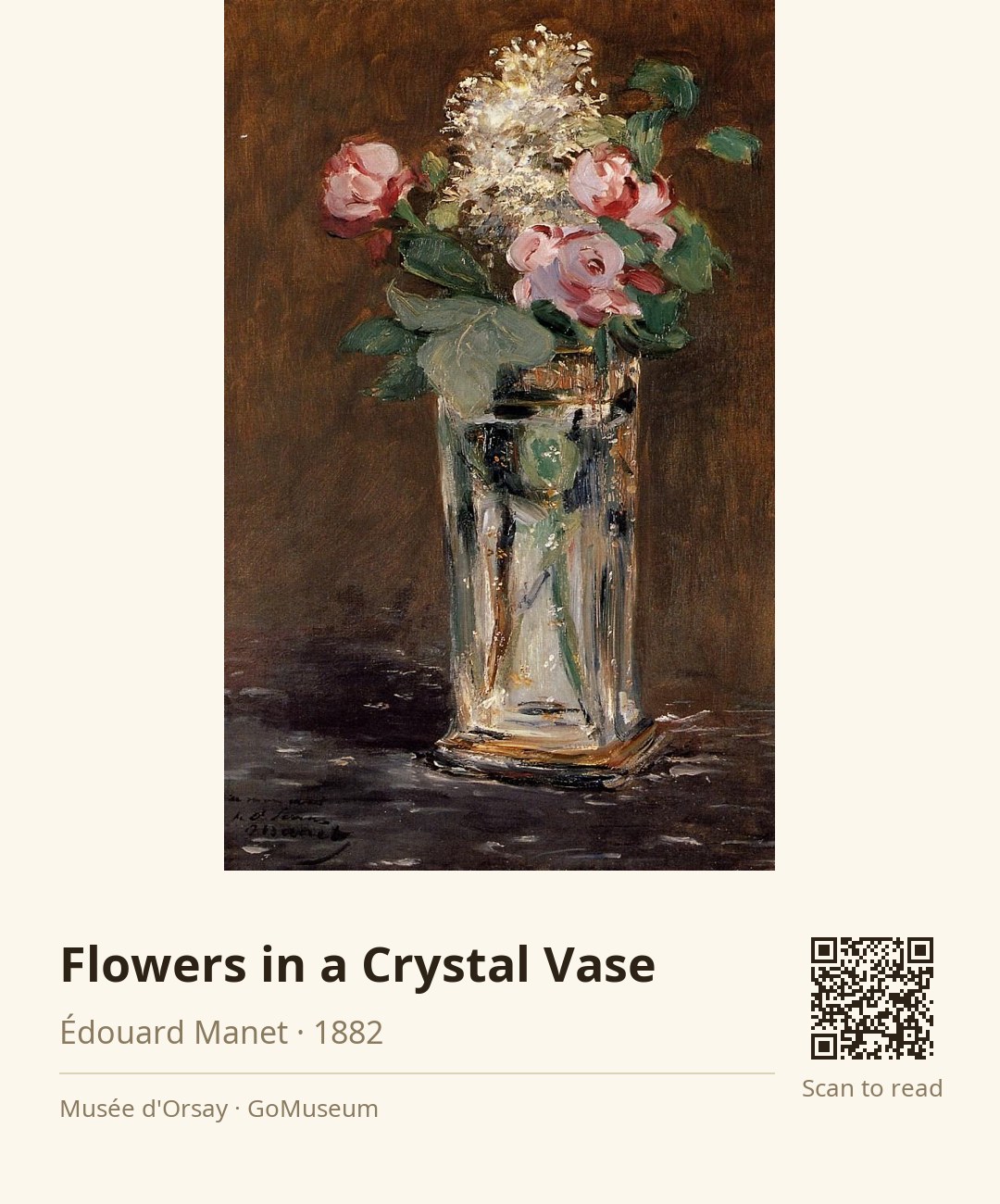
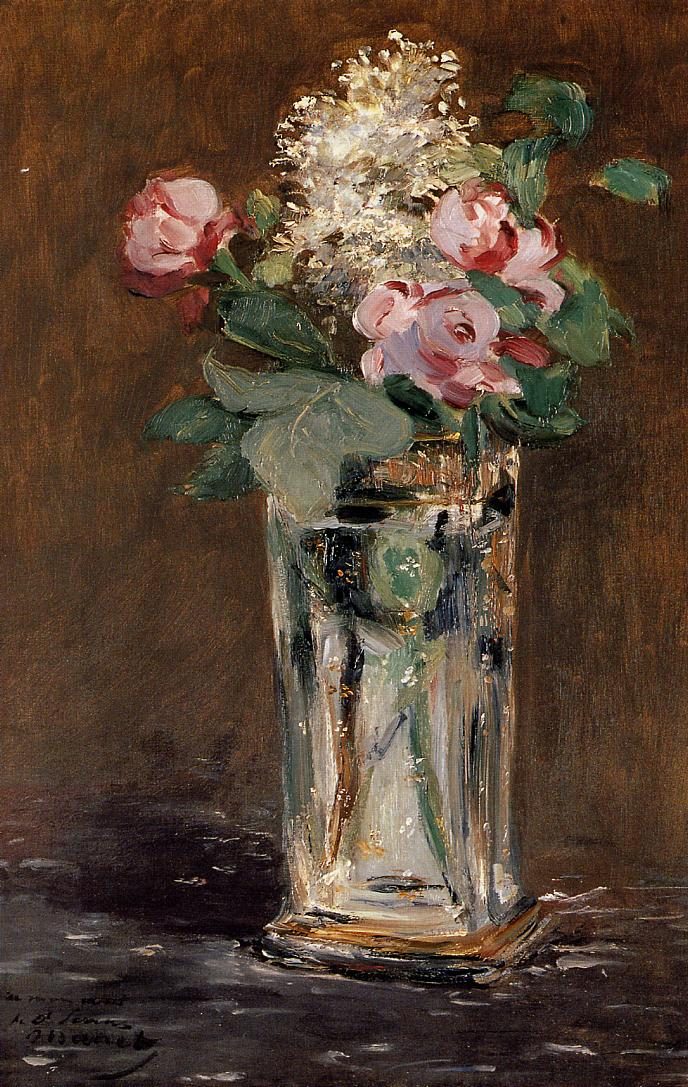
🎧 This work has audio narration — listen in the appTake a moment to really look at "Flowers in a Crystal Vase" by Édouard Manet. Notice how the vibrant colors leap off the canvas, especially the deep reds and bright yellows of the flowers. They seem to dance in the light, don’t they? Now, focus on the way the vase is painted—its crystal surface captures reflections and refracts light, creating a sense of depth and realism that pulls you in. These details matter because they showcase Manet's innovative approach to still life. While many artists of his time treated flowers as mere decoration, Manet elevates them to a focal point, inviting you to appreciate their beauty and complexity. This was a significant shift in the art world, as he blurred the lines between traditional still life and modernist expression. Created in 1882, this painting reflects Manet's evolution as an artist, moving away from the constraints of realism towards a more expressive style. He was a pioneer, often considered a bridge between realism and impressionism, and his work challenged the conventions of his day. As you stand here, think about how this painting captures a fleeting moment of beauty. What feelings do these flowers evoke for you? What stories might they tell if they could speak?
Édouard Manet, born on January 23, 1832, in Paris, emerged as a pivotal figure in 19th-century art, bridging Realism and Impressionism. From an affluent family, he initially faced pressure to pursue a naval career but instead dedicated himself to painting, influenced by his uncle and the Old Masters. His early works, including "The Luncheon on the Grass" and "Olympia," sparked controversy and challenged traditional artistic norms, marking him as a revolutionary force.
Manet's style, characterized by loose brushwork and a focus on contemporary life, diverged from the meticulous techniques of his predecessors. He often depicted modern Parisian scenes, capturing the essence of leisure and social dynamics. Despite initial rejection from the art establishment, he gained recognition among progressive artists and became a mentor to the Impressionists.
Throughout his life, Manet formed connections with influential figures like Baudelaire and Zola, who defended him against critics. His later works, such as "A Bar at the Folies-Bergère," showcased his evolving style and mastery of color. Manet's contributions to art history are profound; he is celebrated not only for his innovative techniques but also for elevating still life and modern subjects to the forefront of artistic expression. He passed away on April 30, 1883, leaving behind a legacy that continues to inspire artists today.
In 1882, Édouard Manet painted 'Flowers in a Crystal Vase,' a work that reflects his evolving style and mastery over still life. This painting emerged during a pivotal time in Manet's career, as he transitioned from the controversial subjects of his earlier works to a more refined exploration of everyday beauty. Although Manet had faced significant backlash for his earlier pieces, like 'Olympia,' he was gaining recognition and respect among his peers. 'Flowers in a Crystal Vase' showcases his ability to elevate the ordinary, capturing the delicate interplay of light and color in a simple floral arrangement.
As you examine 'Flowers in a Crystal Vase,' pay attention to Manet's masterful brushwork. The strokes are both loose and deliberate, creating a sense of movement and life within the flowers. Notice how he layers colors to achieve depth; the reds and yellows are not flat but rather vibrate with energy, almost as if the petals are alive. The light plays a crucial role here—look at how it reflects off the crystal vase, creating a dazzling effect that draws your eye. This interplay of light and shadow enhances the realism of the piece, while the composition itself is carefully structured, guiding your gaze through the arrangement of blooms. Manet's choice to focus on the vase and flowers, rather than a broader scene, invites you to immerse yourself in this intimate moment of beauty.
Did you know that Édouard Manet, the artist behind 'Flowers in a Crystal Vase', was once expected to follow a career in law? Born into an affluent family, his father envisioned him as a naval officer. But after failing the naval exams, Manet's passion for painting took over, leading him to become a pivotal figure in modern art. This shift from a conventional path to the world of vibrant brushstrokes and bold subjects is a testament to his rebellious spirit and dedication to his craft.
Manet was born into an affluent family with strong political connections, which provided him access to the arts from a young age. His uncle encouraged his passion for painting, taking him to the Louvre, and this support helped him pursue a career in art despite his father's initial expectations for him to become a lawyer.
Manet's early works, such as 'The Luncheon on the Grass' and 'Olympia,' sparked significant controversy and backlash from critics and the Academy, yet they also garnered admiration from progressive artists. This duality of criticism and praise helped establish Manet as a pivotal figure in the transition to modern art, influencing future generations of artists.