Woman with a White Jabot
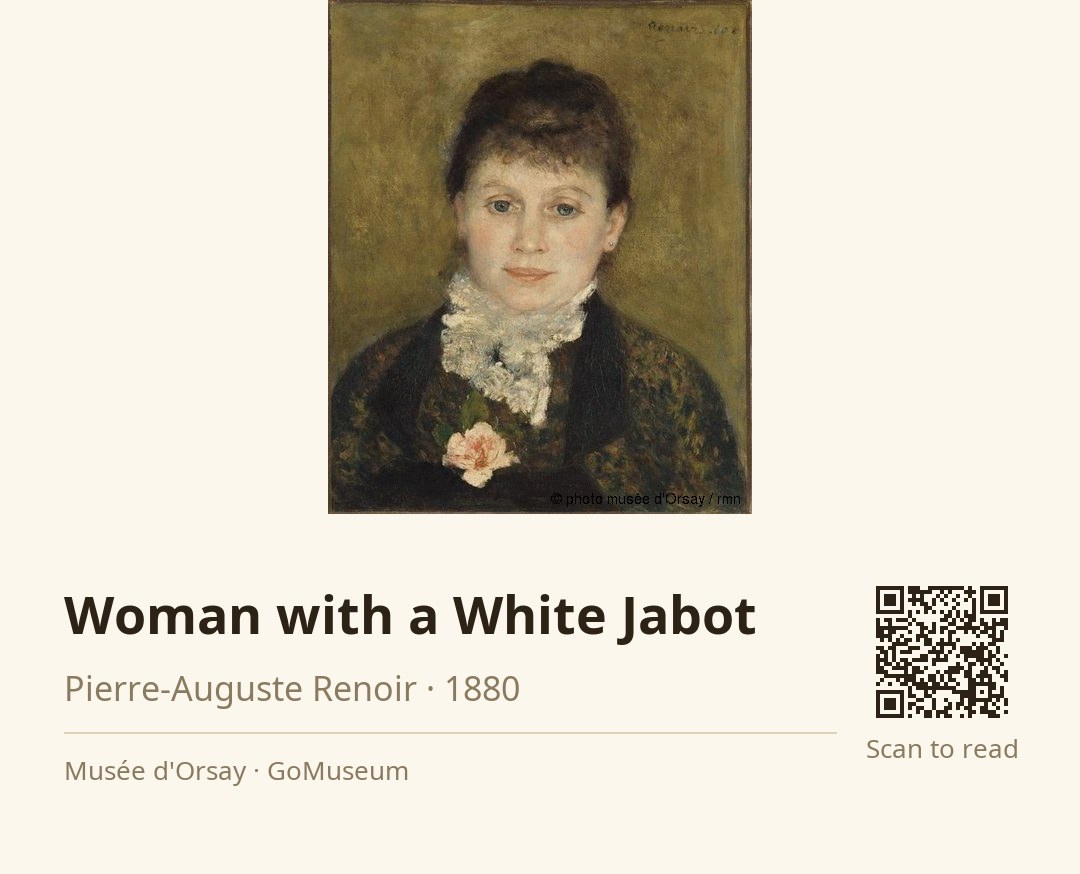
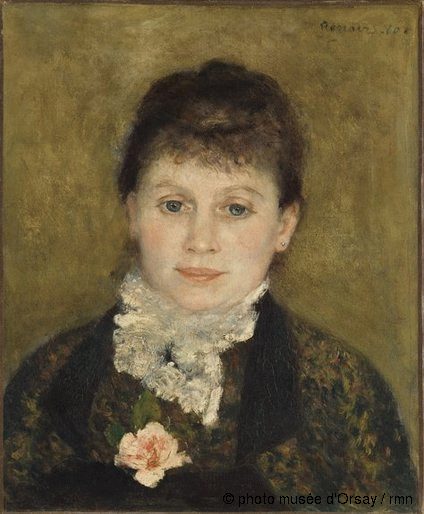
🎧 This work has audio narration — listen in the appThe woman in this portrait gazes directly at you, her serene expression framed by a high collar and a delicate white jabot that draws the eye. Her brown hair, styled with bangs, contrasts beautifully with the soft, muted tones of her dark garment, while a pink flower pinned to her chest adds a subtle pop of color against the warm brown background.
Renoir's choice of a simple, unadorned backdrop emphasizes the subject's calm demeanor, allowing her features to take center stage. The gentle brushwork creates an almost ethereal quality, softening the details and inviting you to linger on her tranquil face.
Created in 1880, "Woman with a White Jabot" stands as a testament to Renoir's focus on feminine beauty and his mastery of capturing the essence of his subjects through a combination of softness and clarity.
Pierre-Auguste Renoir, born on February 25, 1841, in Limoges, France, emerged as a pivotal figure in the Impressionist movement. His early life in a modest family led him to Paris, where he honed his artistic skills amidst the masterpieces of the Louvre. Initially apprenticed in a porcelain factory, Renoir's passion for painting flourished, particularly after studying under Charles Gleyre, where he befriended fellow artists like Monet and Sisley.
Renoir's work celebrated feminine beauty and vibrant social scenes, exemplified in iconic pieces like "Dance at Le Moulin de la Galette." Despite facing criticism early on, he gained recognition, especially after participating in the first Impressionist exhibition in 1874. His style evolved over the years, transitioning towards realism influenced by classical masters like Raphael.
Throughout his life, Renoir balanced personal struggles, including health issues, with a prolific output, reportedly creating around four thousand works. He became a beloved figure in art history, known for his warm palette and expressive brushwork. Renoir passed away on December 3, 1919, leaving a legacy that continues to inspire artists and art lovers alike.
Renoir's technique in 'Woman with a White Jabot' is a fascinating blend of softness and clarity, achieved through his masterful brushwork. The oil paint glides across the canvas, creating a velvety texture that enhances the woman's serene expression. The high collar and delicate lace jabot are rendered with meticulous attention, showcasing Renoir's ability to capture intricate details while maintaining an overall softness. The muted color palette, dominated by warm browns and subtle highlights, allows the pink flower to pop, drawing your eye to the subject's chest. This careful balancing of elements creates a sense of intimacy, inviting viewers to connect with the woman’s calm demeanor. Renoir's choices reflect his desire to portray not just a likeness, but an emotional resonance, making the viewer feel as if they are sharing a moment with her.
Renoir was influenced by the styles and subjects of modern painters such as Camille Pissarro and Édouard Manet.
During the Paris Commune, Renoir was nearly thrown into the Seine River by Communards who mistook him for a spy, but he was saved when a leader recognized him as someone who had previously helped him.
Renoir aimed to convey not just a physical likeness of the woman but also to evoke an emotional connection, allowing viewers to feel as though they are sharing a moment with her.