Equality Before Death
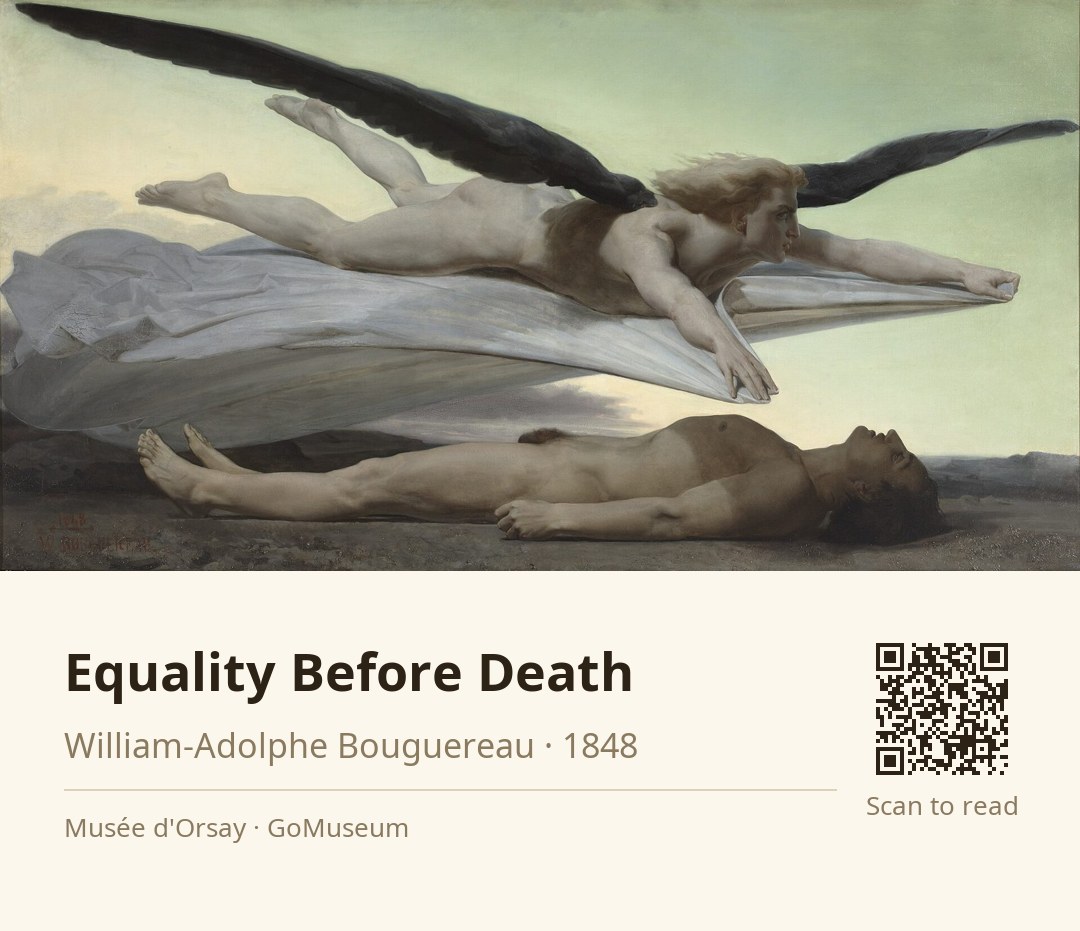
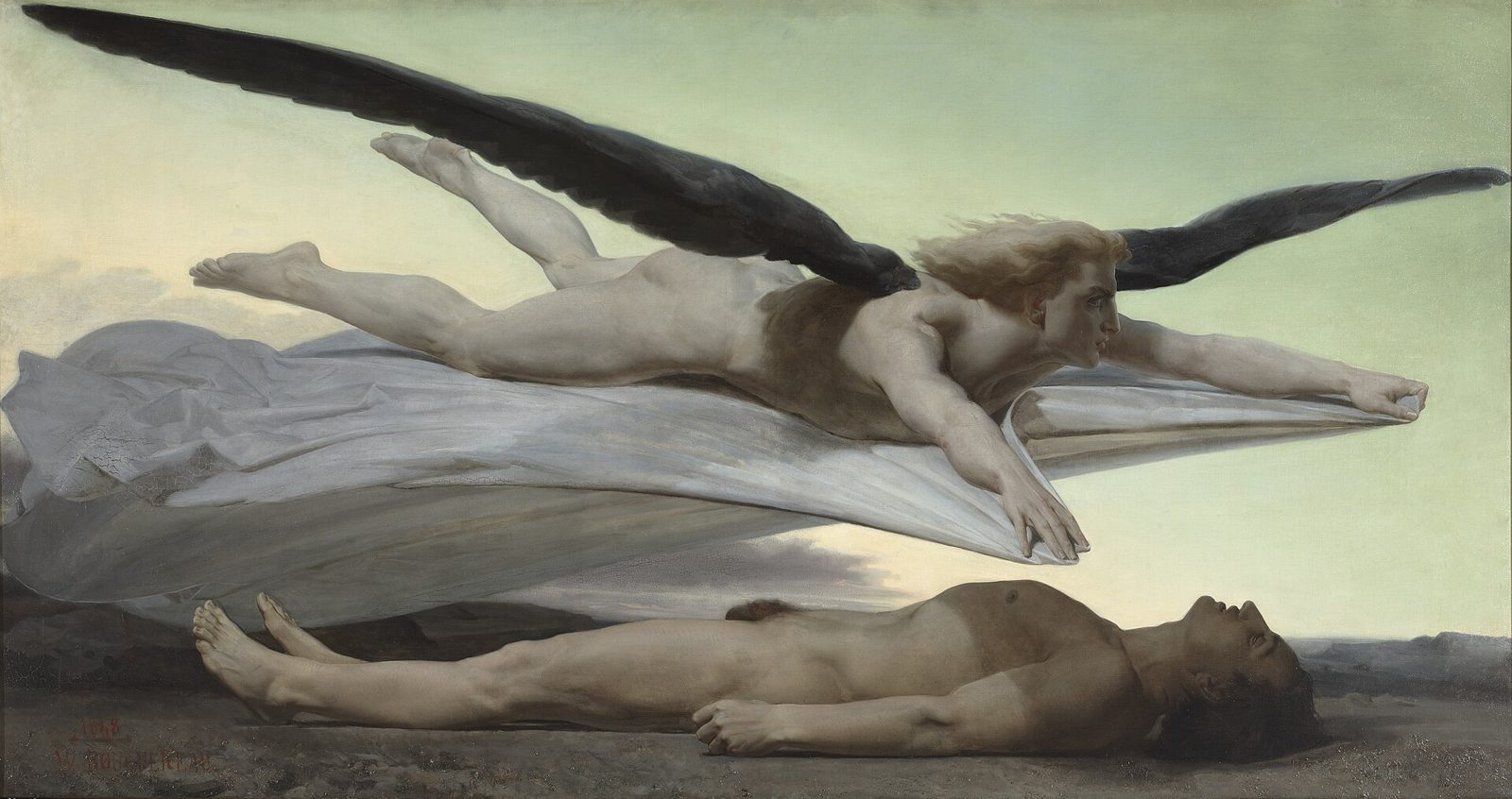
🎧 This work has audio narration — listen in the appTake a moment to really look at "Equality Before Death" by William-Adolphe Bouguereau. Notice how the angel of death gently covers the young man's body with a shroud. The delicate folds of the fabric seem to almost breathe, don’t they? And look at the expression on the angel’s face—there’s a serene compassion there, a sense of peace in the face of mortality.
These details matter because they highlight Bouguereau's unique ability to blend realism with deep emotional resonance. At just 23 years old, he was already making a powerful statement about the universality of death and the equality it brings, regardless of one’s status in life. This was his first major painting, and it set the stage for his career, showcasing his mastery of human emotion and form.
Bouguereau painted this in 1848, a time of great social upheaval in France. His work reflects not just personal themes, but the collective anxieties of his era. As you stand here, think about how this painting invites us to confront our own feelings about life and death. What emotions does it stir in you?
William-Adolphe Bouguereau was a prominent French academic painter born on November 30, 1825, in La Rochelle. He grew up in a family of merchants and developed a passion for art at a young age. Bouguereau studied at the École des Beaux-Arts and won the prestigious Prix de Rome in 1850, which allowed him to immerse himself in the classical art of Italy. His work, characterized by realistic depictions of mythological themes and the female form, gained immense popularity in France and the United States during his lifetime.
Despite his success, he faced criticism from the Impressionist movement, which deemed his style overly traditional. By the early 20th century, changing tastes led to a decline in his popularity, but a revival in the 1980s rekindled interest in his work. Bouguereau completed 822 known paintings, many of which remain lost. His legacy as a master of academic painting endures, particularly for his sensitive portrayals of women and children, marking him as a significant figure in art history. He passed away on August 19, 1905, leaving behind a complex legacy that continues to provoke discussion and admiration.
William-Adolphe Bouguereau's "Equality Before Death" was painted in 1848, marking a pivotal moment in his young career. This was his first major work, completed when he was just 23 years old, and it debuted at the Salon in 1849, where it was met with considerable acclaim. Bouguereau's work quickly gained attention, and he became a prominent figure in the art world, known for his ability to evoke deep emotions through his realistic portrayals. The painting is now housed in the Musée d'Orsay in Paris, a testament to its enduring significance.
As you gaze at "Equality Before Death," take a moment to appreciate Bouguereau's meticulous brushwork and the way he handles light and shadow. The soft, almost ethereal quality of the shroud enveloping the young man is achieved through delicate layering of paint, creating a sense of depth and movement. Notice how the light falls gently on the angel's face, illuminating the compassion in its expression. Bouguereau's composition is carefully structured, drawing your eye to the central figures while allowing the background to recede softly, enhancing the emotional gravity of the scene. The scale of the painting, combined with its realistic detail, invites you to step closer, almost as if you are part of this intimate moment. The overall effect is one of serene beauty, compelling you to confront the themes of life and death in a deeply personal way.
He created it when he was just 23 years old, after spending two intense years at the École des Beaux-Arts in Paris. This painting marked his debut at the Salon, a prestigious exhibition that could make or break an artist's career. Imagine the pressure he felt, stepping into the art world with such a significant piece—it's a testament to his talent and ambition at such a young age!
Bouguereau achieved the shroud's ethereal quality through delicate layering of paint, which allowed for a soft blending of colors and a sense of depth, enhancing the overall emotional impact of the scene.
During his lifetime, Bouguereau was highly celebrated and enjoyed significant popularity, particularly in France and the United States, but by the early 20th century, changing artistic tastes led to a decline in his reputation until a revival of interest in the 1980s.