Two Children
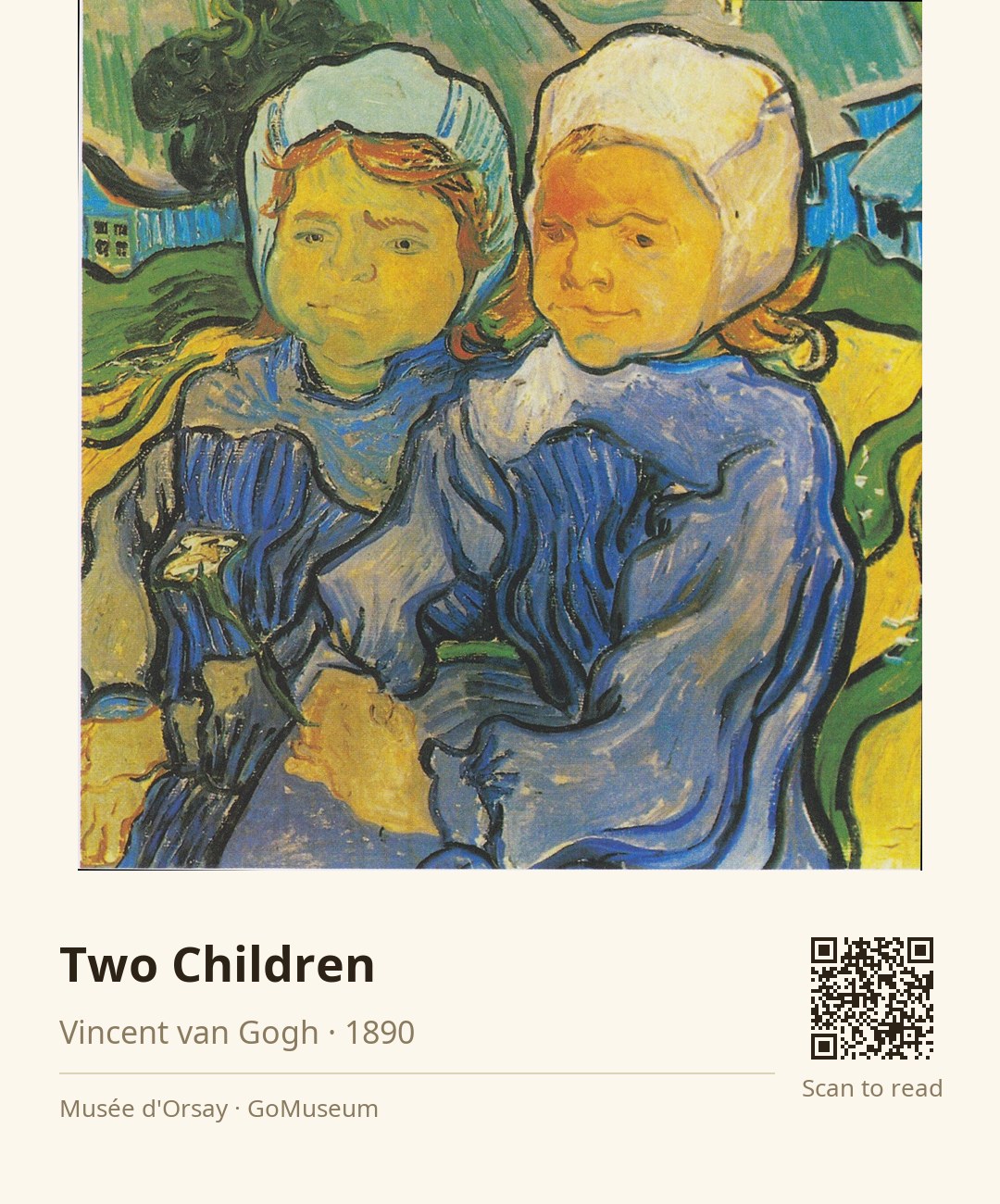
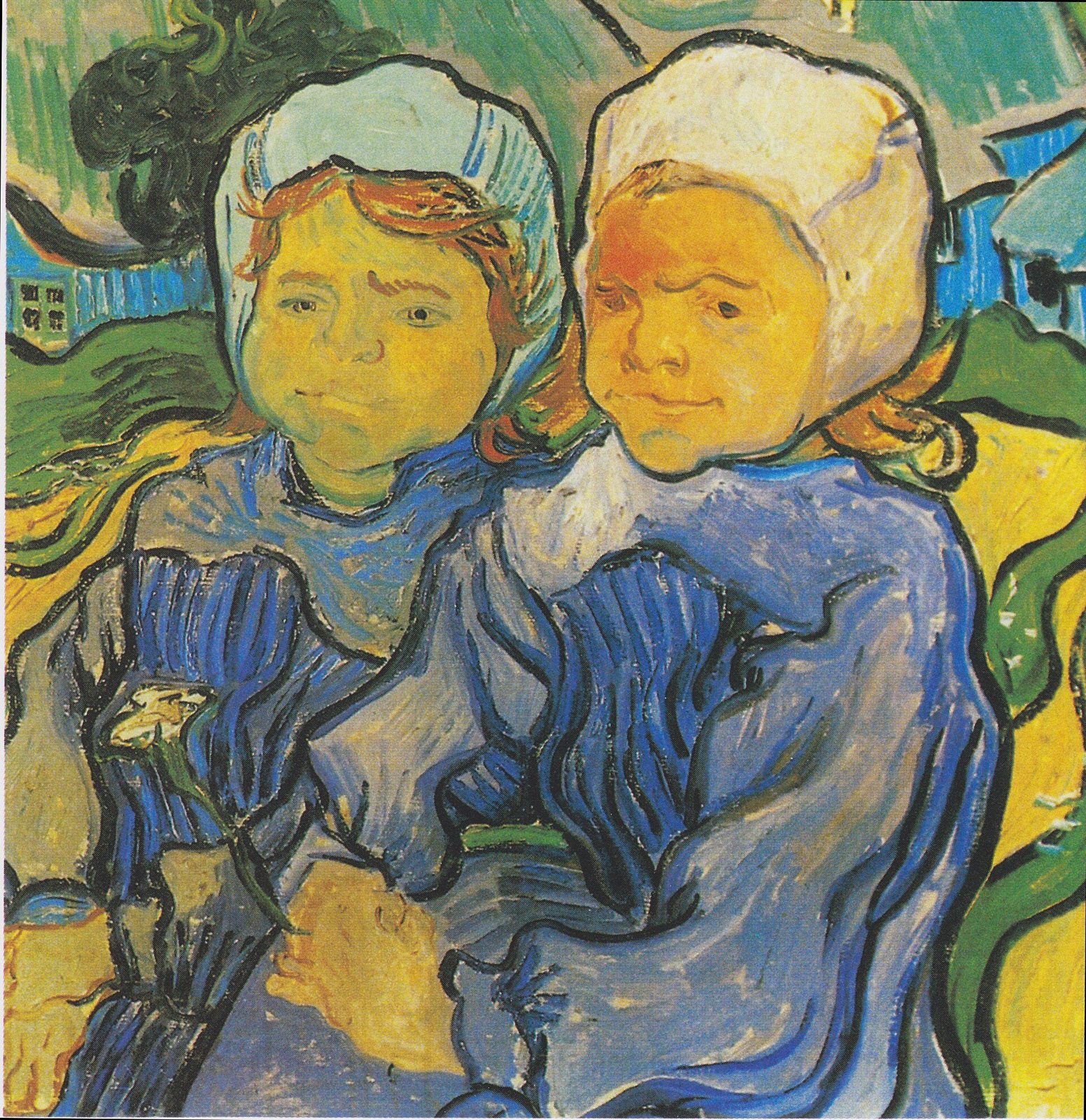
🎧 This work has audio narration — listen in the appTwo young girls, both adorned in white bonnets and blue dresses, capture your attention with their warm, expressive faces painted in vibrant yellows and oranges. The way they lean into each other, gazing outward, creates a sense of intimacy and connection, while the swirling greens and blues of the background suggest a lively landscape, with a house peeking through on the left.
These elements reflect Van Gogh's unique ability to infuse emotion into his subjects. The bold brushwork and dynamic strokes not only bring the figures to life but also evoke a sense of movement and energy, contrasting the serene expressions of the children. The choice of colors enhances the warmth of their presence, inviting viewers to feel a connection to their world.
Created in 1890, this painting is part of Van Gogh's later works, a period marked by intense emotional expression and exploration of color. During this time, he was under the care of Dr. Paul Gachet, who played a significant role in his life and art. Van Gogh's struggles with mental health were profound, yet his artistic output remained prolific, culminating in over 2,100 artworks. "Two Children" was exhibited in a retrospective of his work at the Salon des Indépendants in Paris in 1905.
Vincent van Gogh was a Dutch Post-Impressionist painter born on March 30, 1853, in Zundert. He is renowned for his vibrant use of color and expressive brushwork, which laid the groundwork for modern art. Despite creating around 2,100 artworks in just over a decade, including 860 oil paintings, he struggled with mental illness and poverty throughout his life. His early career as an art dealer was marked by disillusionment, leading him to pursue painting in 1881.
Van Gogh's intense passion for art was evident in his correspondence with his brother Theo, who provided emotional and financial support. His works evolved significantly after moving to Paris in 1886, where he mingled with avant-garde artists. His time in Arles in 1888 marked a peak in his creativity, producing iconic series like sunflowers and wheat fields.
Tragically, van Gogh's life ended in suicide at 37, after years of battling his demons. Initially unrecognized, he gained fame posthumously, becoming a symbol of the tortured artist. His legacy influenced movements like Fauvism and Expressionism, securing his place as one of the most significant figures in art history.
In 'Two Children', Van Gogh employs a bold and expressive brushwork that is characteristic of his later style. The paint handling is dynamic, with thick, textured strokes that create a palpable sense of movement around the figures. The vibrant yellows and oranges used for the children's faces contrast sharply with the cooler tones of their blue dresses, drawing your attention to their warm expressions. The composition is tightly focused, with the children positioned closely together, enhancing their connection. The swirling greens and blues in the background are not merely decorative; they suggest a lively, almost dreamlike landscape that envelops the figures, adding depth and context to their presence. This technique of blending abstraction with representation allows Van Gogh to evoke emotion and energy, making the viewer feel the intimacy of the moment.
Van Gogh's friendship with Gauguin ended after a violent confrontation where he severed part of his own left ear.
Van Gogh's letters to Theo are known for their eloquence and intimacy, often resembling autobiographical reflections.
Dr. Paul Gachet was a physician who cared for Van Gogh during a critical period in his life and had a notable influence on his art.