 Image: Fernidand Hodler (1853 - 1918) – Painter (Swiss) Details on Google Art Project
The Woodcutter
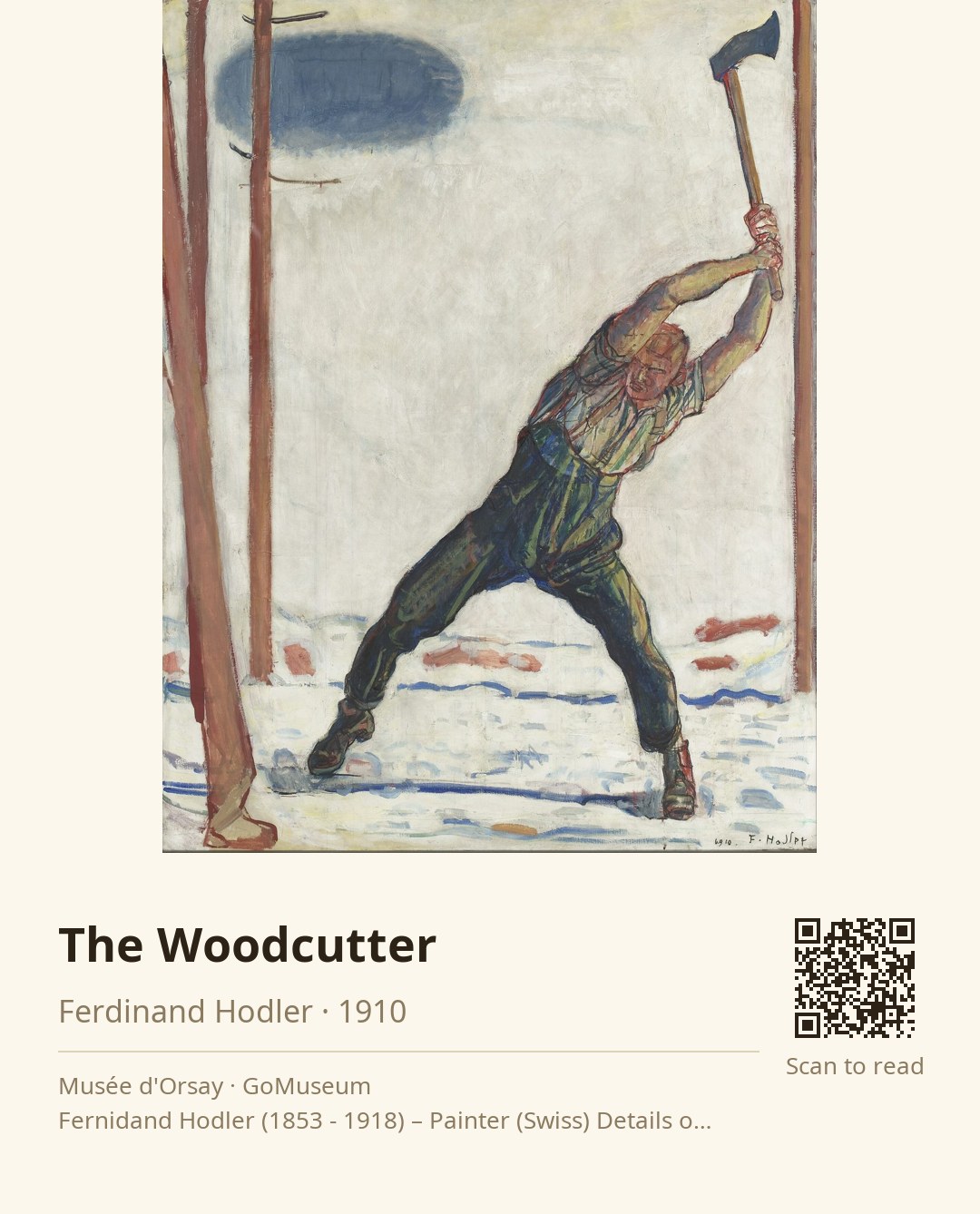
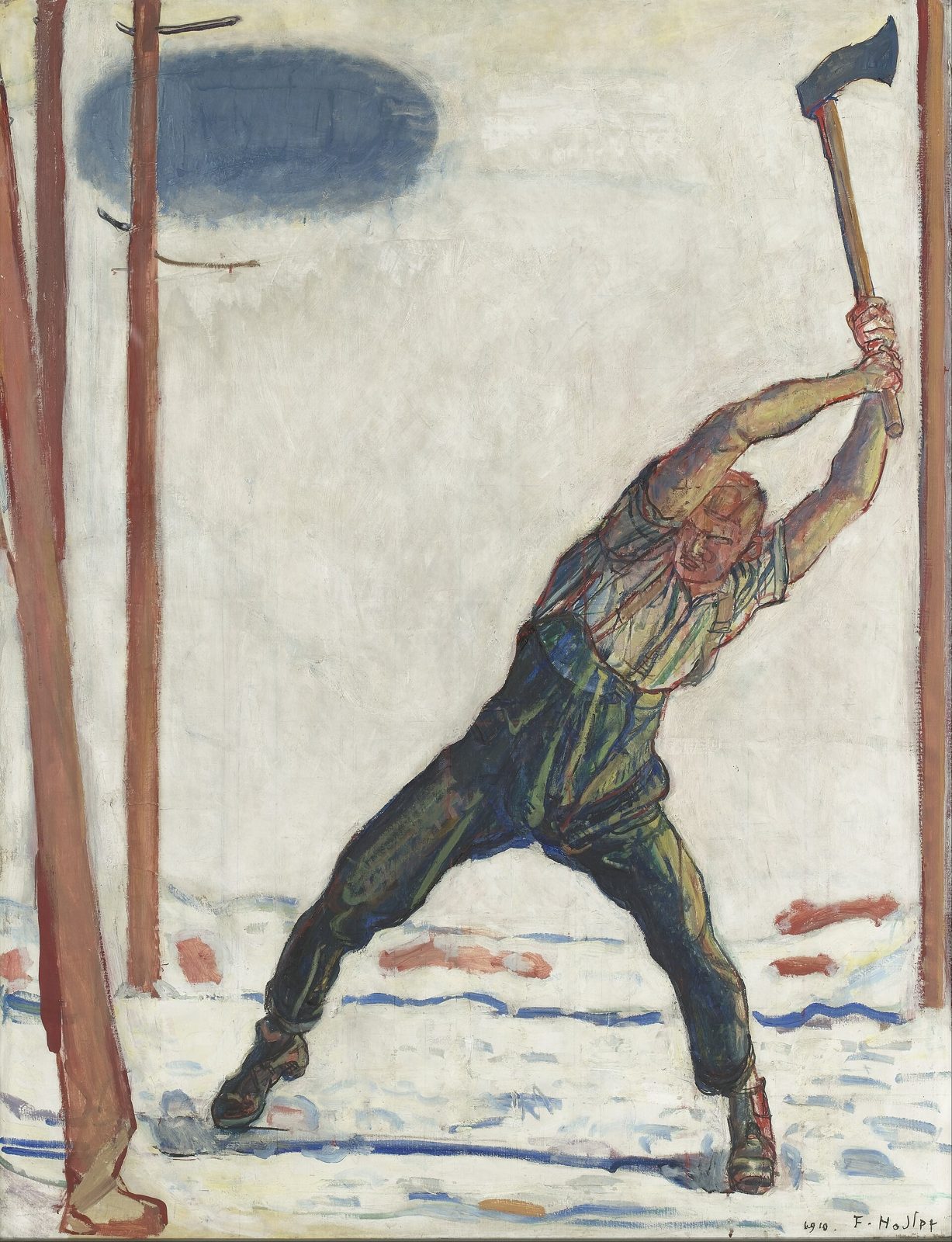
🎧 This work has audio narration — listen in the appTake a moment to really look at "The Woodcutter" by Ferdinand Hodler. Notice how the figure stands strong and resolute, his axe poised mid-swing. The way the light hits his muscular arms creates a sense of movement, almost as if you can hear the crack of wood splitting. These details matter because they capture not just a moment in time, but the very essence of labor and the connection between man and nature. Hodler's use of bold colors and simplified forms reflects his unique style of "parallelism," emphasizing harmony and rhythm in life. This painting, created in 1910, speaks to the dignity of work, a theme that resonates deeply, especially in the context of early 20th-century society, where industrialization was rapidly changing the landscape of labor. Hodler himself faced a tumultuous life, marked by loss and hardship, which likely fueled his appreciation for the strength found in simple, honest work. As you stand here, think about the stories behind the axe and the wood—what does this scene evoke for you? What does it say about the relationship between humanity and nature?
Ferdinand Hodler was a Swiss painter born on March 14, 1853, in Bern, and he passed away on May 19, 1918, in Geneva. As one of the most prominent Swiss artists of the late 19th and early 20th centuries, Hodler's work spanned various genres, including portraiture, landscapes, and historical paintings. His early career was marked by realism, influenced by the Swiss artistic tradition, but he later developed a unique style known as "parallelism," which emphasized symmetry and rhythm in human forms.
Hodler's life was shaped by tragedy; he lost several family members to tuberculosis, which instilled in him a profound awareness of mortality. This theme permeated his art, particularly in works like "Night," which scandalized audiences with its symbolic representation of death. His innovative approach attracted the attention of notable contemporaries, including Rodin and Puvis de Chavannes, who recognized his contributions to modernity.
Despite initial struggles for recognition, Hodler's later works garnered acclaim, establishing him as a key figure in the transition towards modern art in Europe. His legacy endures through his powerful imagery and the emotional depth of his compositions, marking him as a significant artist in the history of Swiss and European art.
This painting reflects not just the artist's personal journey but also the broader context of labor during this period. Hodler, who faced significant personal losses, including the deaths of family members to tuberculosis, found solace in the dignity of work, which is palpable in this piece. The painting was likely influenced by his own experiences as a child laborer, working alongside his stepfather in a decorative painting shop. Over time, Hodler's work garnered both admiration and criticism, reflecting the tensions of an artist striving for recognition in a changing world.
As you gaze at 'The Woodcutter,' take a moment to appreciate the brushwork that Hodler employs. Notice how the strong, sweeping strokes create a sense of movement, almost as if the figure is about to leap off the canvas. The use of light is particularly striking; it highlights the contours of the woodcutter's muscular arms, emphasizing strength and determination. The colors are bold yet harmonious, with deep greens and earthy browns that ground the figure in nature. Hodler's technique of 'parallelism' is evident here, as the composition is structured to create a rhythmic flow, guiding your eye from the woodcutter to the surrounding landscape. The balance of form and color not only captures the essence of labor but also evokes a deeper connection between humanity and the natural world. This careful handling of paint and composition results in a powerful visual narrative that resonates with the viewer.
Hodler's unique approach, known as 'parallelism,' emphasized symmetry and rhythm, which profoundly influenced the Symbolist and Expressionist movements that followed. His work challenged traditional representations of humanity and nature, pushing artists to explore deeper emotional and spiritual connections. This painting, created in 1910, captures the essence of labor and the human condition, resonating with themes of struggle and harmony.
Did you know that Ferdinand Hodler's early life was marked by tragedy? By the age of eight, he had lost his father and two younger brothers to tuberculosis. This profound loss shaped his perspective on life and death, which would later influence his art.
Hodler faced ridicule and criticism for his early works, such as 'Self-Portrait (The Angry One),' which was mocked in Geneva but later accepted in Paris. This struggle for acceptance highlights the challenges he faced in gaining recognition for his unique style and vision.