Rouen Cathedral, Portal, Cloudy Weather
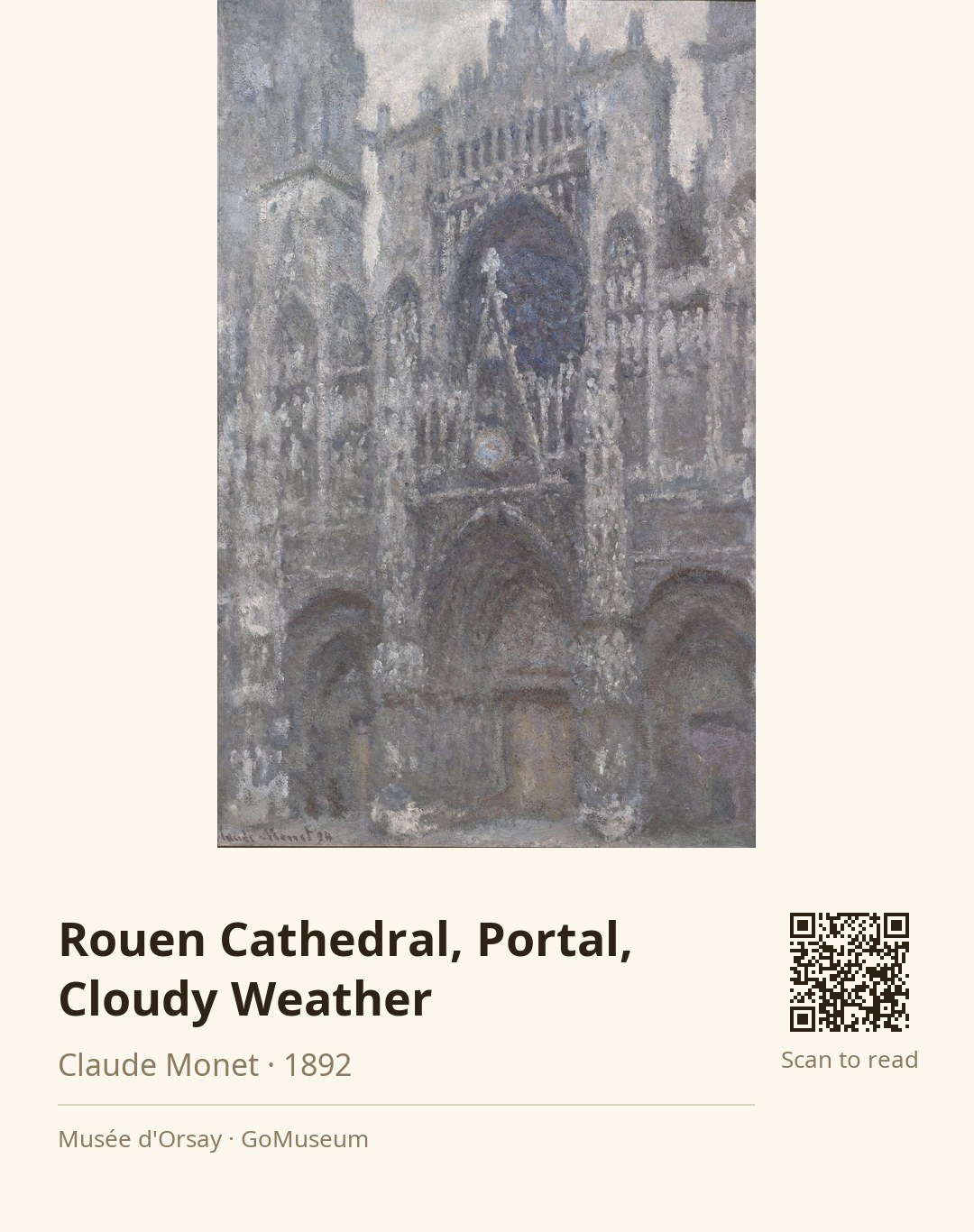
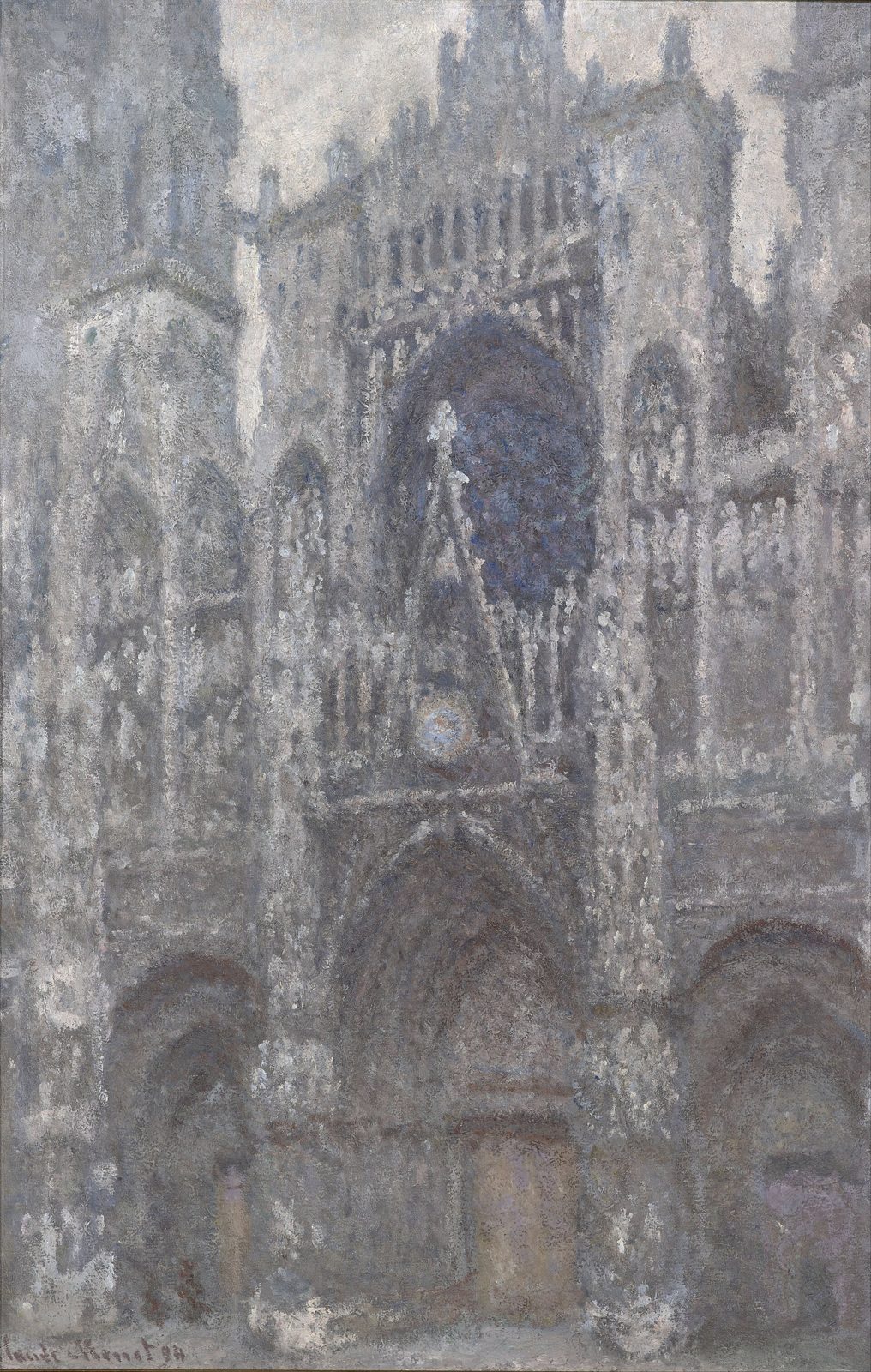
🎧 This work has audio narration — listen in the appTake a moment to really look at Monet’s "Rouen Cathedral, Portal, Cloudy Weather." Notice how the cathedral seems to shimmer under the cloudy sky, almost as if it’s alive. The way he captures the interplay of light and shadow on the stonework is nothing short of magical. These details matter because they reveal Monet's obsession with light and atmosphere, key elements of Impressionism. He painted this series of the cathedral multiple times, each time exploring how the changing weather transformed the scene. It’s not just a building; it’s a living entity, reflecting the mood of the day. Monet created this piece in 1892, during a time when he was deeply immersed in his exploration of color and perception. He was fascinated by how the same subject could look so different under varying conditions, which is a hallmark of his work. As you stand here, think about how this painting invites you to experience the cathedral not just as a structure, but as a part of the ever-changing landscape. What feelings does this scene evoke for you?
Oscar-Claude Monet, born on November 14, 1840, in Paris, was a pioneering French painter and a founder of Impressionism, a movement that transformed the art world. Raised in Le Havre, he developed a passion for nature and painting early on, encouraged by his mother, while his father hoped he would pursue a business career. After his mother's death in 1857, Monet moved in with his aunt, who supported his artistic ambitions.
Monet's career began with caricatures, but he soon sought formal training, studying under Eugène Boudin, who introduced him to plein air painting. His breakthrough came in 1866 with "La Femme à la robe verte," which garnered attention at the Salon. The term "Impressionism" originated from his work "Impression, Sunrise," exhibited in 1874, marking a shift away from traditional art.
Throughout his life, Monet focused on capturing the essence of light and color in nature, creating series of paintings that depicted the same scenes under varying conditions, such as his famous haystacks and water lilies. He settled in Giverny in 1883, where he cultivated a beautiful garden that became his muse. Despite personal hardships, including the loss of loved ones and health issues, Monet's relentless dedication to his craft solidified his place in art history as a master of modernism, influencing countless artists and leaving a lasting legacy. He died on December 5, 1926, in Giverny, celebrated as one of the most significant figures in art.
Monet's "Rouen Cathedral, Portal, Cloudy Weather" was painted in 1892, during a pivotal moment in his career. This piece is part of a larger series where he explored the same subject under varying atmospheric conditions. The work was first exhibited at the prestigious Durand-Ruel gallery in Paris in 1895, where it was met with a mix of intrigue and skepticism. Monet's innovative approach to capturing light and shadow was still a relatively new concept, and while some critics were captivated, others struggled to understand his departure from traditional techniques. After its exhibition, the painting remained in Monet's collection until it was acquired by the Comte de Camondo, a notable patron of the arts. This journey from Monet's studio to the gallery reflects the evolving tastes of the art world at the time, as Impressionism began to gain traction among collectors and the public alike.
As you gaze at this painting, pay attention to Monet's masterful brushwork. He employs quick, loose strokes that create a sense of movement and fluidity, almost as if the cathedral is breathing in the shifting light. The palette is dominated by soft grays and muted blues, yet there are splashes of warmer tones that bring the stone to life. Notice how the light dances across the surface, highlighting the intricate details of the portal while casting shadows that suggest depth and dimension. Monet's composition draws your eye toward the cathedral's entrance, inviting you to step into this atmospheric scene. The scale of the painting, quite large at 100 by 65 centimeters, allows you to immerse yourself fully in the experience, making you feel the weight of the clouds above and the solidity of the stone below.
This piece is part of his series on Rouen Cathedral, where he painted the same subject multiple times under different lighting conditions. This approach influenced countless artists, encouraging them to explore the transient effects of light and color. Monet's work laid the groundwork for modern art movements, pushing boundaries and inspiring future generations to break free from traditional techniques. Remember, this painting is a testament to the power of perception and the beauty of fleeting moments captured on canvas.
One surprising detail about Monet's process is that he often painted multiple canvases of the same scene simultaneously. This allowed him to capture the fleeting effects of light and weather as they changed throughout the day.
Monet often painted multiple canvases of the same scene at once, allowing him to capture the changing effects of light and weather throughout the day, which was a key aspect of his approach to Impressionism.