 Image: Charles-Louis Michelez (1817-before 1900). · Unknown authorUnknown author · User:Lemmageier · photogravure Goupil
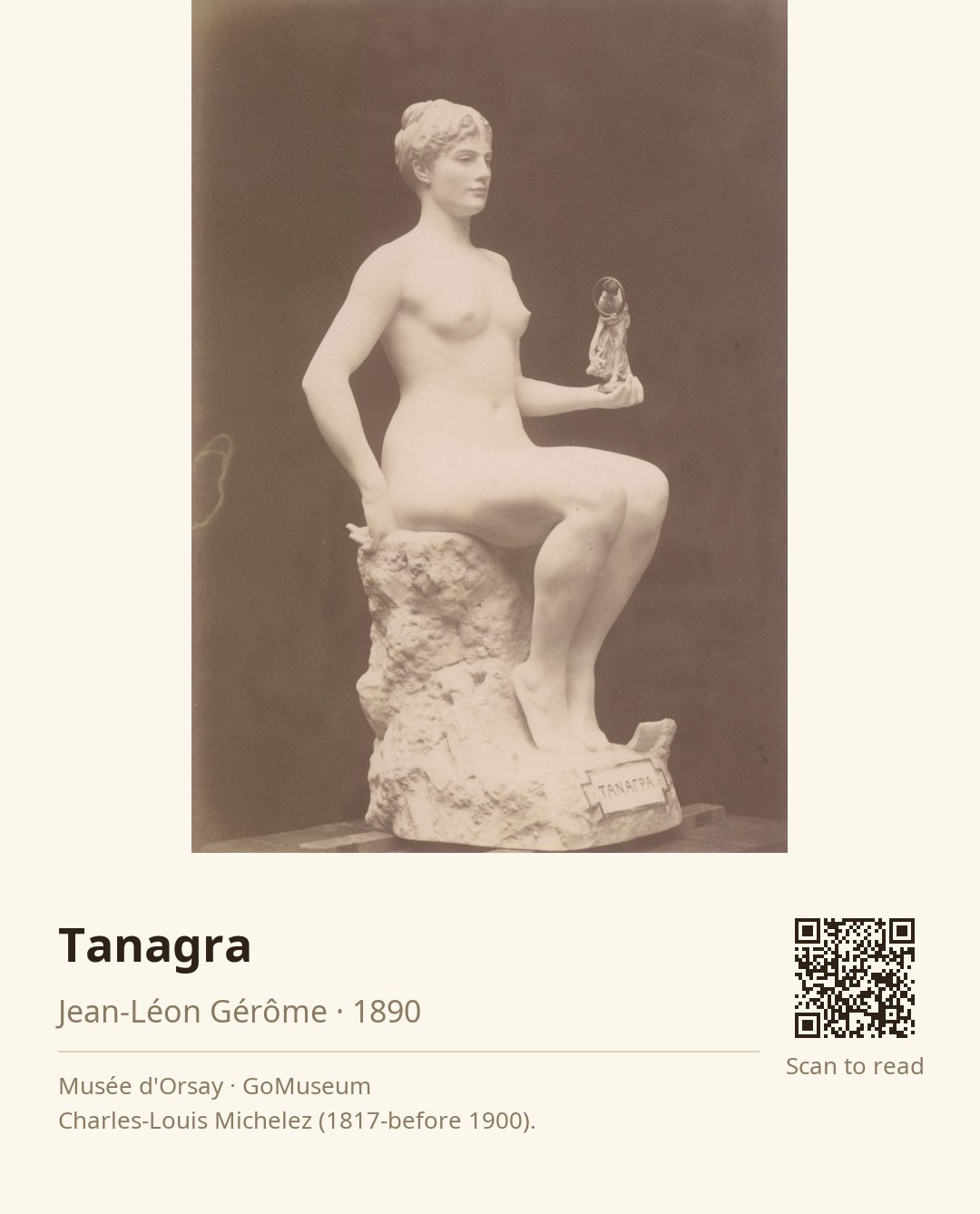
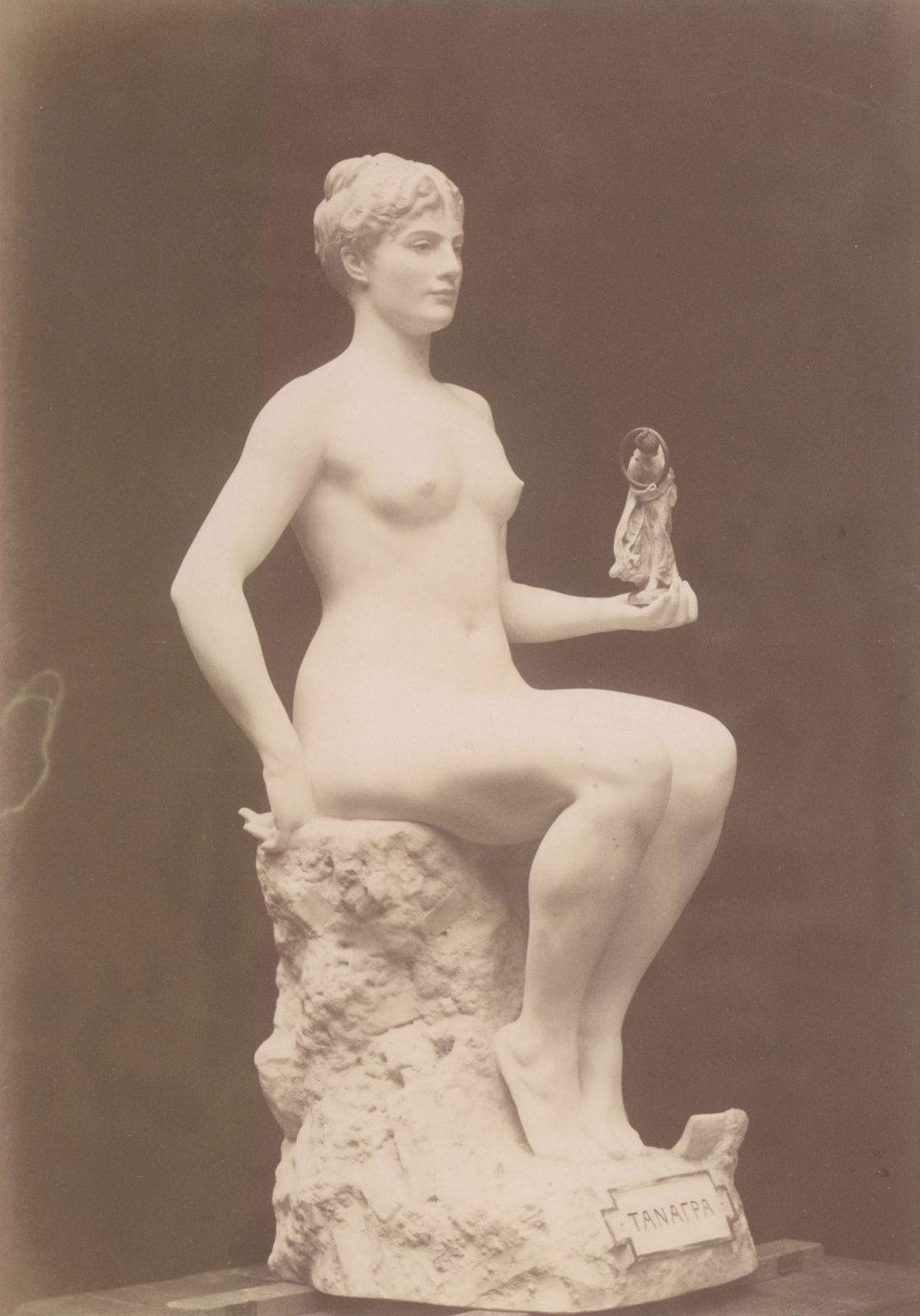
Take a moment to really look at Gérôme's "Tanagra." Notice how she sits, upright and poised, atop a mound of earth, as if she’s just emerged from an archaeological dig. Her skin is delicately tinted, capturing the light in a way that almost breathes life into the marble. And in her hand, she cradles a small figurine of a hoop dancer, a playful twist that adds a layer of intrigue.
These details matter because they reflect Gérôme's fascination with the intersection of art and history. The larger statue represents the spirit of Tanagra, a nod to the ancient figurines that inspired him, while the hoop dancer symbolizes the joy and vibrancy of life that these figures once depicted. It’s a commentary on how art can transcend time, connecting the past with the present.
Gérôme created this sculpture in 1890, during a period when interest in classical antiquity was surging. He was not just sculpting; he was reinventing the very essence of these ancient artifacts, making them relevant for his contemporary audience.
As you stand here, think about the stories that these figures tell—both the ones captured in marble and the ones that inspired them. What do you think Gérôme wanted us to feel about the beauty and complexity of the past?
Jean-Léon Gérôme, born on May 11, 1824, in Vesoul, France, was a prominent painter and sculptor known for his academic style. He gained fame in the mid-19th century, becoming arguably the most celebrated artist of his time. Gérôme's work spanned various genres, including historical, mythological, and Orientalist themes, showcasing his meticulous attention to detail and vibrant compositions. His early education in drawing laid the foundation for his artistic journey, which included studies under notable mentors in Paris.
Gérôme's career flourished after his debut at the Paris Salon in 1847, where his painting "The Cock Fight" garnered critical acclaim. He became a leading figure in the Neo-Grec movement and later embraced Orientalism after travels to Egypt and the Ottoman Empire. His works often depicted exotic scenes, blending accurate architectural details with idealized figures. As a teacher at the École des Beaux-Arts, he influenced a generation of artists, including Mary Cassatt and Thomas Eakins.
Despite his initial success, Gérôme's resistance to modern movements like Impressionism led to a decline in his reputation after his death on January 10, 1904. However, his art experienced a revival in the late 20th century, inspiring filmmakers and continuing to be celebrated for its technical prowess and historical significance. With around 600 paintings and numerous sculptures, Gérôme remains a key figure in the academic art tradition of the Second Empire.
Gérôme's 'Tanagra' is crafted from polychromic marble, a medium that allows for a delicate interplay of color and texture. As you gaze closer, notice the subtle tinting of the skin, hair, and lips—each hue meticulously applied to evoke a lifelike quality. The artist's skill shines through in the way the marble captures light, almost as if the figure is breathing. The intricate details, from the folds of her drapery to the tools scattered at her feet, hint at the labor and care that went into creating this piece, merging artistry with archaeological homage.
Unveiled at the Paris Salon of 1890, Gérôme's 'Tanagra' was a product of a period rich in classical revival. The sculpture embodies the spirit of Tanagra, inspired by the ancient terra cotta figurines discovered in Greece in 1870, which had captivated audiences with their vivid colors and depictions of everyday life. The reception was enthusiastic, with critics noting its lifelike qualities and the artist's innovative approach to classical themes. Today, 'Tanagra' resides in the Musée d'Orsay, though much of its original polychromy has faded, a testament to the passage of time.
Did you know that when Gérôme first unveiled Tanagra at the Paris Salon in 1890, it was not just the sculpture itself that turned heads, but the very idea behind it? Gérôme had created a fictional spirit, the 'spirit of Tanagra,' to embody the essence of the ancient Tanagra figurines, which depicted everyday people rather than gods.
Gérôme's fascination with the Tanagra figurines led him to produce numerous smaller, gilded bronze versions of the Hoop Dancer, making it a modern equivalent of the ancient Tanagra figurines. This allowed him to explore the concept of mass production in art, reinventing these ancient artifacts for contemporary audiences.
Gérôme created a complex artistic program that included not only the Tanagra sculpture but also paintings of imaginary workshops where female artists painted copies of his Hoop Dancer. This self-referential approach allowed him to comment on the role of women in art and the commercialization of artistic creations.