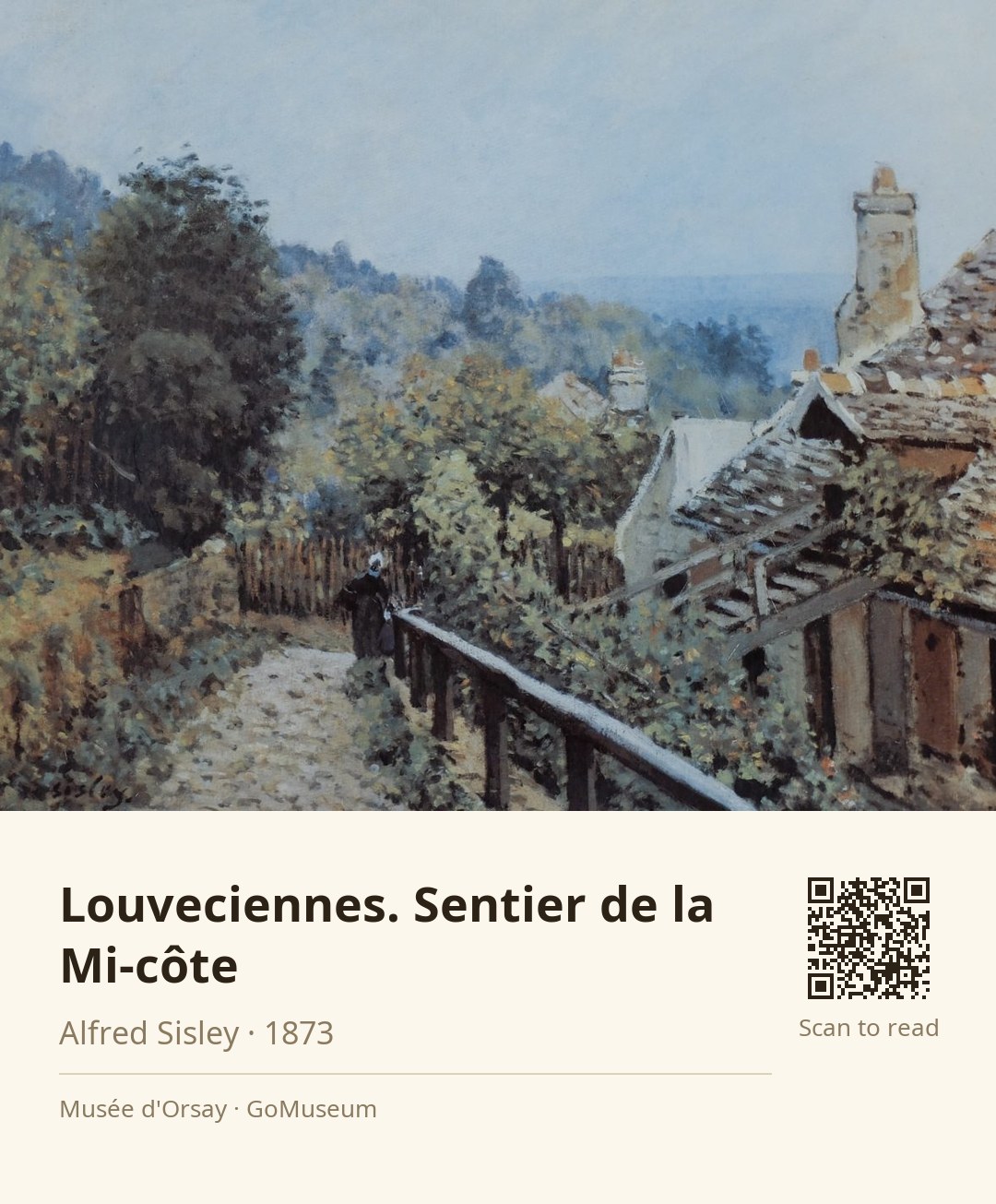
Louveciennes. Sentier de la Mi-côte
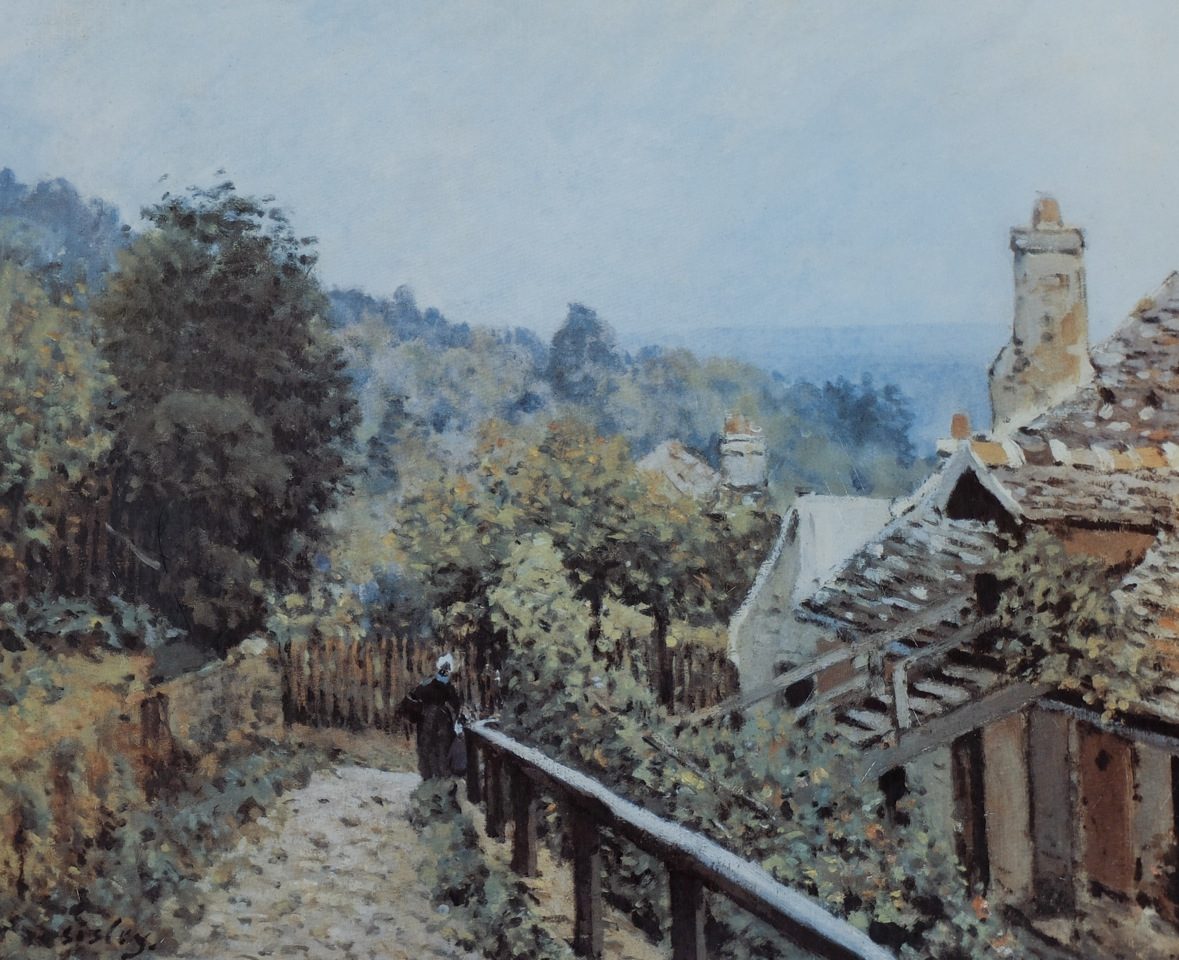
🎧 This work has audio narration — listen in the appTake a moment to really look at "Louveciennes. Sentier de la Mi-côte" by Alfred Sisley. Notice how the diagonal lines of the path and the treetops draw your eye toward the misty Seine valley below. It’s as if the landscape is inviting you to step into its serene embrace.
Now, pay attention to the autumn colors and the soft hues of the rooftops. These warm tones create a gentle atmosphere, almost like a cozy blanket wrapping around the scene. This isn’t just a pretty picture; it captures a fleeting moment in time, a hallmark of Impressionism, where light and color dance together to evoke emotion.
Sisley painted this scene in 1873, during a time when he was deeply committed to capturing the beauty of nature en plein air, or outdoors. His dedication to this practice set him apart from many of his contemporaries, allowing him to convey the essence of a place rather than just its physical details.
As you stand here, think about what it must have been like for Sisley to paint this scene, surrounded by the lush greenery and the sounds of nature. What feelings does this landscape stir in you? How does it connect you to the world outside these walls?
Alfred Sisley was a British-born Impressionist landscape painter, born in Paris on October 30, 1839, to affluent expatriate parents. His dedication to painting outdoors, or en plein air, marked him as one of the most consistent figures within the Impressionist movement. Sisley’s work primarily focused on landscapes, with notable series depicting the River Thames, the floods at Marly-le-Roi, and the Gothic church at Moret-sur-Loing. Despite his talent, he struggled for recognition and financial stability throughout his life, often relying on the support of patrons and friends.
Sisley's artistic journey began in earnest after returning to Paris from London, where he had been sent to pursue a business career. Instead, he found his calling in art, studying at the École des Beaux-Arts and forming close friendships with fellow artists like Monet and Renoir. His personal life was marked by hardship, particularly after the Franco-Prussian War disrupted his family's financial support. He married Eugénie Lescouezec, and together they faced many challenges, including the loss of a child and Sisley’s ongoing financial instability.
Although Sisley’s work was largely overlooked during his lifetime, it has since gained significant appreciation, solidifying his place in art history as a key contributor to Impressionism and French landscape painting. His delicate depictions of nature continue to resonate, showcasing the beauty of the world around him. Sisley passed away on January 29, 1899, in Moret-sur-Loing, leaving behind a legacy that would flourish posthumously.
As you gaze at 'Louveciennes. Sentier de la Mi-côte', notice how Sisley's brushwork creates a sense of movement and life. The diagonal lines of the path and the treetops guide your eye effortlessly toward the misty Seine valley, almost inviting you to wander down that path yourself. Sisley employs a soft palette of autumn colors, blending warm hues that evoke a sense of tranquility and comfort. The way he handles light is particularly striking; it dances across the rooftops and filters through the trees, giving the scene a luminous quality. His choice of composition, with the path leading the viewer's gaze, creates a dynamic balance that feels both serene and alive. The scale of the painting, modest yet intimate, allows you to feel as if you are stepping into the scene rather than merely observing it. This technique is a hallmark of Impressionism, where the artist captures not just the visual details but the very essence of the moment.
Sentier de la Mi-côte' is that it was painted on-site, in the very location it depicts. This practice of painting outdoors was not just a technique for Sisley; it was a philosophy. He believed that to truly capture the essence of a landscape, one must immerse oneself in it. This dedication to en plein air painting was a defining characteristic of his work and set him apart from many of his contemporaries, who often painted in studios.
The original site of the painting, which was once a farm, has been abandoned and suffered damage from a landslide in 1983. There are currently restoration plans in place to preserve the area.
Throughout his life, Sisley faced financial difficulties, particularly after the Franco-Prussian War disrupted his family's business. This precarious situation forced him to rely on the support of patrons and art dealers, impacting his ability to promote his work during his lifetime.