Waitress serving beer
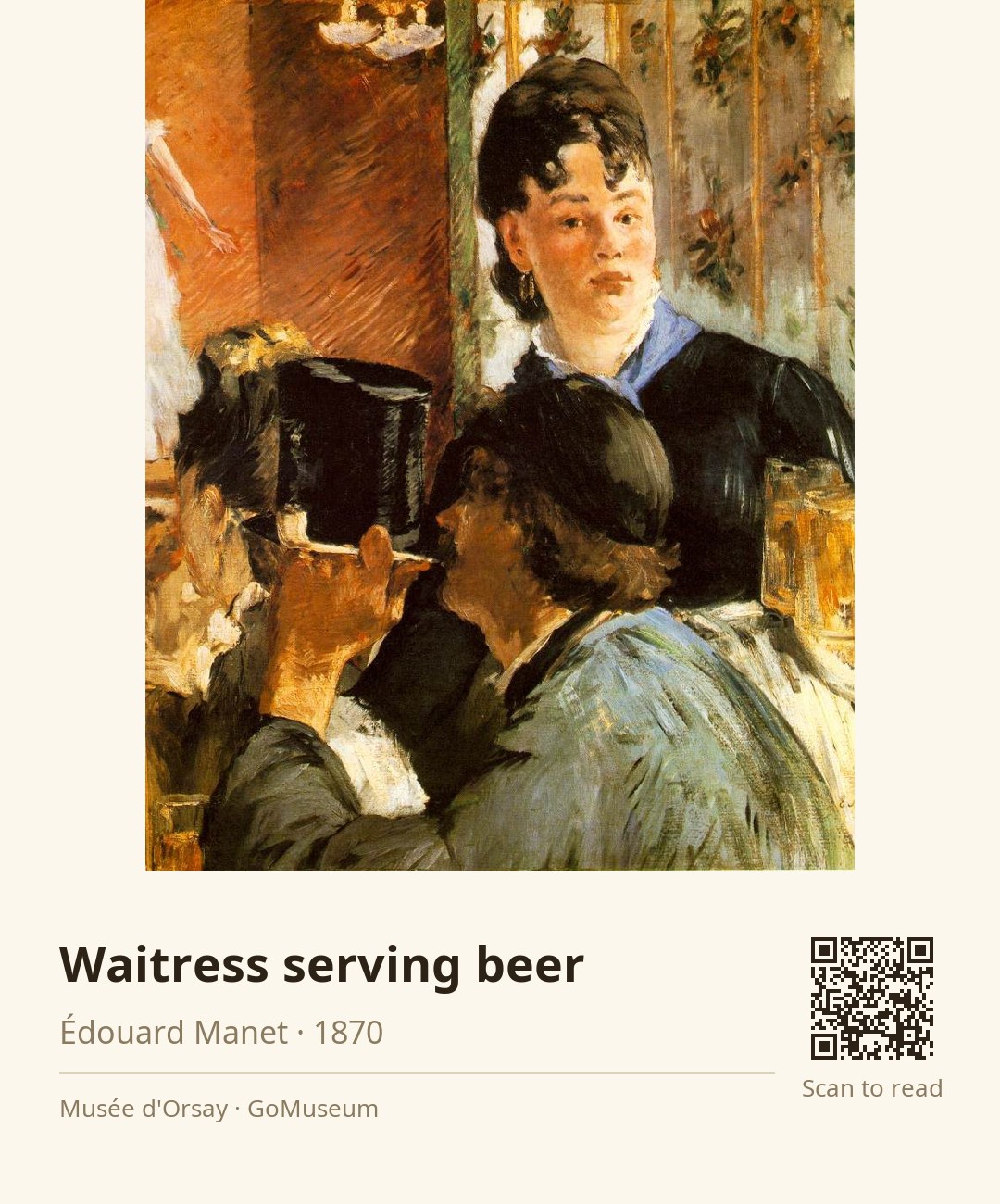
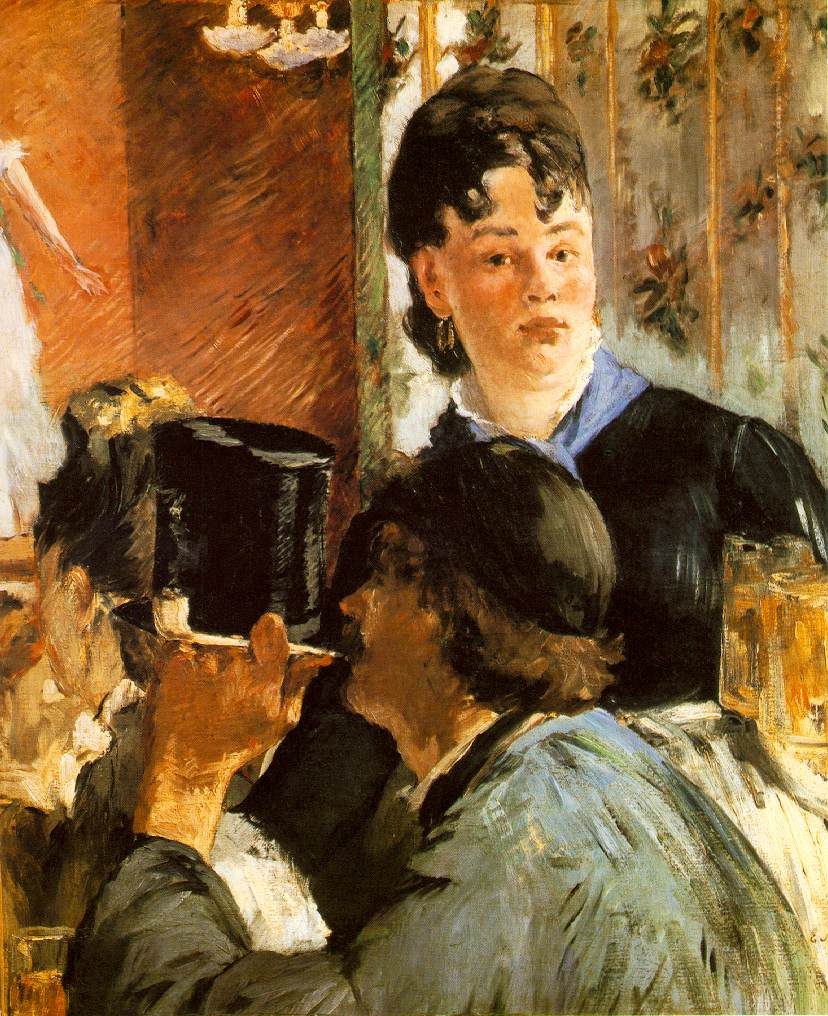
🎧 This work has audio narration — listen in the appTake a moment to really look at Manet's "Waitress Serving Beer." Notice how the waitress stands confidently, her gaze meeting yours, as if inviting you into the lively café scene. The way her white apron contrasts with the deep hues of the background draws your eye directly to her, highlighting her role in this bustling environment.
This detail matters because it reflects Manet’s focus on modern life and the everyday experiences of people in Paris during the late 19th century. Unlike traditional portraits that glorified historical figures, Manet celebrates the working class, giving them a presence and dignity that was often overlooked.
As you stand here, think about the stories this waitress might tell—what did she see in her daily interactions? What moments of joy or struggle did she witness? Let her gaze linger in your mind, inviting you to reflect on the lives of those who serve us in our own bustling world today.
Édouard Manet, born on January 23, 1832, in Paris, emerged as a pivotal figure in 19th-century art, bridging Realism and Impressionism. From an affluent family, he initially faced pressure to pursue a naval career but instead dedicated himself to painting, influenced by his uncle and the Old Masters. His early works, including "The Luncheon on the Grass" and "Olympia," sparked controversy and challenged traditional artistic norms, marking him as a revolutionary force.
Manet's style, characterized by loose brushwork and a focus on contemporary life, diverged from the meticulous techniques of his predecessors. He often depicted modern Parisian scenes, capturing the essence of leisure and social dynamics. Despite initial rejection from the art establishment, he gained recognition among progressive artists and became a mentor to the Impressionists.
Throughout his life, Manet formed connections with influential figures like Baudelaire and Zola, who defended him against critics. His later works, such as "A Bar at the Folies-Bergère," showcased his evolving style and mastery of color. Manet's contributions to art history are profound; he is celebrated not only for his innovative techniques but also for elevating still life and modern subjects to the forefront of artistic expression. He passed away on April 30, 1883, leaving behind a legacy that continues to inspire artists today.
It’s important to note that this piece is often confused with another work, "Corner of a Café-Concert," as some art historians view it as a preparatory version. It was once part of Auguste Pellerin's collection in Paris before moving to the Bernheim Jeune gallery. In 1919, it was sold at auction and bought back by the Bernheim gallery, eventually making its way to the collection of the eccentric Denys Cochin. After a series of transactions, it was acquired by the prince Matsukata Kōjirō, who was known for his extensive collection of artworks. Following the restitution of Matsukata's collection in 1959, the painting returned to the Louvre. Over the years, it has been exhibited in various prestigious venues, including the Grand Palais in Paris in 1983, showcasing its enduring appeal and significance in the art world.
As you gaze at 'Waitress Serving Beer,' take note of Manet's masterful brushwork. The way he layers paint creates a sense of immediacy, drawing you into the scene. The waitress's confident posture is emphasized by the contrasting dark background, which not only highlights her figure but also enhances the overall composition. Manet's use of light is particularly striking; it bathes her in a warm glow, suggesting the lively atmosphere of the café. The painting's scale, larger than life, invites you to step closer, almost as if you're part of the bustling environment. Each stroke feels deliberate yet spontaneous, capturing the essence of modern life with a freshness that was revolutionary for its time.
One intriguing aspect of 'Waitress Serving Beer' is its connection to Manet's other works. Art historians suggest that this painting may have been a secondary version or preparatory study for 'Corner of a Café-Concert.' This relationship highlights Manet's ongoing exploration of café culture, making it a fascinating piece within the broader context of his artistic journey.
Interestingly, the painting's provenance is somewhat mysterious; it does not appear in the inventory of Auguste Pellerin, its early owner, nor in the artist's sales records, suggesting that its early history is not well-documented.
This painting is considered a significant work that helped pave the way for modern depictions of everyday life, influencing later artists who sought to capture the essence of contemporary social scenes in their work.
In 'Waitress Serving Beer,' the figures are depicted more closely, creating a sense of intimacy and immediacy, as if the viewer is zoomed in on a specific moment within the broader café scene.