L'Ambulance improvisée
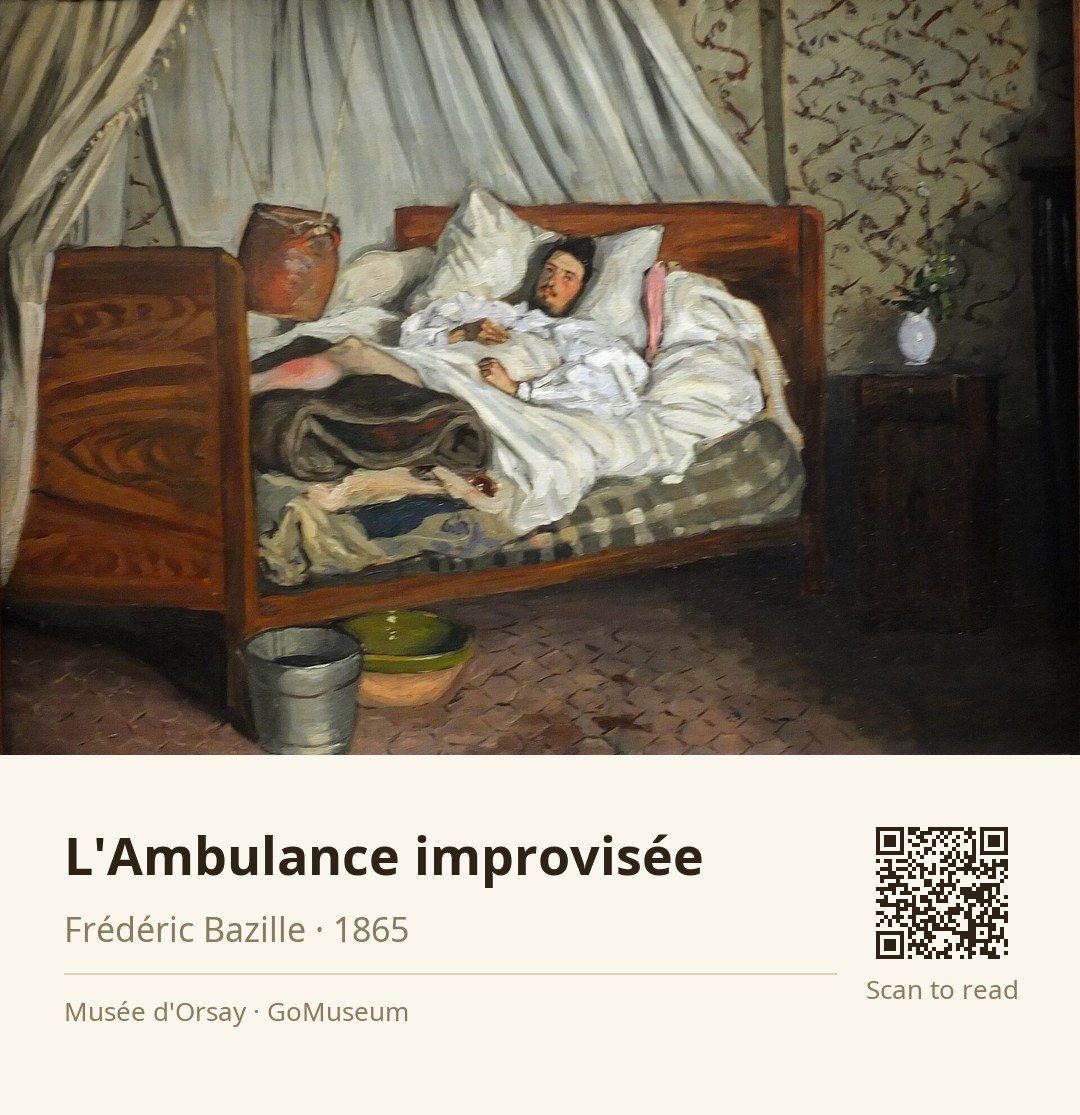
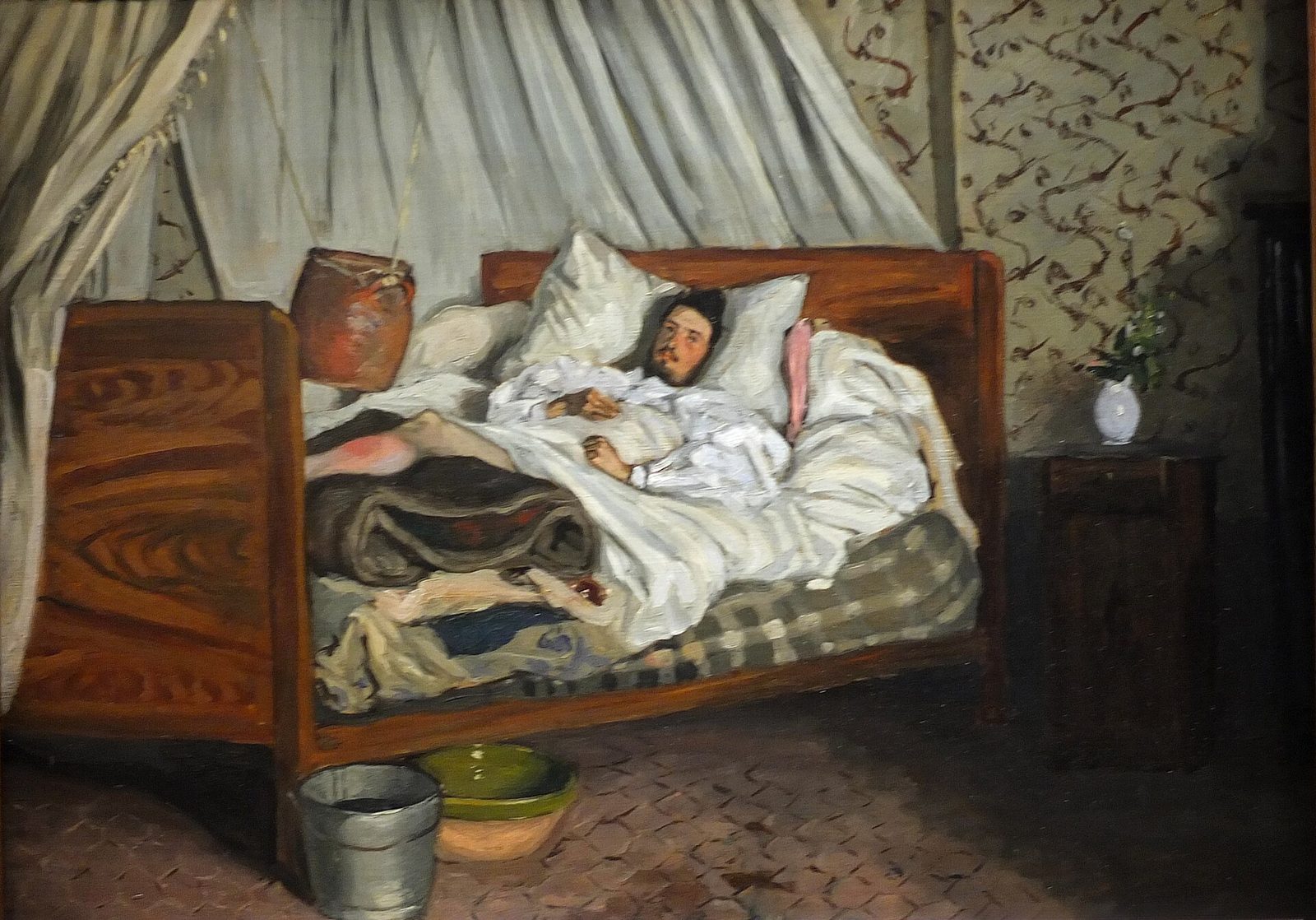
🎧 This work has audio narration — listen in the appTake a moment to really look at "L'Ambulance improvisée." Notice how Claude Monet, lying in bed, seems almost lost in thought, his face reflecting a mix of vulnerability and frustration. The raw, red wound on his shin is stark against the soft fabric of the bedding, drawing your eye to the very real pain he’s enduring.
These details matter because they reveal the intimate bond between the two artists. Bazille captures not just a moment of recovery, but the essence of their friendship during a time when Monet was sidelined by injury. This painting is more than a depiction of a wounded man; it’s a testament to the support and camaraderie that defined their lives as artists.
Created in 1865, this work sits at the crossroads of realism and the emerging Impressionist movement, showcasing Bazille's unique ability to blend emotional depth with technical skill. He was just 23 when he painted this, a time when he was deeply influenced by his contemporaries and the struggles they faced.
As you stand here, consider the vulnerability of artists, both in their work and in their lives. What do you think this moment says about friendship and support in the face of adversity?
Jean Frédéric Bazille was a French Impressionist painter born on December 6, 1841, in Montpellier. Coming from a wealthy Protestant family, he initially pursued medicine to satisfy his parents but soon shifted his focus to art after being inspired by Eugène Delacroix. Moving to Paris in 1862, he became part of the burgeoning Impressionist movement, befriending artists like Claude Monet and Pierre-Auguste Renoir. Bazille's works, characterized by their vibrant figures set against natural landscapes, include notable pieces such as "Family Reunion" and "The Pink Dress."
Despite his promising career, Bazille's life was tragically cut short when he died at the age of 28 during the Franco-Prussian War. His commitment to his friends and the arts was evident as he generously supported fellow artists. Although his work was largely forgotten after his death, a revival began in the 20th century, recognizing his contributions to Impressionism. Today, Bazille is celebrated for his unique perspective and remains an important figure in art history, embodying the spirit of youthful creativity and camaraderie among the Impressionists.
Frédéric Bazille painted 'L'Ambulance improvisée' in 1865, during a pivotal moment in his life and the art world. This piece was created while Bazille was in Chailly-en-Bière, where his friend Claude Monet was recuperating from a leg injury. The painting captures a deeply personal moment, reflecting not just Monet's physical state but also the emotional bond between the two artists. Over the years, it has been part of several retrospectives, including those in Montpellier and Paris, and has been housed in the Musée d'Orsay since 1986, solidifying its place in the canon of Impressionist art. Its provenance includes notable collectors like Meynier de Salinelles and Pinchinat, highlighting its journey through the art market.
Take a closer look at Bazille's technique in 'L'Ambulance improvisée.' The brushwork here is both expressive and intimate, capturing the tension of Monet's situation. Notice how Bazille uses a palette dominated by warm tones, with the stark red of Monet's wound contrasting against the softer hues of the bedding. This choice not only draws your eye but also evokes a visceral reaction, making you acutely aware of the pain and vulnerability depicted. The composition is structured around Monet's figure, which is slightly off-center, creating a sense of imbalance that mirrors his physical state. The light filtering into the room adds depth, enhancing the emotional weight of the scene. Bazille's ability to blend realism with emerging Impressionist techniques allows this moment to resonate on a personal level, inviting you to feel the weight of friendship and suffering.
This intimate portrayal of Claude Monet, bedridden after an injury, captures not just a moment of vulnerability but also the deep camaraderie among artists of the time. Bazille's attention to detail—the inflamed wound, the disheveled bed—invites viewers into a personal space, showcasing the emotional weight of friendship and support. This painting matters because it reflects the shift towards capturing everyday life and human connection, influencing future generations of artists to explore intimacy and realism in their work.
One intriguing aspect of 'L'Ambulance improvisée' is its title, which refers to a temporary field hospital. In the context of the 19th century, the term 'ambulance' had a different connotation, emphasizing the makeshift nature of care during wartime. This adds a layer of irony to the painting, as it depicts a moment of personal recovery amidst the backdrop of a society grappling with the realities of conflict.
Bazille's death at the young age of 28 during the Franco-Prussian War cut short a promising career, and he was largely forgotten for decades. However, his work has since been rediscovered and celebrated, influencing later generations of artists and contributing to the narrative of Impressionism.