Fernand Halphen enfant
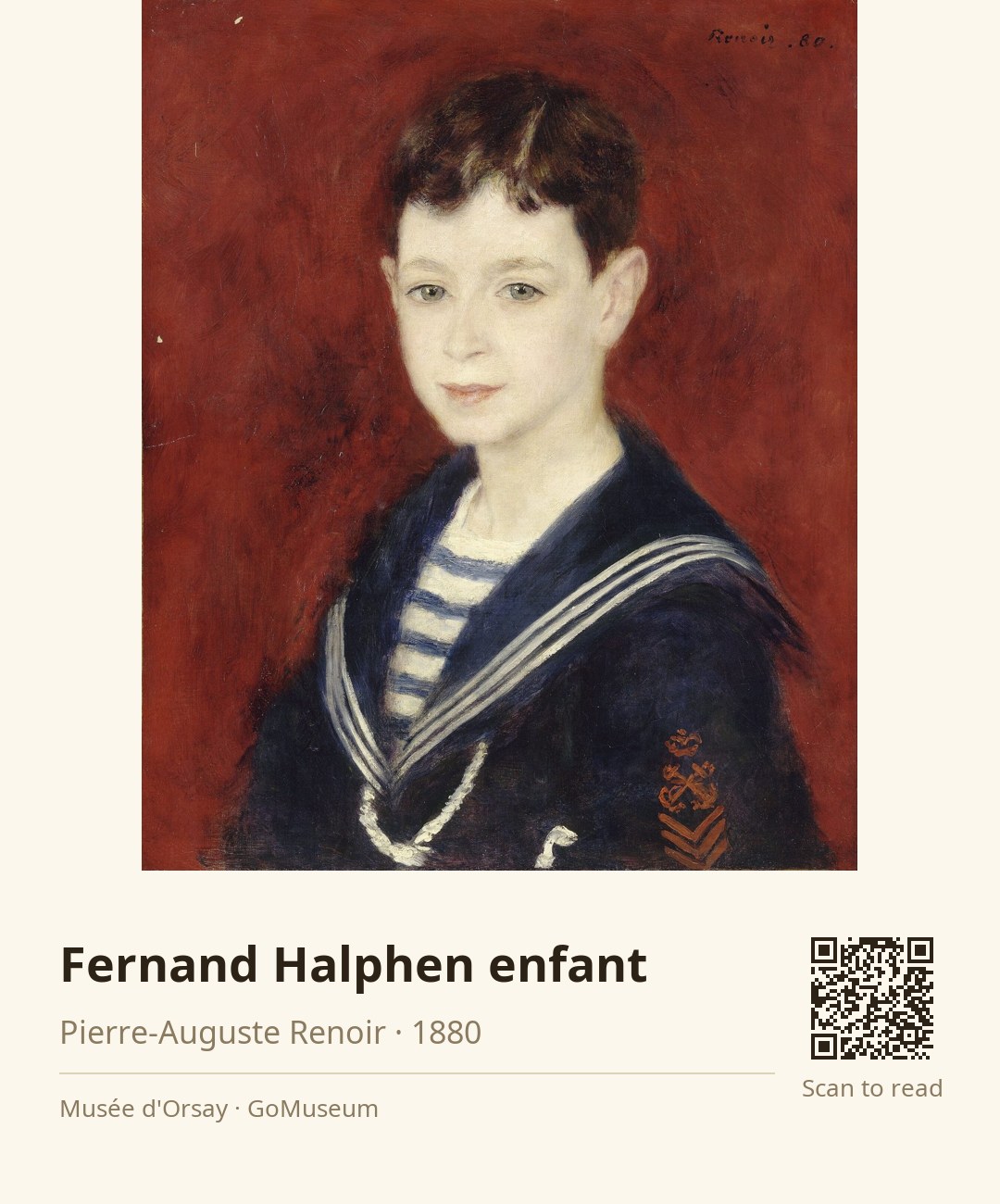
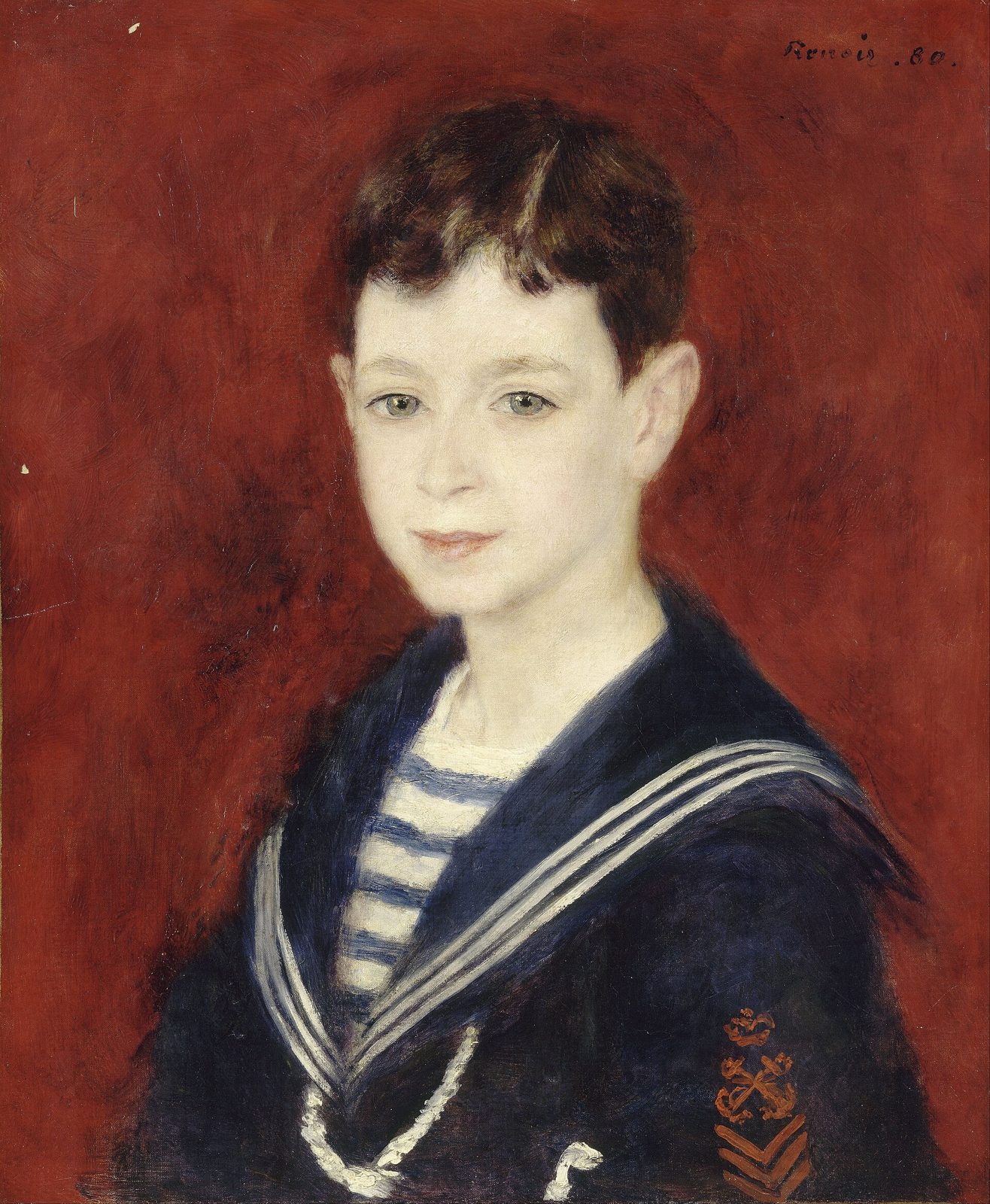
🎧 This work has audio narration — listen in the appTake a moment to really look at "Fernand Halphen enfant" by Renoir. Notice how the young boy, dressed in his sailor uniform, gazes directly at you with an expression that seems both innocent and wise beyond his years. His profile is captured in a three-quarters view, almost as if he’s about to step out of the canvas.
Now, focus on the vibrant red background that surrounds him. This isn’t just a backdrop; it’s a bold statement that enhances the warmth of his skin tones and the crispness of his uniform. The contrast draws your eye and makes Fernand feel alive, almost as if he could turn and speak to you at any moment.
This detail is significant because it reflects Renoir's mastery of color and light, which were central to the Impressionist movement. By using such a striking background, Renoir not only highlights the subject but also evokes a sense of intimacy and immediacy, inviting you into Fernand's world.
Painted in 1880, this portrait was commissioned by Fernand's parents, showcasing the importance of family and memory in Renoir's work. It’s a glimpse into a moment in time, capturing the essence of childhood in a way that resonates even today.
As you stand here, think about what this painting says about youth and the fleeting nature of childhood. What memories does it stir in you?
Pierre-Auguste Renoir, born on February 25, 1841, in Limoges, France, emerged as a pivotal figure in the Impressionist movement. His early life in a modest family led him to Paris, where he honed his artistic skills amidst the masterpieces of the Louvre. Initially apprenticed in a porcelain factory, Renoir's passion for painting flourished, particularly after studying under Charles Gleyre, where he befriended fellow artists like Monet and Sisley.
Renoir's work celebrated feminine beauty and vibrant social scenes, exemplified in iconic pieces like "Dance at Le Moulin de la Galette." Despite facing criticism early on, he gained recognition, especially after participating in the first Impressionist exhibition in 1874. His style evolved over the years, transitioning towards realism influenced by classical masters like Raphael.
Throughout his life, Renoir balanced personal struggles, including health issues, with a prolific output, reportedly creating around four thousand works. He became a beloved figure in art history, known for his warm palette and expressive brushwork. Renoir passed away on December 3, 1919, leaving a legacy that continues to inspire artists and art lovers alike.
The portrait 'Fernand Halphen enfant' was painted by Pierre-Auguste Renoir in 1880, commissioned by the boy's parents. This intimate work captures young Fernand in his sailor uniform, gazing directly at the viewer. Initially, the painting was given to a governess before passing through various hands, including that of art dealer Jos Hessel. It eventually found its way to Alice de Koenigswarter, the widow of the model, who passed away in 1917. Their son, Georges, later donated the painting to public collections in 1995. Today, it resides in the Musée d'Orsay in Paris, a testament to its enduring legacy and the familial connections that shaped its journey.
The vibrant red background isn't merely decorative; it serves to amplify the warmth of Fernand's skin tones and the crispness of his uniform. Notice how the brushwork feels both fluid and deliberate, creating a sense of immediacy. The three-quarters profile view adds depth, inviting you into the boy's world. Renoir’s choice of a vertical format enhances the intimacy of the portrait, making Fernand feel almost life-sized, as if he could step right out of the canvas. The light dances across his face, capturing a fleeting moment of childhood that feels both timeless and ephemeral.
Painted in 1880, this work showcases Renoir's shift towards a more personal and intimate style, focusing on the emotional resonance of his subjects. The influence of this piece can be seen in the way it captures the innocence and vitality of youth, setting a precedent for future portrait artists. Renoir's ability to convey personality through brushwork and color not only enriched the Impressionist movement but also inspired generations of artists to explore the depth of human emotion in their work. Remember, this isn't just a painting of a boy; it's a glimpse into the heart of a transformative era in art history.
It’s a touching gesture that highlights the importance of family and care in the 19th century. Imagine the excitement of a young boy receiving such a beautiful representation of himself, captured by none other than Renoir, a master of Impressionism! This painting not only reflects Fernand's youthful spirit but also the affection his family had for him, making it a cherished keepsake.
This commission reflects the importance of family and the desire to capture childhood memories, a theme that resonates throughout Renoir's work. It highlights how portraits served as a means to preserve familial bonds and moments in time.
Initially given to a governess, the painting passed through various hands, including art dealer Jos Hessel, before being gifted to Alice de Koenigswarter, the widow of the model. This journey illustrates the painting's connection to personal histories and the evolving appreciation for Renoir's work.