 Image: Tylwyth Eldar
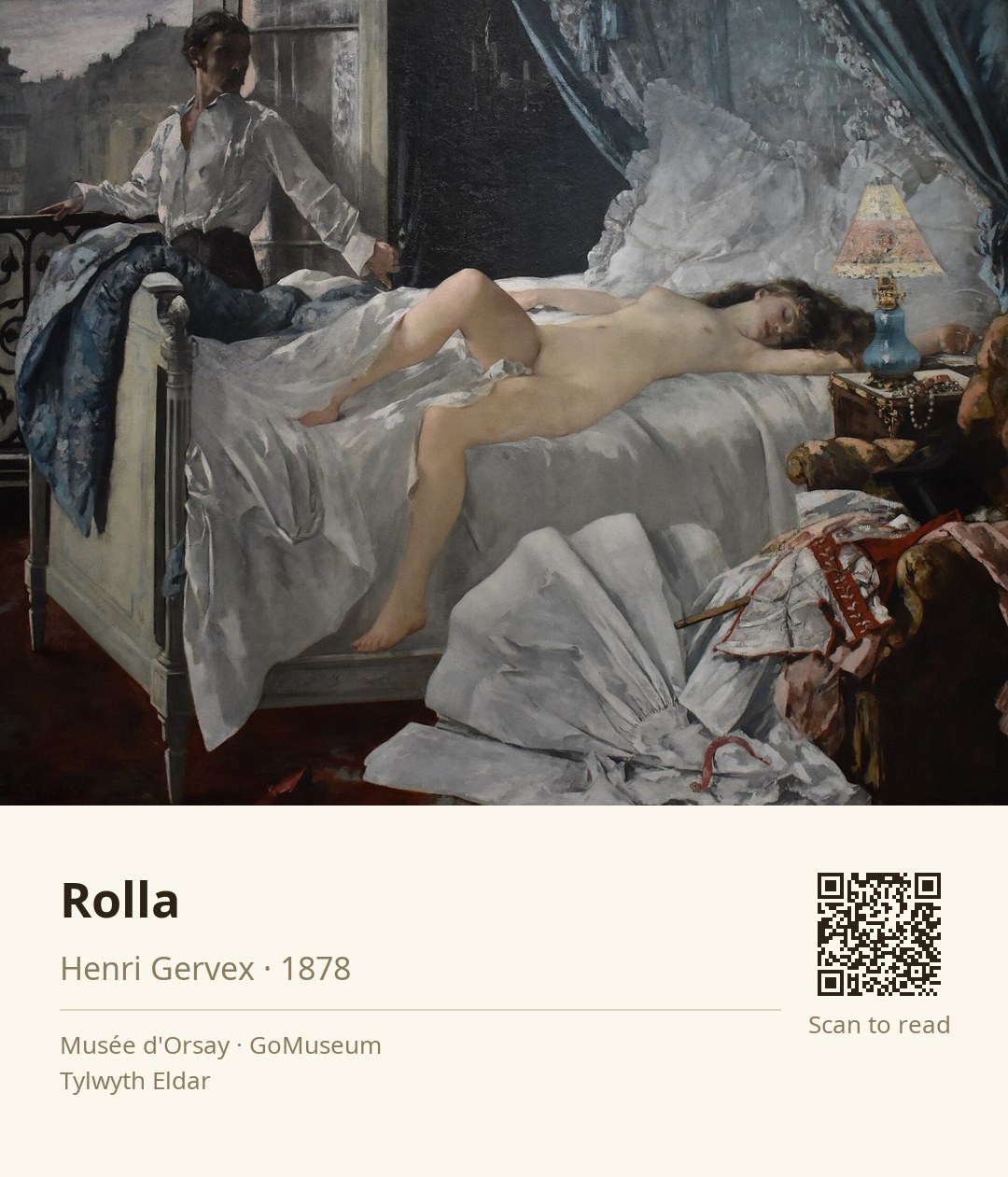
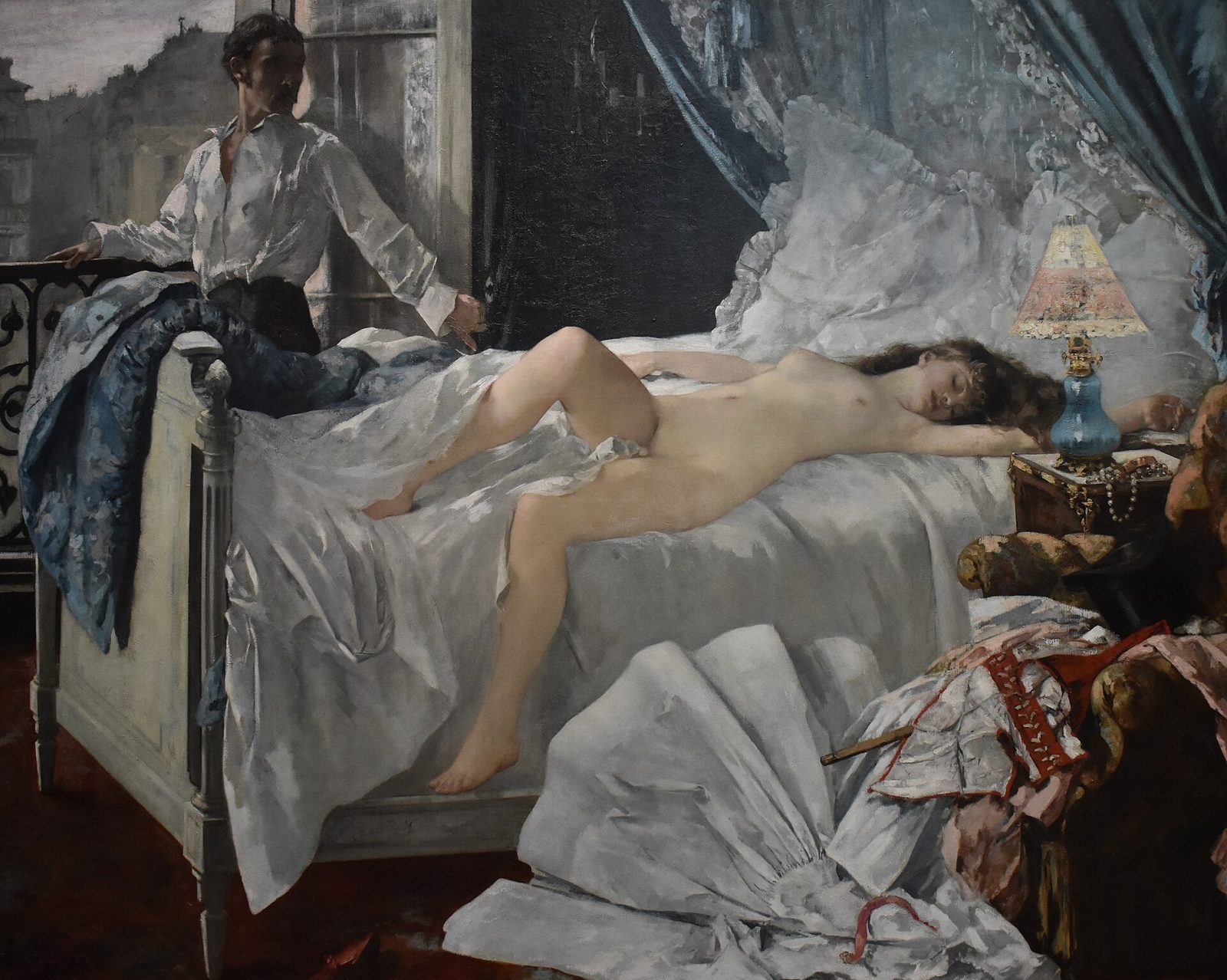
Take a moment to really look at "Rolla" by Henri Gervex. Notice how the light dances across the woman's skin, highlighting her curves, while the shadows deepen around her, creating an almost theatrical atmosphere. This contrast isn’t just about aesthetics; it sets the stage for a story steeped in melancholy and desire.
The painting captures a pivotal moment from Alfred de Musset's poem, where Jacques Rolla, a bourgeois man, gazes at Marion, a young woman who embodies both beauty and tragedy. The corset in the foreground, a detail suggested by Edgar Degas, hints at the societal constraints and the scandalous nature of their encounter. This detail matters because it underscores the tension between allure and moral judgment, a theme that resonated deeply in 19th-century France.
Gervex painted this in 1878, a time when such depictions of intimacy were controversial, leading to its rejection from the Salon for being deemed immoral. Yet, this very scandal propelled Gervex into the limelight, making "Rolla" a sensation when it was displayed in a nearby gallery.
As you stand here, consider how this painting invites you to reflect on the complexities of love, loss, and societal expectations. What emotions does it stir in you?
Henri Gervex was a prominent French painter born on December 10, 1852, in Montmartre. He trained under notable artists like Alexandre Cabanel and Eugène Fromentin, honing his skills in both classical and modern styles. Gervex's early works, primarily mythological, often sparked controversy, most notably with his painting "Rolla," which was rejected by the Salon for its provocative depiction of a nude. This scandal, however, propelled him to fame, leading to significant exhibitions and acclaim.
His relationship with the courtesan Valtesse de La Bigne not only influenced his art but also inspired Émile Zola's character in "Nana." Gervex's oeuvre evolved to include modern life representations, achieving success with works like "Dr Péan at the Salpétrière." He received numerous commissions for public buildings and was awarded the Legion of Honour for his contributions to art.
Gervex's legacy includes a diverse body of work, from portraits to grand historical scenes, and he played a vital role in the artistic community of his time, mentoring future artists. He passed away on June 7, 1929, leaving behind a significant mark on the art world, celebrated for both his technical skill and his bold explorations of contemporary themes.
Henri Gervex's 'Rolla' was painted in 1878, a time when the boundaries of artistic expression were being fiercely contested. This painting, inspired by Alfred de Musset's poem, was initially accepted for the Salon but was later rejected by the jury, who deemed it immoral due to its frank depiction of a nude woman. The scandal surrounding its rejection only fueled public interest, leading to its exhibition in a nearby gallery where it drew significant crowds. For three months, art lovers flocked to see the piece, which captured a moment of deep melancholy and desire. The corset in the foreground, a detail suggested by Edgar Degas, added to the controversy, reinforcing the portrayal of the woman as a prostitute. This painting not only marked a turning point in Gervex's career but also ignited discussions about morality in art during the late 19th century.
In 'Rolla', Gervex employs a masterful technique that combines rich oil paint with a keen understanding of light and shadow. The brushwork feels almost restless, creating a dynamic tension between the illuminated skin of the woman and the darker, shadowy corners of the room. Notice how the light caresses her curves, enhancing her sensuality while simultaneously casting a somber mood over the scene. The composition is carefully structured; the diagonal lines lead your eye from the woman to the man, Jacques Rolla, who stands in a moment of contemplation. The scale of the painting, quite large at 175 by 220 centimeters, invites viewers to step into this intimate space, making the emotional weight of the moment palpable. Gervex’s choice to depict this pivotal moment just before a tragic decision adds layers of narrative depth, making the viewer feel the weight of despair and longing.
One intriguing detail about 'Rolla' is that the model for the young woman, Marion, initially refused to have her face painted. Instead, another woman posed in her place, adding an extra layer of complexity to the narrative of the painting. This decision not only highlights the societal pressures surrounding the portrayal of women in art but also reflects the personal dynamics between models and artists during that era.
The painting drew significant crowds and became a sensation, with art lovers flocking to see it, which highlighted the public's fascination with the scandal surrounding its rejection.