Woman with a Parasol, facing left
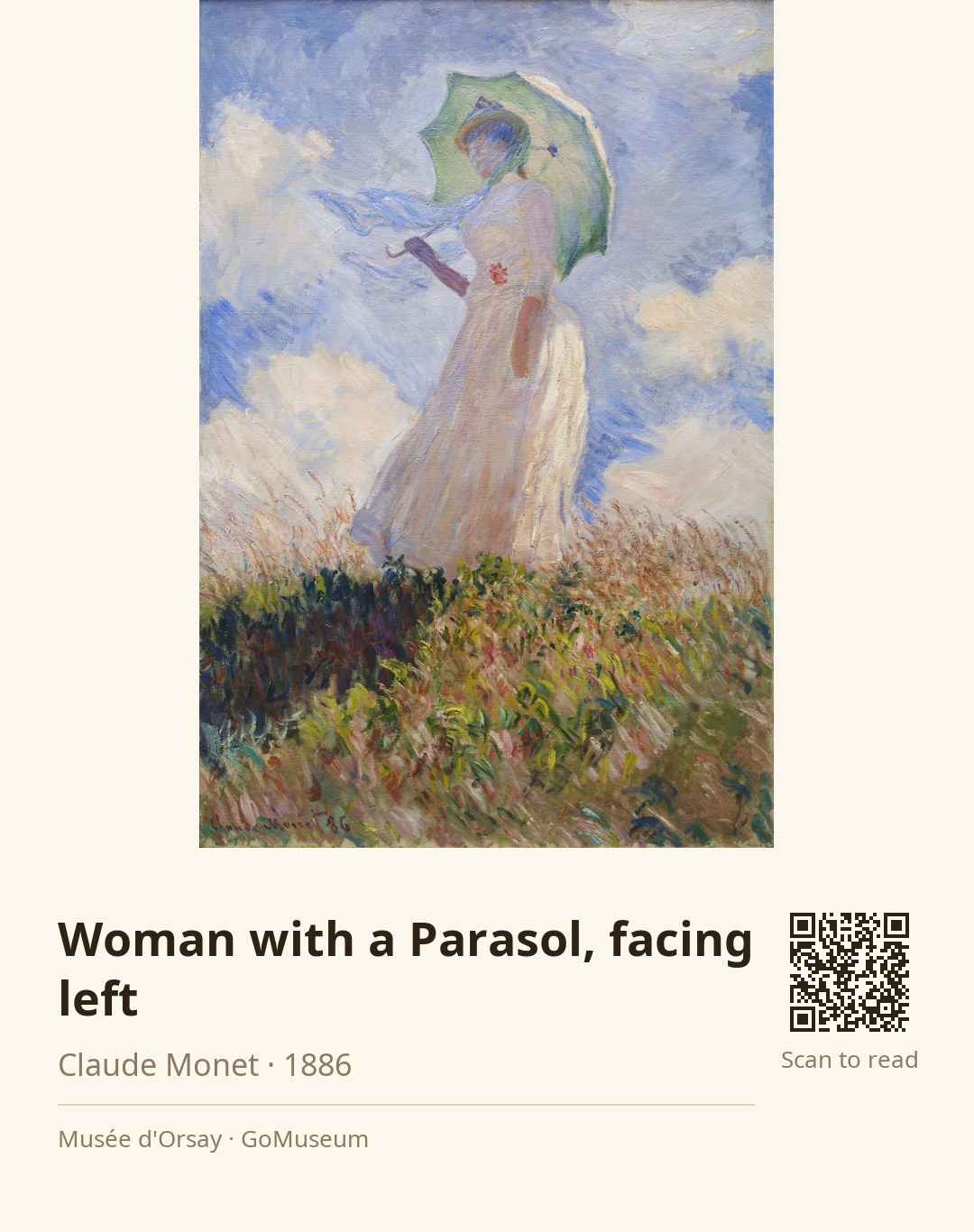
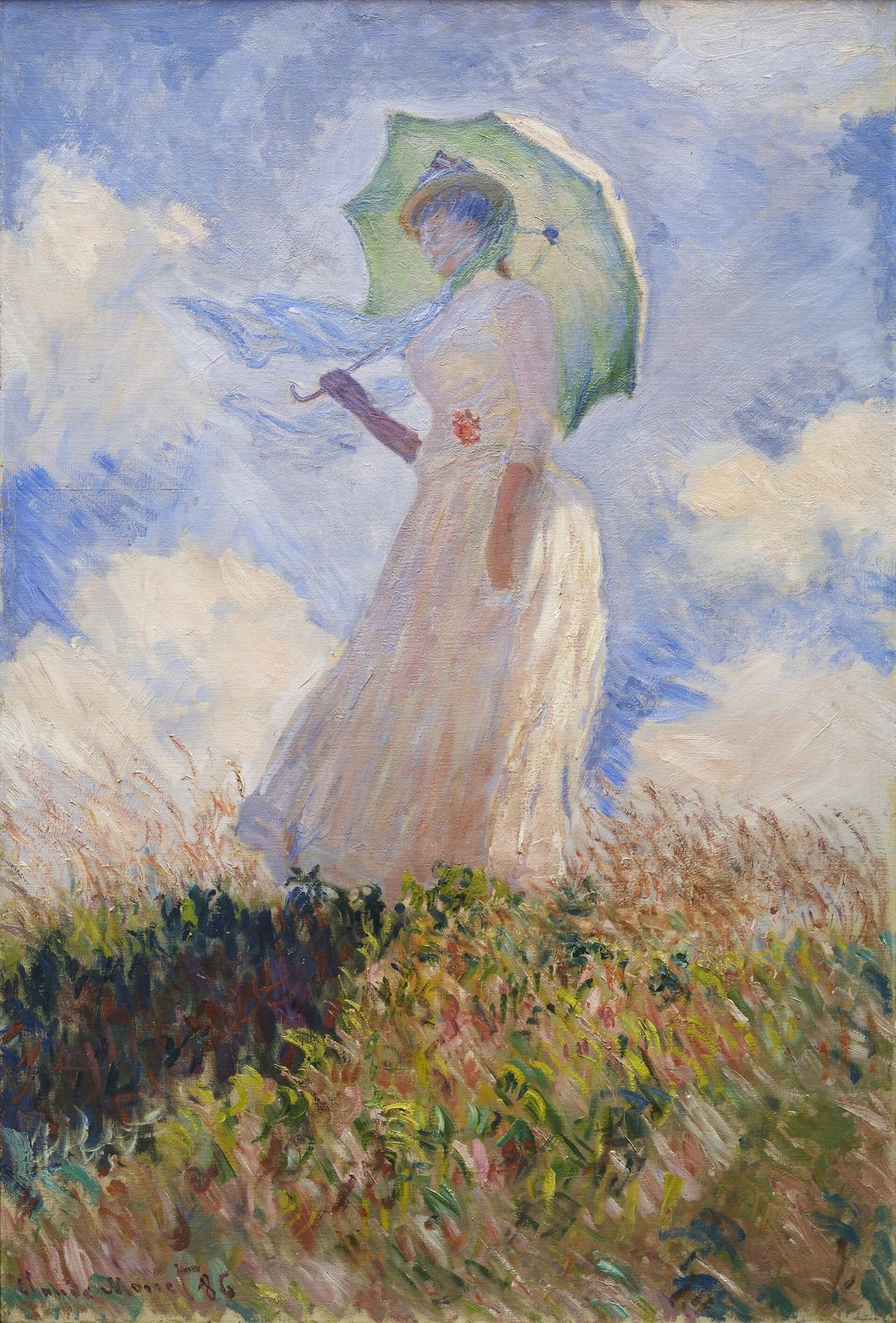
🎧 This work has audio narration — listen in the appTake a moment to really look at "Woman with a Parasol." Notice how the sunlight dances across the canvas, illuminating the vibrant greens and blues that surround the figure. The way the wind seems to tousle her dress and the delicate fabric of her parasol creates a sense of movement, almost as if she could step right out of the painting. This lively depiction is not just about a woman enjoying a day outdoors; it captures a fleeting moment in time, a hallmark of Monet’s impressionist style. The brushstrokes are loose and spontaneous, inviting you to feel the warmth of the sun and the gentle breeze. Monet was a master at capturing light, and here, he uses it to convey emotion and atmosphere, transforming a simple scene into something magical. Painted in 1886, this piece features Suzanne Hoschedé, Monet’s muse and the daughter of his friend. It reflects his fascination with capturing the essence of nature and the human experience within it. Monet often painted outdoors, striving to depict the world as he perceived it in that very moment. As you stand here, think about the joy of that summer day and the beauty of nature that Monet sought to immortalize. What feelings does this scene evoke for you?
Oscar-Claude Monet, born on November 14, 1840, in Paris, was a pioneering French painter and a founder of Impressionism, a movement that transformed the art world. Raised in Le Havre, he developed a passion for nature and painting early on, encouraged by his mother, while his father hoped he would pursue a business career. After his mother's death in 1857, Monet moved in with his aunt, who supported his artistic ambitions.
Monet's career began with caricatures, but he soon sought formal training, studying under Eugène Boudin, who introduced him to plein air painting. His breakthrough came in 1866 with "La Femme à la robe verte," which garnered attention at the Salon. The term "Impressionism" originated from his work "Impression, Sunrise," exhibited in 1874, marking a shift away from traditional art.
Throughout his life, Monet focused on capturing the essence of light and color in nature, creating series of paintings that depicted the same scenes under varying conditions, such as his famous haystacks and water lilies. He settled in Giverny in 1883, where he cultivated a beautiful garden that became his muse. Despite personal hardships, including the loss of loved ones and health issues, Monet's relentless dedication to his craft solidified his place in art history as a master of modernism, influencing countless artists and leaving a lasting legacy. He died on December 5, 1926, in Giverny, celebrated as one of the most significant figures in art.
In 1886, Claude Monet painted 'Woman with a Parasol,' a work that would later become iconic in the Impressionist movement. The painting was first exhibited in 1891 at the prestigious Durand-Ruel gallery in Paris, where it received a warm reception, showcasing Monet's innovative approach to capturing light and movement. Over the years, the painting changed hands, eventually becoming part of the collection at the Musée d'Orsay in Paris, where it remains today, celebrated for its vibrant depiction of a fleeting moment in nature.
Take a closer look at the brushwork in 'Woman with a Parasol.' Monet employed loose, rapid strokes that create a sense of immediacy and spontaneity. The way he layered the paint gives a textured quality to the scene, allowing the sunlight to shimmer across the canvas. Notice how the colors blend together; the greens and blues are not just colors but are alive, reflecting the warmth of the day. The composition is dynamic, with the figure of Suzanne positioned slightly off-center, drawing your eye across the canvas. This choice enhances the feeling of movement, as if she might step out of the painting at any moment. The scale of the work, at 131 by 88 centimeters, invites you to step closer and immerse yourself in this vibrant world.
Painted in 1886, this work captures a fleeting moment in time, showcasing Monet's innovative approach to plein air painting. By focusing on the interplay of sunlight and shadow, he influenced countless artists who followed, encouraging them to embrace spontaneity and the beauty of the natural world. Remember, it's not just a portrait; it's a celebration of life, light, and the ephemeral nature of our surroundings.
While this one features the woman facing left, there's another version where she faces right. It's a fascinating glimpse into Monet's process, as he often explored the same subject from different angles, capturing the essence of light and movement in each iteration. This approach reveals his relentless pursuit of perfection and his desire to convey the fleeting moments of nature.
In 2016, the association Citémômes created a giant knitted version of 'Woman with a Parasol' as part of the 'Tricote un sourire' project for the Rouen Impressionnée festival.