Irma Brunner
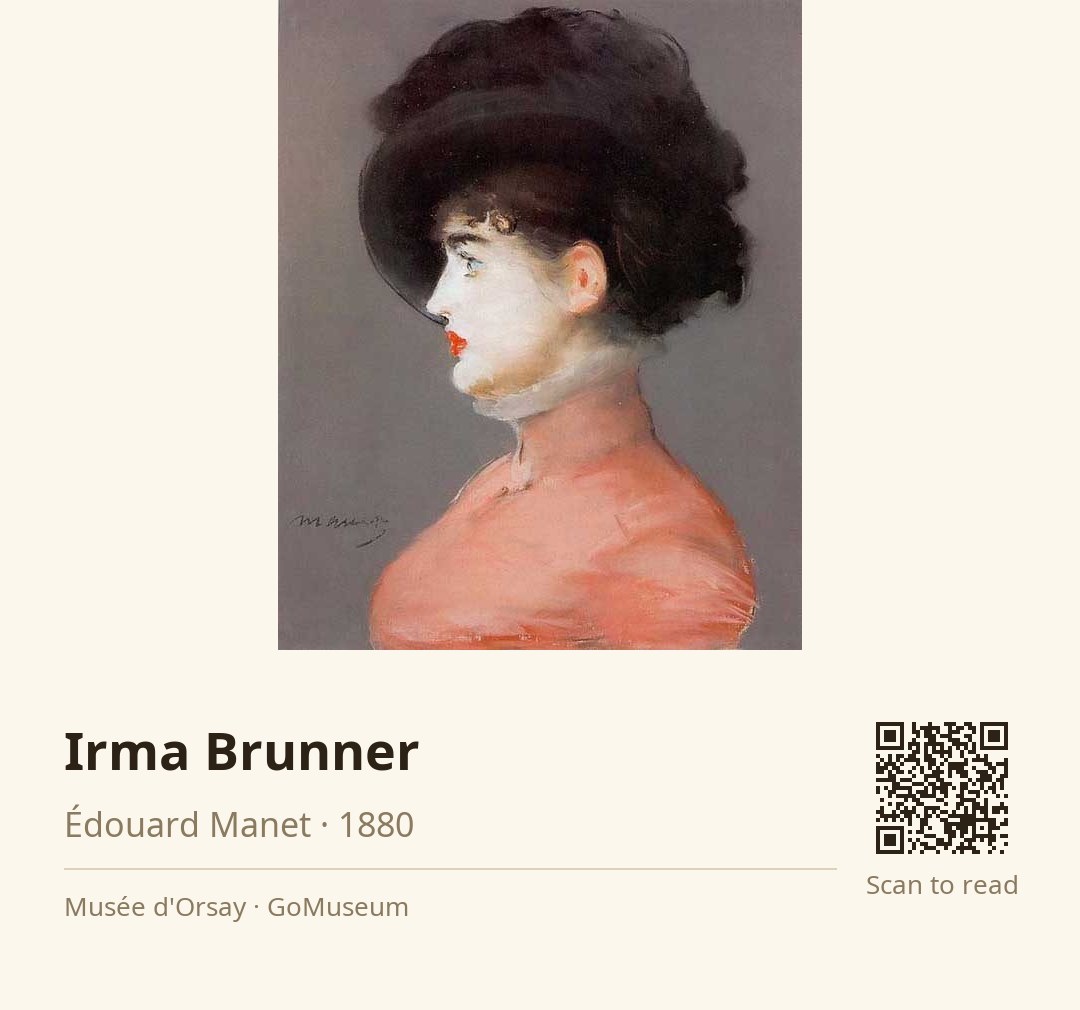
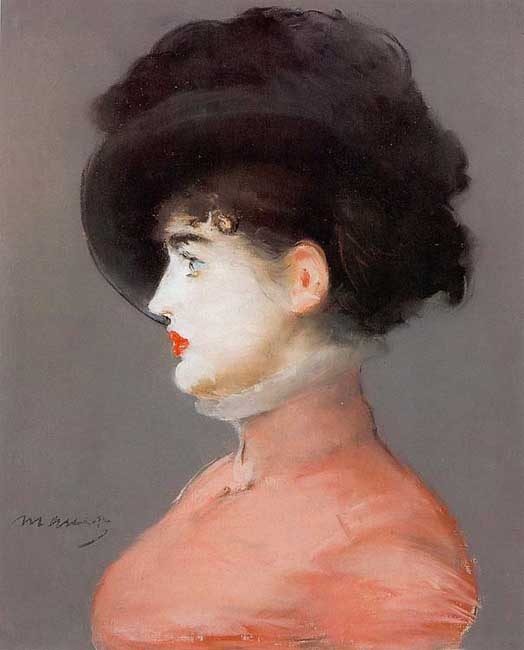
🎧 This work has audio narration — listen in the appTake a moment to really look at Irma Brunner, the elegant figure in this pastel portrait by Édouard Manet. Notice how her striking black hat contrasts beautifully with the soft pink of her dress. The way the light plays off her skin and the delicate textures of her clothing creates a sense of depth and richness that draws you in. These details matter because they reflect Manet's mastery of color and form, capturing not just a likeness but the essence of Parisian elegance in the late 19th century. The velvety tones and the careful balance between light and dark showcase his innovative approach to portraiture, moving away from traditional techniques to something more modern and expressive. Irma Brunner, a woman of high society, was introduced to him by a mutual friend, and through her, Manet was able to explore the subtleties of beauty and fashion that defined the era. As you stand here, think about what this portrait says about the time it was created. How does it reflect the social dynamics of Paris? What stories might Irma Brunner hold within her gaze? Let these questions linger as you take in the elegance of this exquisite work.
Édouard Manet, born on January 23, 1832, in Paris, emerged as a pivotal figure in 19th-century art, bridging Realism and Impressionism. From an affluent family, he initially faced pressure to pursue a naval career but instead dedicated himself to painting, influenced by his uncle and the Old Masters. His early works, including "The Luncheon on the Grass" and "Olympia," sparked controversy and challenged traditional artistic norms, marking him as a revolutionary force.
Manet's style, characterized by loose brushwork and a focus on contemporary life, diverged from the meticulous techniques of his predecessors. He often depicted modern Parisian scenes, capturing the essence of leisure and social dynamics. Despite initial rejection from the art establishment, he gained recognition among progressive artists and became a mentor to the Impressionists.
Throughout his life, Manet formed connections with influential figures like Baudelaire and Zola, who defended him against critics. His later works, such as "A Bar at the Folies-Bergère," showcased his evolving style and mastery of color. Manet's contributions to art history are profound; he is celebrated not only for his innovative techniques but also for elevating still life and modern subjects to the forefront of artistic expression. He passed away on April 30, 1883, leaving behind a legacy that continues to inspire artists today.
After a period of experimentation with various styles, Manet returned to portraiture, capturing the essence of high society in Paris. This work was commissioned through a mutual friend, Méry Laurent, who introduced him to Brunner, a woman of notable social standing. The painting was well-received, with critics praising its elegance and the skillful use of pastel, a medium Manet had turned to due to his declining health. The artwork is now housed in the Musée d'Orsay, where it continues to draw admiration for its sophisticated portrayal of 19th-century Parisian fashion and beauty. Its provenance traces back to Comte Isaac de Camondo, highlighting its esteemed history.
As you gaze at Irma Brunner, take a moment to appreciate Manet's masterful technique. The use of pastel on cardboard allows for a velvety texture that enhances the richness of the colors. Notice how the brushwork feels both deliberate and spontaneous, creating a lively interplay between light and shadow. Manet expertly balances the dark tones of Brunner's black hat and the soft pink of her dress, drawing your eye to the contours of her face. The composition is structured yet dynamic, with Brunner positioned in profile, emphasizing her elegance. The subtle gradations of color, especially in her skin tone, reveal Manet's keen understanding of light, making her appear almost luminous against the muted gray background. This approach not only captures her likeness but also evokes the sophisticated atmosphere of the era.
Painted in 1880, this work reflects Manet's innovative use of pastel, a medium that allowed him to capture the elegance of Parisian society with a fresh, vibrant palette. His approach influenced a generation of artists, steering them away from the rigid conventions of the past. By focusing on the beauty of the subject rather than delving into psychological depth, Manet challenged the norms of character exploration in portraiture. This shift opened doors for future artists to prioritize style and emotion over narrative, marking a significant step towards the modernist movement. Remember, Manet's legacy lies in his ability to blend elegance with a new artistic freedom, forever changing how we perceive portraiture.
Interestingly, Manet often invited his friends to model for him, asking them to wear their finest clothes, including extravagant hats. This practice not only allowed him to capture the essence of Parisian fashion but also created a sense of camaraderie among the artistic community, as they participated in the creation of his celebrated works.
Manet's choice of pastel on cardboard allowed him to achieve a velvety texture that enhances the richness of colors, creating a lively interplay between light and shadow that is particularly effective in capturing the softness of Irma Brunner's skin.
Irma Brunner was introduced to Manet by their mutual friend Méry Laurent, which not only facilitated the commission of this portrait but also reflects the interconnectedness of Parisian high society and the artistic community of the time.
After a phase of experimentation with various styles, Manet's return to portraiture marked a pivotal moment as he adapted his technique to accommodate his declining health, showcasing his ability to innovate within constraints while still capturing the elegance of his subjects.