Head of a Young Arab Girl and Study of Crossed Hands
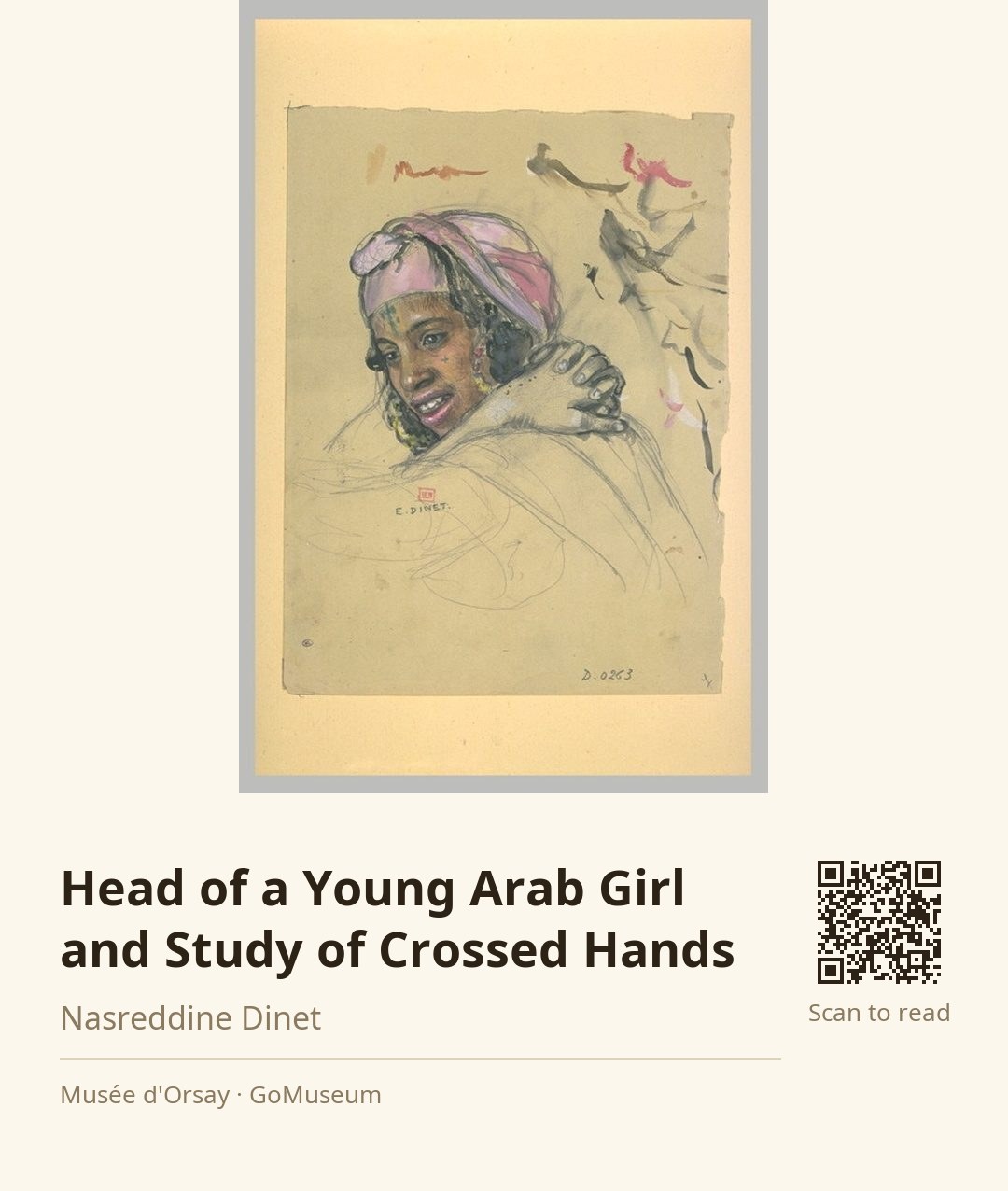
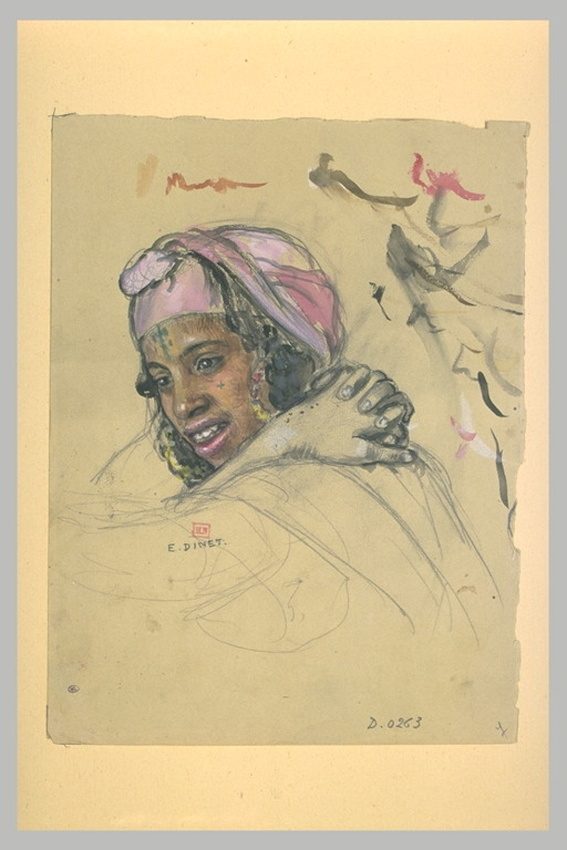
🎧 This work has audio narration — listen in the appTake a moment to really look at the expressive face of the young Arab girl in Nasreddine Dinet's drawing. Notice how her large, dark eyes seem to hold a world of stories, and how the delicate lines of her features capture both youth and wisdom. The way her head is slightly tilted adds a sense of intimacy, inviting you into her world. These details matter because they reflect Dinet's deep connection to the culture and people of Algeria, where he spent much of his life. His ability to portray such emotional depth is a testament to his respect and understanding of his subjects, which sets him apart from many of his contemporaries. Dinet didn’t just paint what he saw; he painted what he felt, bridging the gap between two worlds. Born Alphonse-Étienne Dinet, he was a French artist who fell in love with Algeria, eventually converting to Islam and immersing himself in the local culture. His works often depict everyday life and religious themes, showcasing a genuine appreciation for the beauty around him. As you stand here, consider what this young girl might be thinking. What stories could she tell? How does her gaze connect with yours across time and space? Let her presence linger in your mind as you explore more of Dinet's work.
Nasreddine Dinet, born Alphonse-Étienne Dinet in Paris on March 28, 1861, was a prominent French orientalist painter who dedicated much of his life to capturing the essence of Algeria and its culture. His artistic journey began at the École nationale supérieure des Beaux-Arts, where he trained under esteemed artists. Dinet's fascination with Algeria ignited during his travels there, leading him to convert to Islam and adopt the name Nasr ad-Din, meaning "defender of the faith." This transformation deepened his connection to the land and its people, allowing him to create works that were both ethnographic and deeply personal.
Dinet's paintings often depicted daily life in Algerian villages, religious themes, and landscapes, reflecting his immersion in the local culture. His ability to speak Arabic and understand Islamic traditions set him apart from many of his contemporaries. He was a founding member of the Société des Peintres Orientalistes Français and received accolades for his work, including a silver medal at the 1889 Exposition Universelle. His legacy endures, celebrated as a master of Algerian painting, and his life story continues to inspire discussions on orientalism and cultural exchange. Dinet passed away on December 24, 1929, leaving behind a rich body of work and a profound impact on the art world.
This drawing, titled 'Head of a Young Arab Girl and Study of Crossed Hands,' was created by Nasreddine Dinet before 1900, during a time when he was deeply immersed in Algerian culture. Dinet's work was well-received, reflecting a growing interest in Orientalism in Europe, and he was a prominent figure in the Société des Peintres Orientalistes Français, which he co-founded. His unique perspective as a Frenchman who converted to Islam and lived among the Algerian people allowed him to capture the essence of his subjects in a way that resonated with audiences both in France and abroad.
As you examine this drawing, pay attention to the delicate brushwork that Dinet employs to convey the young girl's features. The lines are fluid yet precise, capturing the softness of her skin and the depth of her expression. Notice how the shading creates a sense of volume, giving life to her face. The use of light is particularly striking; it highlights her large, dark eyes, drawing you into her gaze. Dinet's choice of composition, with the girl's head slightly tilted, enhances the intimacy of the moment, as if she's sharing a secret with you. The study of crossed hands adds another layer, suggesting a narrative beyond the surface. This interplay of light, shadow, and form showcases Dinet's mastery of his craft, allowing him to evoke emotion and connection through his art.
Did you know that Nasreddine Dinet was not just an artist but also a translator? He translated Arabic literature into French, including an epic poem by Antarah ibn Shaddad, which he published in 1898.
Dinet developed deep friendships with local Algerians, particularly with Sliman ben Ibrahim, who accompanied him throughout his life, showcasing his genuine integration into the community.
Unlike many of his contemporaries who focused on exoticism, Dinet's work was highly mimetic and ethnographic, reflecting a true understanding of Arab culture and language, which allowed him to depict his subjects with authenticity.
Dinet's conversion to Islam not only influenced his artistic themes, leading him to paint more religious subjects, but it also marked a profound personal transformation that resonated with both his life and work, earning him respect in Algeria.