 Image: Phyrexian · Gautier Poupeau from Paris, France · VladoubidoOo · Chatsam · Chatsam
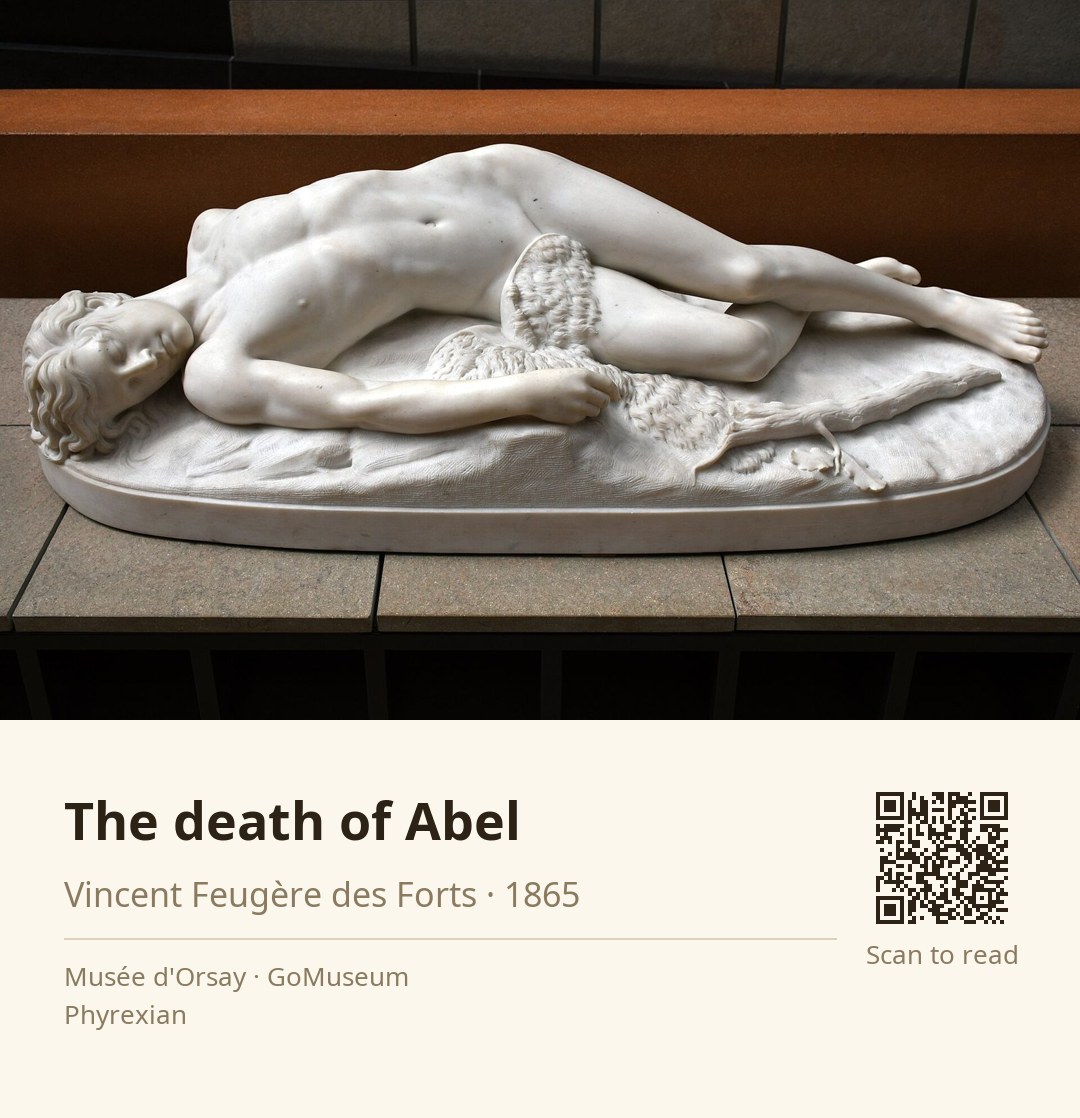
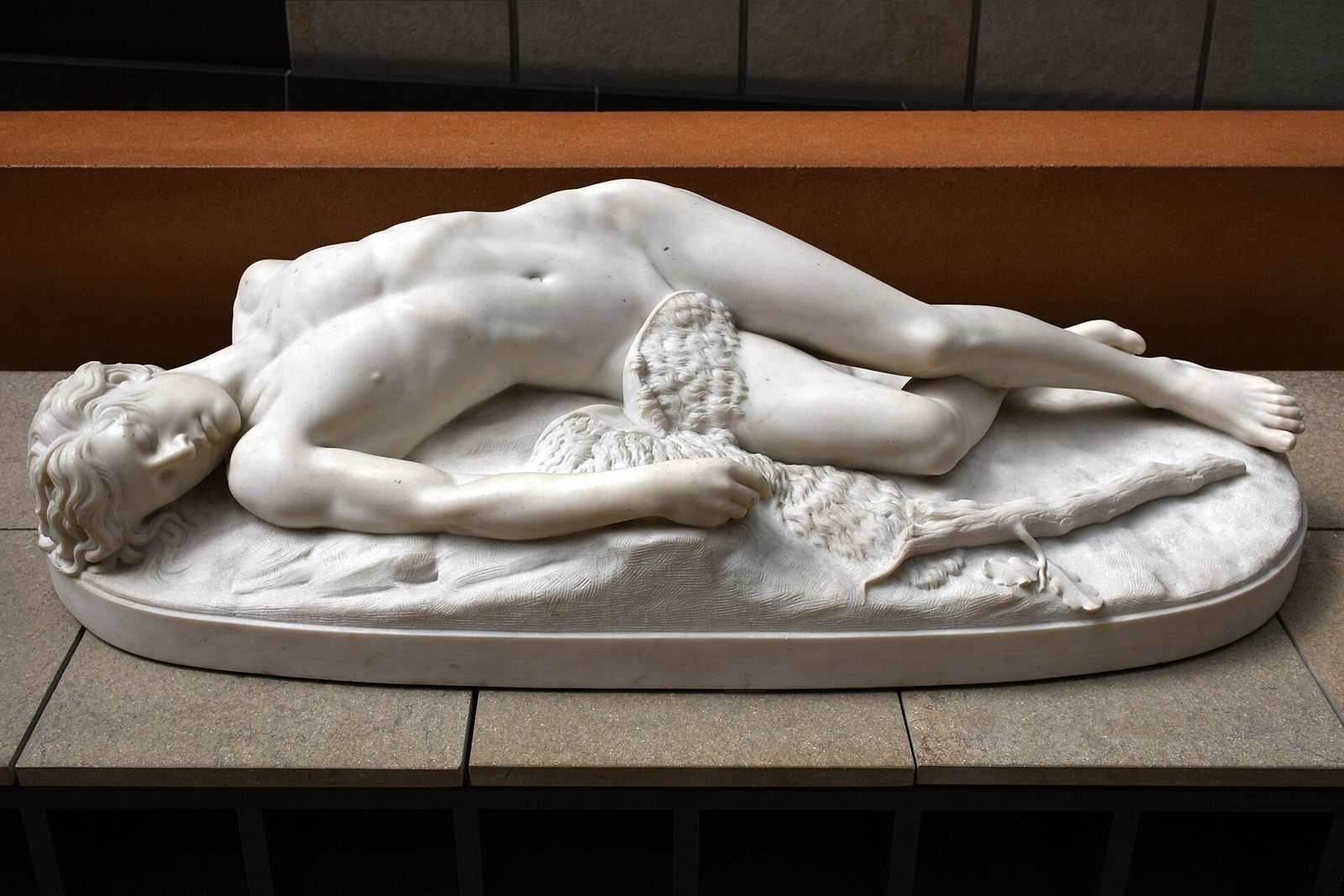
The death of Abel
🎧 This work has audio narration — listen in the appTake a moment to really look at "The Death of Abel." Notice how the lifeless figure of Abel is cradled in the arms of his brother Cain, a moment frozen in time that speaks volumes about loss and regret. The way Feugère des Forts captures the tension in Cain’s posture—his head bowed, shoulders hunched—suggests a deep emotional turmoil, doesn’t it? It’s not just about the act of violence; it’s about the aftermath, the weight of guilt that Cain must bear. Feugère des Forts, a Parisian sculptor from the mid-19th century, was known for his ability to evoke emotion through marble, and here, he does just that, inviting us to reflect on our own experiences of loss. As you stand here, think about how this piece resonates with you. What feelings does it stir within you? What stories of loss and regret does it remind you of? Let that connection linger as you move through the rest of the museum.
Vincent Émile Feugère des Forts, born in Paris on November 17, 1825, was a prominent French sculptor known for his evocative works in marble and plaster. Coming from an established bourgeois family, he was influenced by a lineage that valued service and culture. His artistic journey began under the mentorship of François-Joseph Heim and Jehan Du Seigneur, leading to his debut at the Salon in 1849. Feugère's dedication to sculpture flourished, with notable pieces like "Abel Mort," which earned him acclaim and medals at various exhibitions, including the Salon of 1864.
His works often reflected deep emotional themes, as seen in his bas-reliefs for the Lariboisière Hospital and the poignant "Calvaire" group in the church of Saint-Jacques-Saint-Christophe. Feugère's artistry was characterized by a blend of classical technique and a sensitive portrayal of human experience, securing his place in the narrative of 19th-century French sculpture. He continued to exhibit until 1870, leaving behind a legacy that would influence future generations of artists. Feugère passed away in Paris in March 1889, remembered for his contributions to the art world and the emotional depth of his sculptures.
As you gaze at 'The Death of Abel,' take a moment to appreciate the craftsmanship involved in this marble sculpture. Notice how the artist, Vincent Feugère des Forts, has skillfully carved the delicate features of Abel’s face, capturing a haunting stillness. This juxtaposition of textures draws you in, doesn't it? The way the light plays off the polished surfaces enhances the emotional weight of the scene, inviting you to feel the tension and sorrow embedded in the stone.
Created in 1865, 'The Death of Abel' was first presented as a plaster model at the Salon, where it garnered significant acclaim, earning Feugère des Forts a medal. The marble version followed in 1866, solidifying his reputation as a master sculptor. The sculpture was later cast in bronze, with one version gifted to the Musée des Beaux-Arts in Chartres by the artist's widow in 1893, ensuring its place in art history.