 Image: PMRMaeyaert
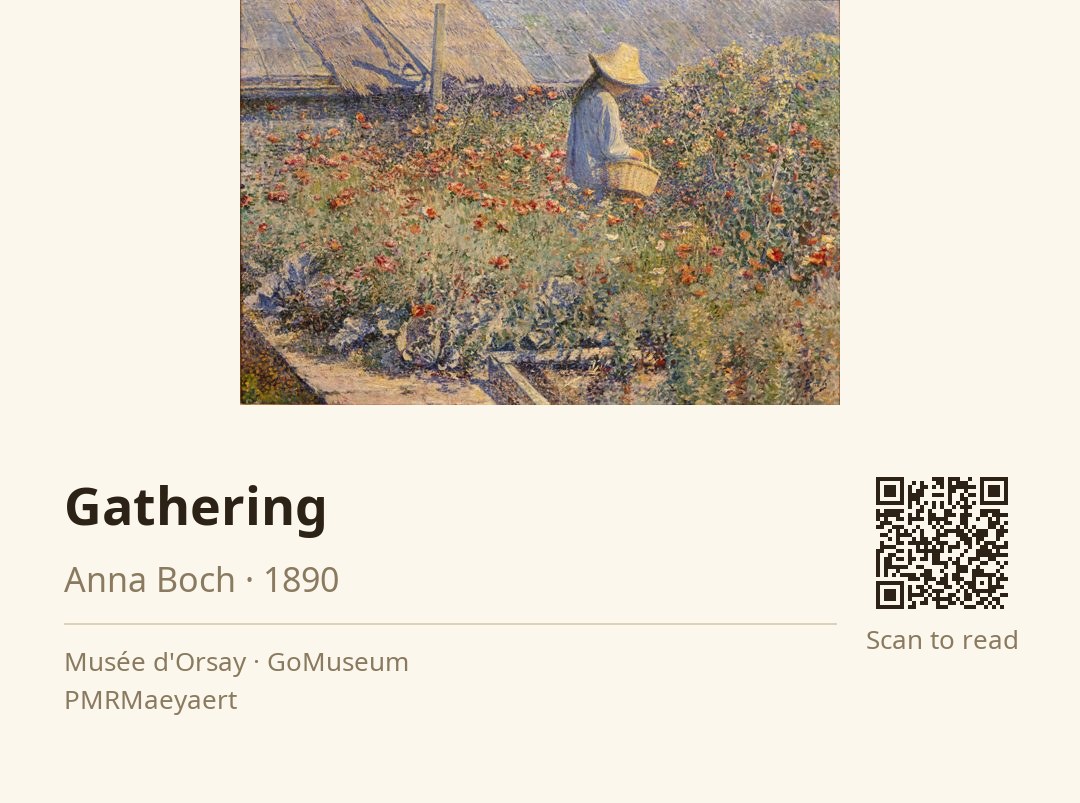
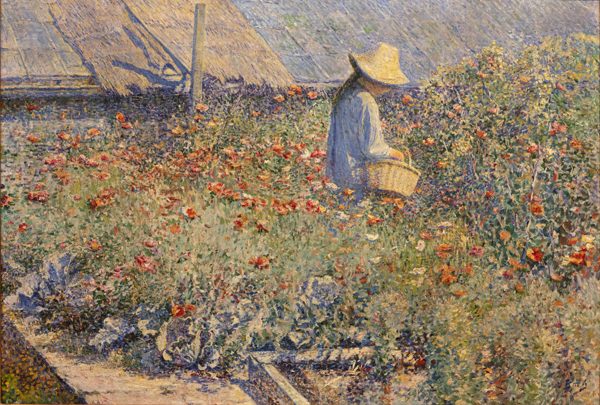
Take a moment to really look at "Gathering" by Anna Boch. Notice how the young girl, with her straw hat tilted just so, is completely absorbed in her task of picking those vibrant red flowers. The way her profile is captured, head bowed, creates an intimate connection with the garden around her, almost as if she’s in a world of her own. Now, focus on the colors—those rich reds and lush greens. They’re not just pretty; they pulse with life and energy, embodying the joy of a simple, yet profound moment in nature. Boch’s brushwork gives the scene a soft, impressionistic quality that invites you to feel the warmth of the sun and the gentle rustle of leaves. This painting, created in 1890, reflects Boch's deep appreciation for everyday beauty and her mastery of the Impressionist style. As one of the few women in the artistic group Les XX, she carved out a space for herself in a male-dominated world, using her art to celebrate the ordinary moments that often go unnoticed. So, as you stand here, think about the girl in the garden. What do you think she’s thinking about as she gathers those flowers? What moments in your life feel just as precious and fleeting?
Anna-Rosalie Boch, born on February 10, 1848, in Belgium, was a pioneering painter and art collector, notable for being the only female member of the avant-garde group Les XX. Coming from an artistic family, she was influenced by her brother Eugène, a painter, and her cousin Octave Maus, an art critic. Boch's artistic journey began under conventional training but evolved as she embraced Impressionism and Neo-Impressionism, particularly influenced by Théo van Rysselberghe and Isidore Verheyden.
Her works, characterized by a vibrant palette and a blend of Impressionist and Pointillist techniques, reflect her deep connection to nature and her surroundings. Boch was also a dedicated patron of the arts, amassing a significant collection of Post-Impressionist works, including pieces by Vincent van Gogh, whom she supported and admired. Notably, she purchased "La Vigne Rouge," the only painting Van Gogh sold during his lifetime.
Throughout her life, Boch remained committed to promoting young artists and enriching the cultural landscape of Belgium. After her death in 1936, her legacy continued through exhibitions and donations to museums, ensuring her contributions to art history were recognized. Boch's life exemplifies the intersection of art and philanthropy, leaving a lasting impact on the art world.
Gathering, painted by Anna Boch in 1890, first graced the public eye in Brussels in 1891. This horizontal oil on canvas captures a young girl picking red flowers in a garden, a scene that resonates with the charm of everyday life. Boch, a prominent figure in the Neo-Impressionist movement and the only female member of the artistic group Les XX, was known for her vibrant Impressionist style. After its debut, the painting was exhibited at the Salon des Indépendants in Paris the same year. Fast forward to 2024, when it was generously donated to the Musée d'Orsay from the Meyer-Louis Dreyfus collection.
In 'Gathering', Boch employs a vibrant palette that captures the essence of a sunlit garden, using rich reds and lush greens to evoke a sense of life and vitality. The brushwork is soft yet deliberate, creating an impressionistic quality that draws you into the scene. Notice how the girl’s profile is framed by the foliage, guiding your eye to her delicate task. Boch’s choice of a horizontal format enhances the expansive feel of the garden, inviting you to linger in this moment. The light dances across the canvas, highlighting the textures of the flowers and the girl's straw hat, which adds a playful contrast to the scene. This technique not only showcases her skill but also reflects her deep connection to nature and the joy found in simple, everyday moments.
As the only female member of the avant-garde group Les XX, Boch broke barriers in a male-dominated art world. Her embrace of Impressionism and later Neo-Impressionism influenced not only her contemporaries but also future generations of artists. Remember, this painting is a testament to her legacy as both an artist and a patron, championing the talents of others like Vincent van Gogh. It’s a reminder of how one artist can change the landscape of art forever.
She not only admired his talent but also purchased one of his paintings, 'La Vigne Rouge', which is believed to be the only work he sold during his lifetime. This connection highlights Boch's role not just as an artist but also as a significant figure in the art community, supporting and promoting her contemporaries.
Anna Boch came from a family deeply involved in the arts; her father was a successful porcelain manufacturer, her brother was a painter, and her cousin was an influential art critic. This artistic environment likely nurtured her talent and ambition, allowing her to thrive in a male-dominated art world.
Many of Boch's paintings feature her godchild, Ida van Haelewijn, often depicted in gardens, which suggests a personal connection to the themes of childhood and nature. This intimate portrayal reflects Boch's own experiences and relationships, highlighting the importance of familial bonds in her work.
Boch was not only an artist but also a prominent art collector and patron, actively supporting her contemporaries like Vincent van Gogh. Her collection included major Post-Impressionist works, and she used her influence to promote emerging artists, showcasing her commitment to the artistic community.