The Tepidarium
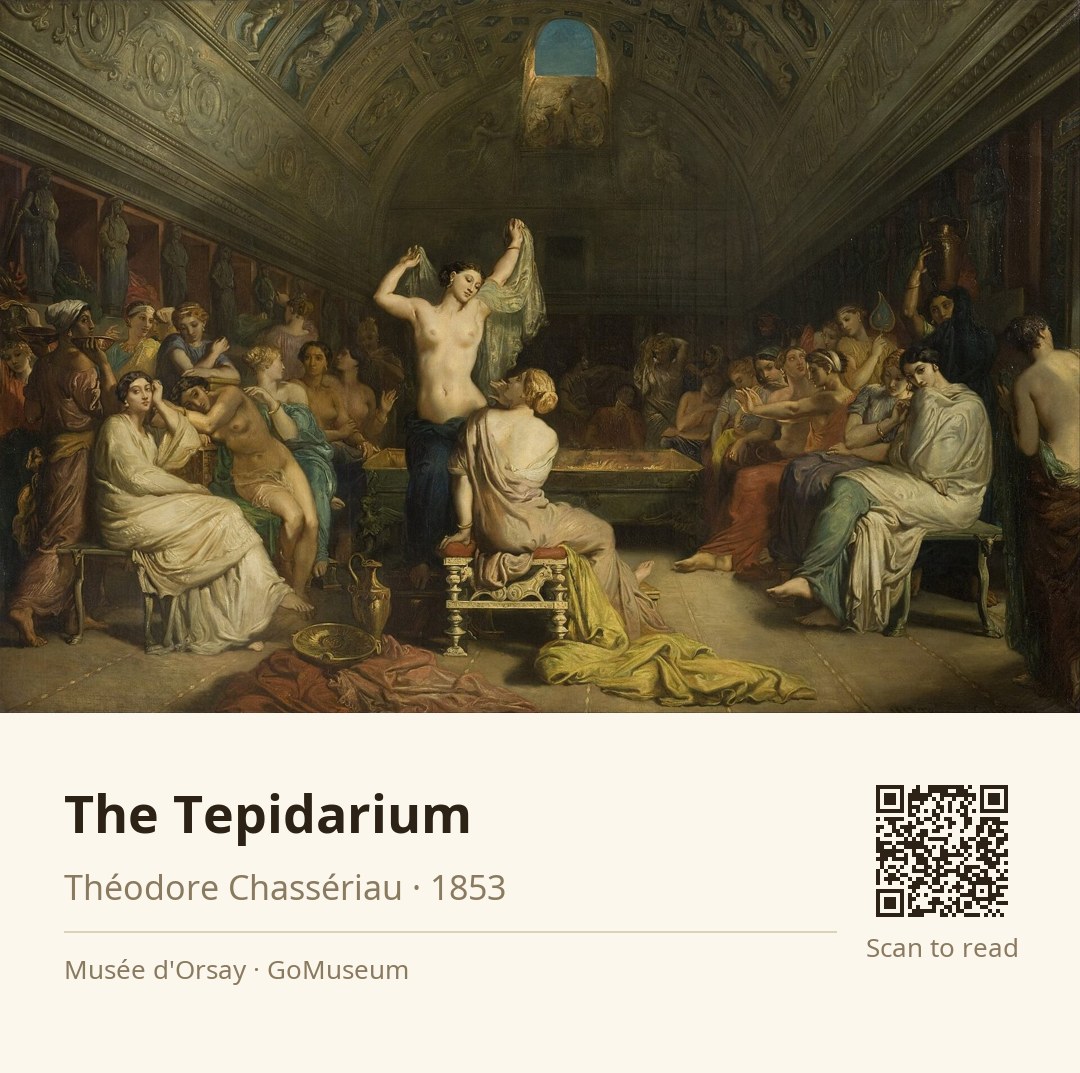
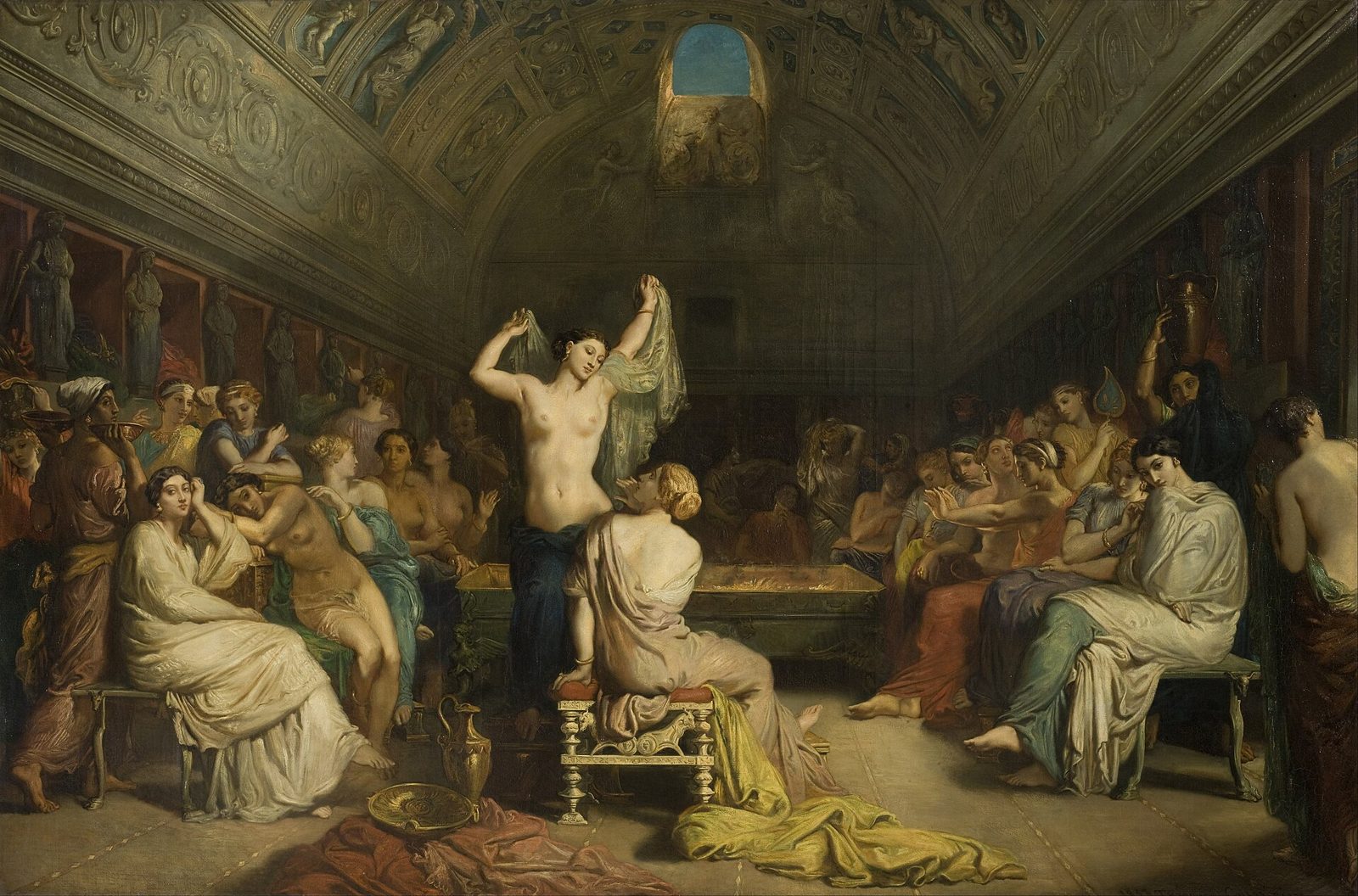
🎧 This work has audio narration — listen in the appTake a moment to really look at "The Tepidarium" by Théodore Chassériau. Notice how the central figure, a woman stretching her arms, exudes a sense of relaxed sensuality, inviting you into this ancient Roman bath. Her pose is not just about nudity; it’s a celebration of the human form, a moment of vulnerability and comfort amidst the company of other women.
Now, look at the diversity of the figures around her. You’ll see women of different ethnic backgrounds, each engaged in their own quiet moments.
Chassériau painted this scene in 1853, inspired by his visit to Pompeii, a city frozen in time by a volcanic eruption. His romantic yet neoclassical style captures both the beauty and the intimacy of this moment, inviting us to ponder what life was like in those baths, where women gathered to relax and rejuvenate.
As you take in this artwork, think about the connections it creates across time. What stories do you imagine these women might share? What would it be like to step into their world, even just for a moment?
Théodore Chassériau, born on September 20, 1819, in the Dominican Republic, was a prominent French Romantic painter known for his portraits, historical scenes, and Orientalist works. His early talent was nurtured under the guidance of Jean-Auguste-Dominique Ingres, who recognized his potential at a young age. Chassériau's style evolved from Neoclassicism to embrace the vibrant Romanticism of Eugène Delacroix, reflecting a unique blend of both influences.
Chassériau's artistic journey began in Paris, where he quickly gained recognition, exhibiting at the Salon and earning accolades for his innovative approach to the female form. His notable works include "Susanna and the Elders" and "The Toilette of Esther," showcasing his mastery of color and composition. He was also a skilled draftsman, producing a series of prints illustrating Shakespeare's "Othello."
His travels to Algeria inspired a series of dynamic works depicting Arab life, further establishing his reputation. Despite his success, Chassériau struggled with health issues and the pressures of his commissions, leading to his untimely death at 37 in 1856. He left behind a legacy that bridged classical and romantic styles, influencing future generations of artists. His contributions were celebrated by contemporaries like Théophile Gautier, who recognized him as a master in his own right, akin to Raphael.
The Tepidarium was created in 1853 by the French artist Théodore Chassériau, who drew inspiration from his visit to Pompeii in 1840. This painting was first exhibited at the Salon des Artistes français in Paris in the same year it was completed, where it garnered attention and was assigned the number 228. It later appeared at the Exposition Universelle in Paris in 1855, further solidifying its place in the art world. Critics noted the diverse representation of women in the painting, highlighting figures of various ethnic backgrounds, which sparked discussions about the multicultural aspects of ancient Roman society.
Chassériau's technique in The Tepidarium showcases a masterful blend of romanticism and neoclassicism. The brushwork is fluid and expressive, creating a sense of movement among the figures. Notice how the light plays across the women's bodies, highlighting their forms and casting soft shadows that enhance the intimate atmosphere of the tepidarium. The color palette is warm and inviting, with earthy tones that evoke the warmth of the baths. The composition is carefully structured, with the central figure drawing your eye immediately, while the surrounding women create a harmonious balance. Chassériau's choice to depict a horizontal format allows for a panoramic view of this social scene, inviting you to linger over the details and the interactions between the figures. This thoughtful arrangement not only captures the essence of relaxation but also reflects the artist's deep understanding of human connection.
One intriguing aspect of The Tepidarium is how it inspired the poet José-Maria de Heredia, who wrote a sonnet titled 'Le Tepidarium' as part of his collection Les Trophées. This connection between visual art and poetry highlights the painting's impact beyond the canvas, showing how it resonated with contemporary artists and writers, further enriching its cultural significance.